

Embroidered Caps for Staff: Logo Size, Panels and Proofing
Choose custom embroidered caps with the right logo scale, cap construction, stitch density and approval process for consistent branded headwear.
An embroidered cap gives mobile staff and outreach teams a compact, practical branding surface. The challenge is that a curved front panel, seam and textured fabric behave differently from a flat polo shirt. A logo that looks perfect in a PDF can become cramped when sewn onto a cap.
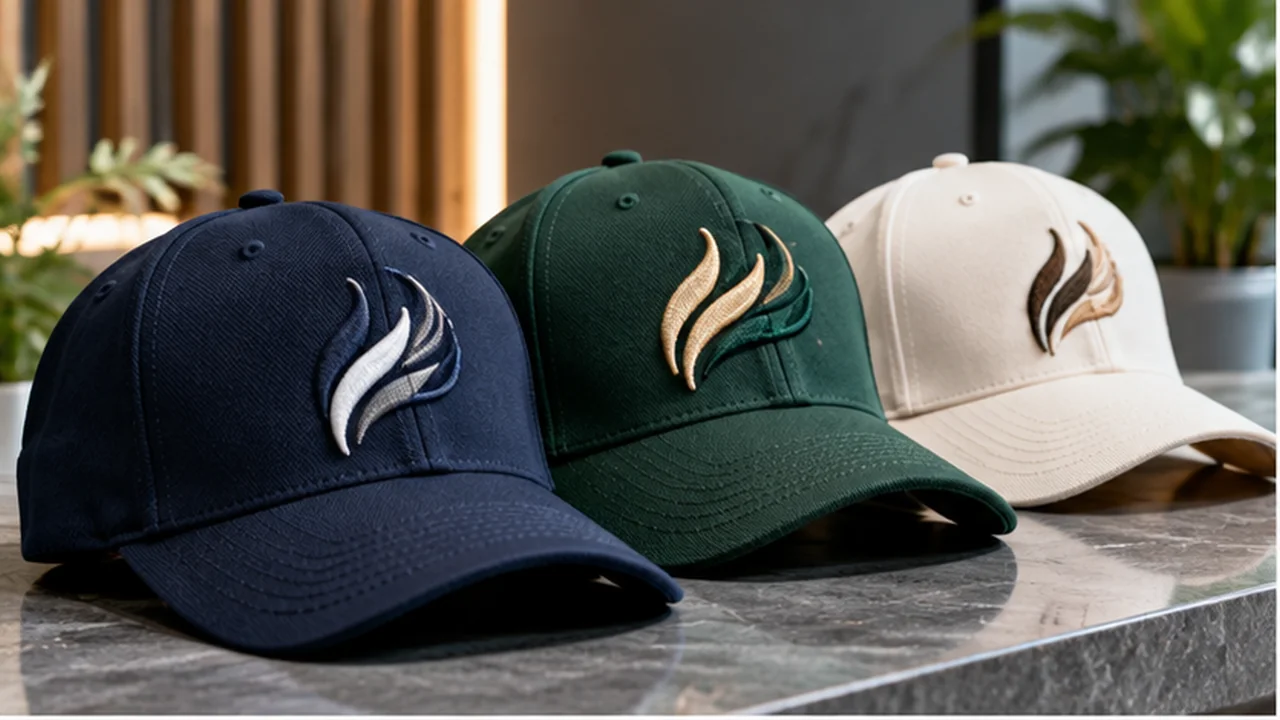
Choose the cap before shrinking the logo
Start with the wearer: a structured cap keeps its front panel firm, while an unstructured cap follows the shape of the head. Check brim shape, crown height, closure and fabric comfort. These details affect both fit and the amount of stable space available for stitching.
Ask for a physical cap sample or a clear picture of the exact model. Do not approve embroidery based on a generic blank cap illustration; the front seam, peak and side panels can change the placement options.
Make small artwork readable
A cap logo usually performs better with bold shapes and sensible line spacing. Very tiny lettering, thin gaps and densely shaded effects can become muddy when converted into stitches. A simple icon with a short brand name may work better than a full office address or long slogan.
Request an embroidery proof showing the design at real dimensions. Thread colours should be selected from available samples, not assumed to match a glowing phone display. A design meant to sit near the curved edge should be tested on the selected cap construction.
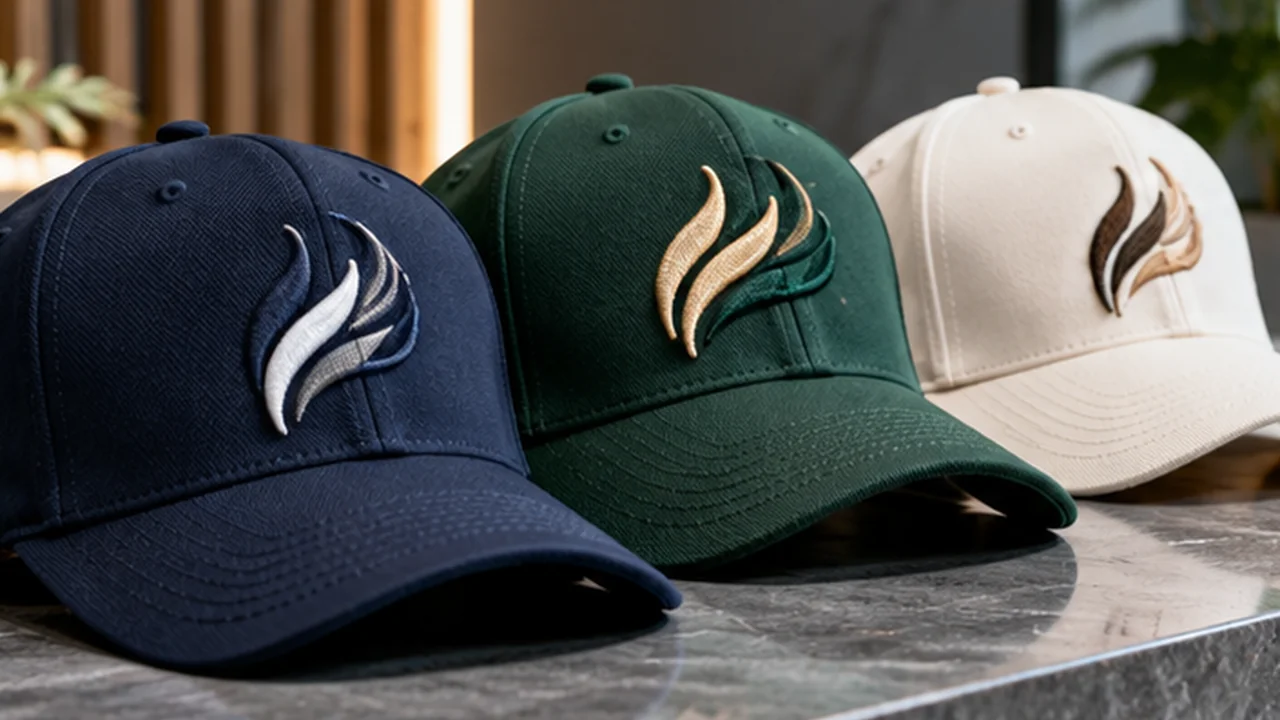
Plan placement across front, side and back
The front centre is the usual hero location, but a smaller side or rear detail can identify a department without crowding the main logo. Consistency matters more than filling every panel. Keep the same distance from seams and crown edge on every cap in a repeat order.
If your staff also wear polos or jackets, share the master logo files across garments but approve each item separately. Stitch counts, stabiliser requirements and viewing distances will differ.
Keep reorders simple
Record the approved cap model, colour, logo dimensions, thread choices, placement and digital embroidery file version. When batches arrive months apart, a written standard helps prevent slight differences between teams.
Count by cap variant rather than only by total units. A mixed order with adjustable caps or multiple colourways needs explicit approval for each combination.
Quick comparison before placing an order
| Decision | What to consider | Approval check |
|---|---|---|
| Front logo | Large simple mark | Watch crown seam and curved surface |
| Side emblem | Short symbol or initials | Keep tiny lines and text legible |
| Rear detail | Small name or icon | Avoid clashes with adjuster |
How JCP services fit this order
For product specifications and appropriate customisation, review the relevant JCP product or service page. Its process and product examples can help you prepare a clearer quotation request. Availability, method, minimum quantity and delivery should be confirmed for your exact destination and order rather than assumed from a general guide.
See SingaporeUniform’s website for the destination brand and its current information. To share the final requirement directly with JC Print & Office, use the official JCP contact page. This article is informational and does not imply an operational Singapore or Sarawak showroom.
Frequently asked questions
Can a full-colour gradient be embroidered?
Embroidery uses threads rather than continuous ink. Gradients usually need simplifying, a different stitch approach or an alternative decoration method.
Can we embroider through a centre seam?
It depends on the cap and design. A stitched sample on the exact model is the safest way to judge the result.
Should cap and polo logos have identical dimensions?
Not necessarily. Keep the proportions and artwork identity consistent, but scale to the usable area of each garment.
Illustrative AI-generated imagery. Service/product information cross-checked against publicly retrievable JCP pages on 21 October 2026. Images are local ZIP assets; live media URLs shown in HTML are placeholders until upload. Website domains shown above require site-side validation.