

Polycotton vs Quick-Dry Polo Shirts for Everyday Work
Compare polycotton and quick-dry polo fabrics for office, warehouse and customer-facing uniforms, including heat, washing and logo decoration.
Two navy polo shirts can look almost identical online but feel very different after a full shift. When ordering daily uniforms, choose the fabric for the activity first, then refine colour, collar and logo treatment. There is no universal winner between blended pique, cotton-rich knit and lightweight performance polyester.
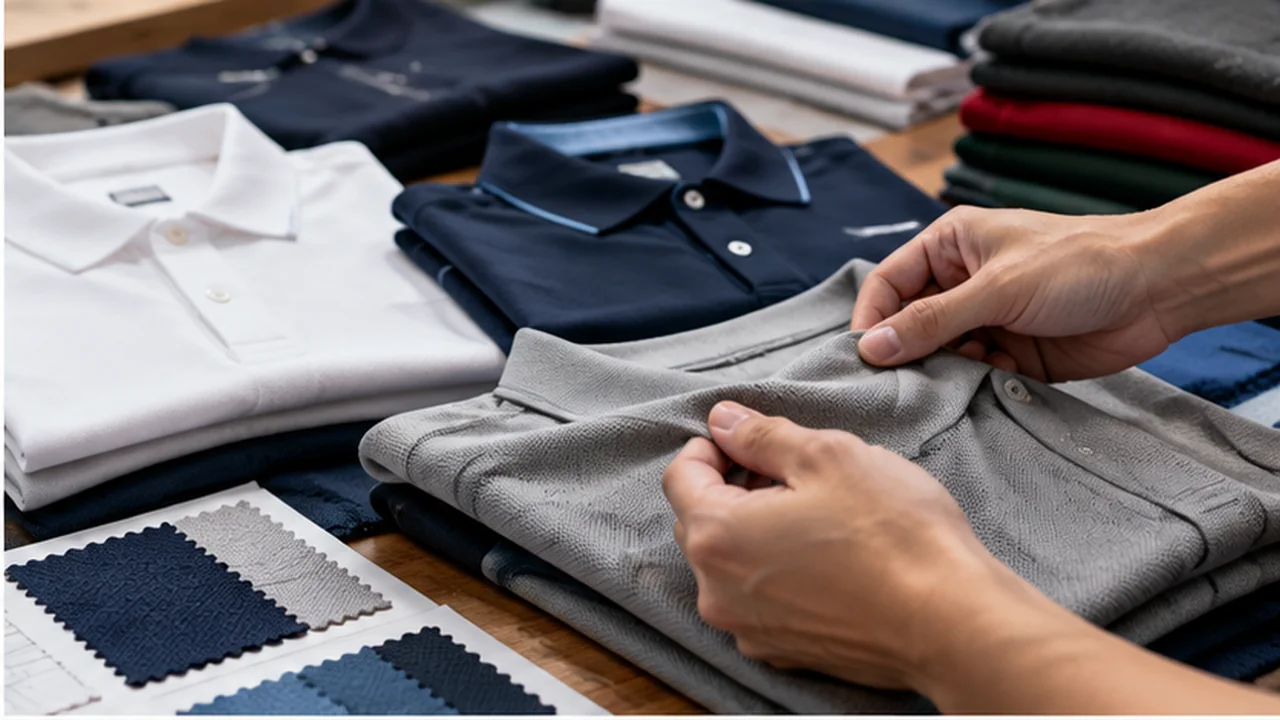
Start with the work environment
An air-conditioned reception counter has different needs from a delivery route or stockroom. Cotton-rich fabrics can offer a familiar hand feel; polycotton blends balance texture with easy maintenance; quick-dry polyester knits are frequently chosen for active, humid conditions. The knit construction and weight matter as much as the fibre label.
Get samples into the hands of actual wearers. Ask them to test arm movement, sitting, bending and one normal wash. The most expensive-looking polo is not useful if staff avoid wearing it.
Understand moisture and comfort
A fabric advertised as quick-dry may move or release moisture differently according to weave and finishing. Breathability also depends on fit and thickness. Heavier cotton can feel soft yet hold moisture longer, while thin synthetic shirts can dry faster but may feel less structured.
Choose based on sweat exposure, indoor cooling and expected washing frequency. Avoid relying on marketing terms alone: record the exact fabric composition and sample code in the purchase brief.
Check how branding interacts with material
Embroidery works on many polo fabrics, but loosely knitted or lightweight fabric may need stabilisation. Heat-applied logos require a method suitable for the material and care temperature. Print feel is especially noticeable on lightweight performance shirts.
Approve a production sample with the real logo applied. Look for puckering, distortion near button plackets and uncomfortable heavy decoration on high-movement zones.
Make a repeat-order standard
Note shirt model, shade, fabric specification, sizing chart and brand placement. Where a workforce combines office and outdoor roles, coordinated colours with different fabric types can work—provided the variation is intentionally documented.
Retain one labelled reference sample from the approved batch. It will be more reliable than trying to match garments from photographs during the next order.
Quick comparison before placing an order
| Decision | What to consider | Approval check |
|---|---|---|
| Cotton-rich | Familiar soft hand feel | Moisture retention and shrinkage care |
| Polycotton | Balance of structure and maintenance | Confirm actual blend and knit weight |
| Quick-dry polyester | Active, warm-weather roles | Test print feel and breathability |
How JCP services fit this order
For product specifications and appropriate customisation, review the relevant JCP product or service page. Its process and product examples can help you prepare a clearer quotation request. Availability, method, minimum quantity and delivery should be confirmed for your exact destination and order rather than assumed from a general guide.
See SingaporeUniform’s website for the destination brand and its current information. To share the final requirement directly with JC Print & Office, use the official JCP contact page. This article is informational and does not imply an operational Singapore or Sarawak showroom.
Frequently asked questions
Is heavier GSM always better?
No. GSM describes fabric mass, not overall comfort, durability or suitability for a job.
Can we mix two fabrics in one team?
Yes, if the visible colour and fit standards are coordinated and each variant is approved.
Which option is easiest to embroider?
That depends on knit stability, logo size and backing. A stitch sample on the selected polo is more useful than a generic rule.
Illustrative AI-generated imagery. Service/product information cross-checked against publicly retrievable JCP pages on 21 October 2026. Images are local ZIP assets; live media URLs shown in HTML are placeholders until upload. Website domains shown above require site-side validation.