

Hoodies and Sweatshirts for Air-Conditioned Teams: What to Check
Plan branded staff hoodies and sweatshirts with the right fabric, layer fit, zip style, wash care and discreet decoration.
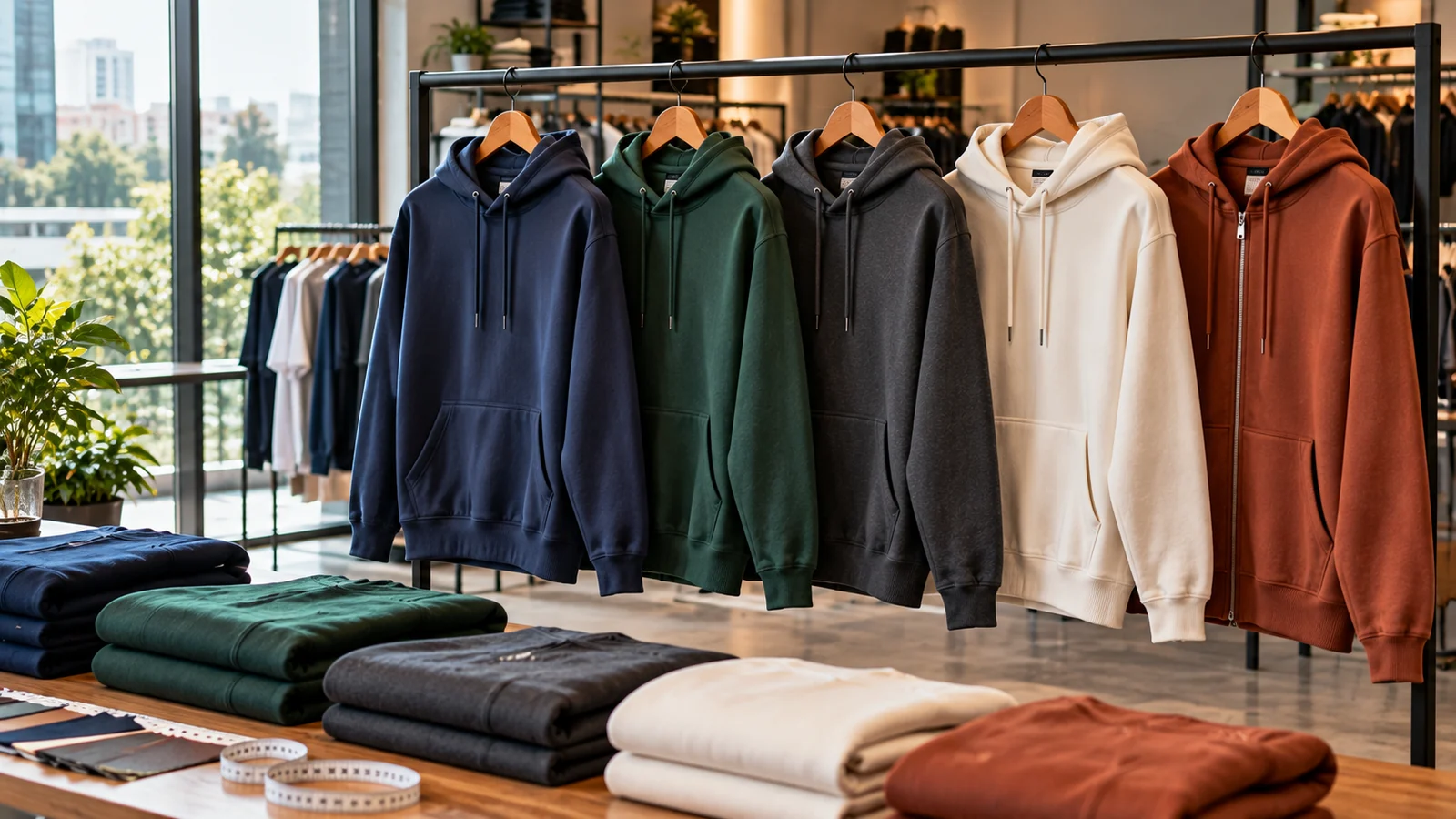
A hoodie can be useful teamwear in a cool office, an air-conditioned training room or a workplace where staff move between indoor zones. It should not be chosen on appearance alone. Thickness, ease of layering, sleeve mobility and washing habits determine whether people actually wear it. For Singapore teams, the objective is usually to add a comfortable optional layer without losing the professionalism of the main uniform.
Some workplaces prefer a clean crew-neck sweatshirt, while others need a full zip that employees can remove quickly. A pullover may be warm and simple, but it can disrupt hair, lanyards or face coverings when taken off. Ask staff when the layer will be worn and with what underlying shirt before selecting a style for a company-wide order.
Start with layering rather than sizing in isolation
A sweatshirt is rarely worn alone at work. Staff might put it over a polo, button shirt or light T-shirt, so the garment needs sufficient room across the chest, shoulders and upper arms. Choosing an oversized body is not a substitute for proper sleeve and shoulder fit. A trial wearer should be able to type, reach for shelves and carry equipment without tight cuffs or bunching fabric.
Test both the smallest and largest typical uniform layers during fitting. If the hoodie feels perfect over a thin T-shirt but too restrictive over a polo, the size selection needs revisiting. Keep an issue record showing each employee's approved layer size rather than assuming it matches their standard polo size exactly; different garment patterns use different allowances.
Fabric feel and warmth can vary widely
Fleece-backed fabrics often feel warmer than a thin single-knit jersey, but the experience depends on fabric weight, construction and air movement. Cotton-polyester blends may balance softness and care needs differently from 100% cotton. Do not assume a higher GSM alone means better quality. Compare actual samples for softness, stretch recovery, lint shedding and how the fabric feels after normal washing.
Consider whether the garments will be worn in a dusty work area or a clean customer-facing space. Some brushed interiors can shed fibres or feel warm during a short walk outdoors. Dark colours can show lint, and light colours may expose stains. The supplier's fibre and care labels should guide expectations, but a washed sample is still valuable for a sizeable rollout.
Pullover, crew neck or full zip?
A pullover hoodie offers a relaxed casual appearance, sometimes useful for creative teams and internal merchandise. A crew-neck sweatshirt usually looks cleaner under a jacket and avoids drawcords. A full-zip style makes layering easier and can feel less restrictive when temperatures change throughout the day. Each form has a different logo placement opportunity, so consider branding at the same time as the garment construction.
For example, a large centre-chest print is interrupted by the zipper on a full-zip hoodie. A smaller left-chest logo or sleeve mark may suit that design better. The Ultifresh zip hoodie product example illustrates one available sweatshirt construction, while the broader uniform customisation service range can help with matching decoration to the intended fabric and garment layout.
Keep branding restrained and practical
A sweatshirt should remain useful even if staff wear it over several different polo colours. Choose a consistent company colour and a logo that reads clearly without covering a large, uncomfortable area. Embroidery can be effective for compact marks, but thick seam zones, pockets and drawcord locations may limit placement. Printing choices also depend on fabric content and wash care.
Always approve logo scale on the actual garment size. A mark that feels balanced on a medium sweatshirt might look small on larger sizes or crowd a small youth fit. Ask for one wearable sample showing the intended decoration, then compare it with the organisation's other branded apparel. Keep the artwork and thread or print colour references for future reorders through the Singapore Uniform site.
A smarter order brief
- Work environment and average time spent in cooled versus outdoor spaces.
- Base garment worn beneath the sweatshirt and intended layering fit.
- Preferred fabric feel, care requirements, hood and zip choice.
- Logo position, colour, sample size and proof approval steps.
- Reorder availability and how optional layers will be distributed.
Choose when the sweatshirt is part of the uniform
An optional layer should have a clear place in the dress code. Staff may otherwise wear personal outerwear in many colours because they do not know when company hoodies are expected. Specify whether the garment is for internal work only, public-facing shifts or travelling between buildings. A simple policy can also cover what should remain visible, such as identification badges and the main corporate logo.
There may be good reasons to permit alternatives for religious dress, accessibility, sensory preferences or medical needs. The aim is a coordinated and workable standard rather than one rigid garment for every person. Agree on acceptable base colours and layering arrangements, and ask employees how the sweatshirt feels across their normal schedule before finalising the dress code.
Plan the distribution and replacement routine
If sweatshirts are issued seasonally or to selected roles, use an inventory list that records size, date and style. Decide whether employees keep them at home or store them in the workplace; this can affect how frequently they are washed and misplaced. A replacement policy prevents supervisors from improvising prices or approvals whenever a zip fails or a garment becomes worn.
Ask suppliers how long the selected range is expected to remain available, while recognising that stock forecasts are not guarantees. Save a sample showing the exact dye shade, zip colour and branding position. Reordering the same garment family is easier when that specification is ready rather than having to reconstruct the design from old photos and memory.
Common questions
Should a staff hoodie fit looser than a polo?
Often a little extra layering allowance helps, but garment sizing varies by pattern and brand. Trial fit over the actual uniform is the safest method.
Is a full-zip sweatshirt better for work?
It can be more convenient when temperatures vary, but zips introduce a visual break through front branding. A crew neck may be cleaner for some settings.
Can a thick hoodie be used as protective cold-weather clothing?
Ordinary hoodies are casual layers, not substitutes for certified protective clothing where a workplace hazard assessment requires specific performance.