

Chef Jackets and Kitchen Uniforms: A Practical Buying Guide
How to select chef jackets for a busy kitchen by comparing fabric, closures, sleeve coverage, pockets, laundering and comfort.
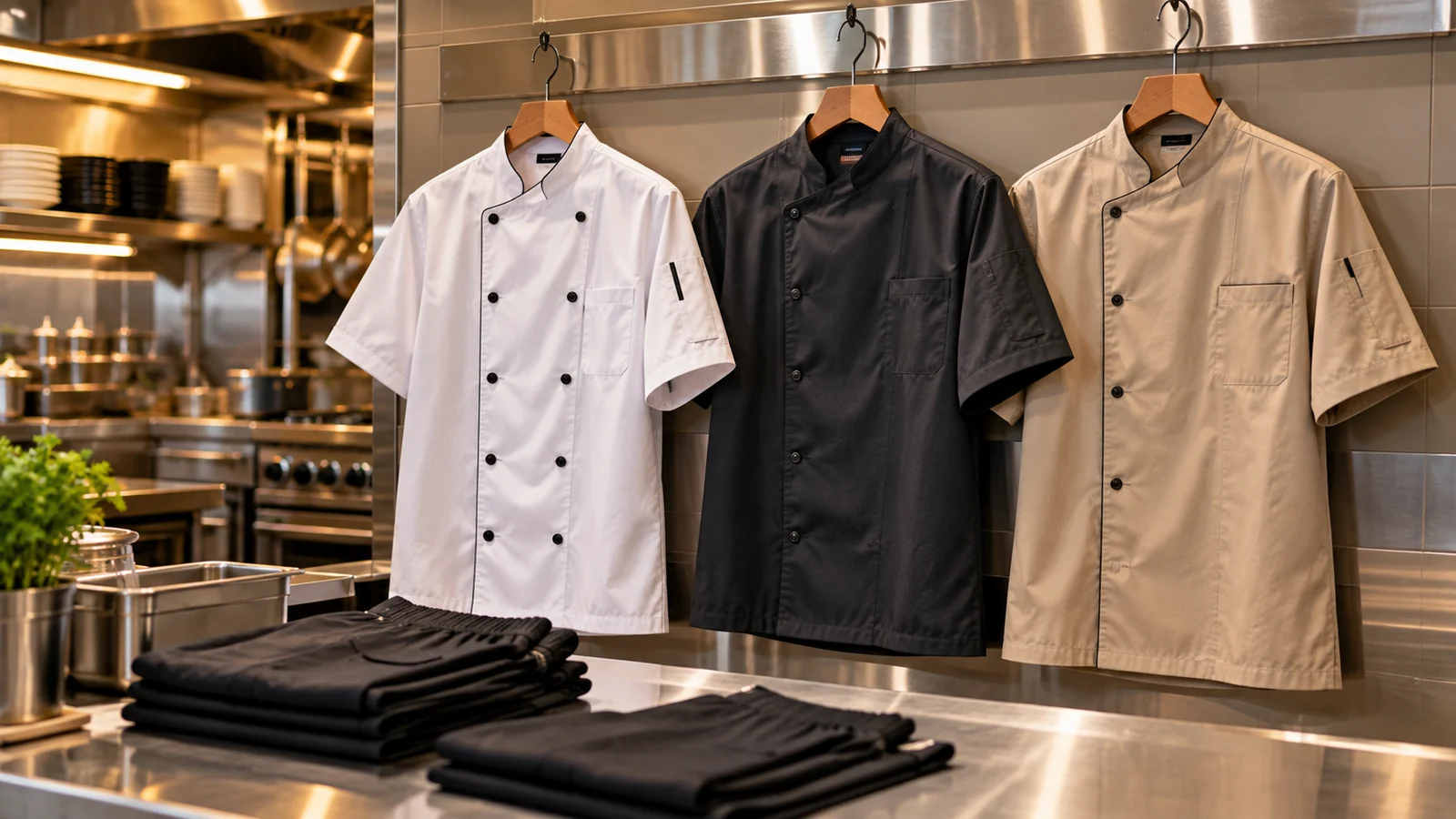
A kitchen uniform has to cope with movement, spills, heat and repeated washing while still giving a hospitality team a tidy appearance. Chef jackets often look similar at first glance, yet their collars, closures, sleeve lengths and fabric weights can behave differently during a long shift. Whether you are equipping a restaurant, bakery, catering operation or production kitchen, the best choice starts with the tasks performed in each work zone.
Not every team member needs the same jacket. A chef working beside cooking equipment may have different needs from a pastry assistant plating desserts or a counter worker serving customers. Before discussing embroidery placement or colour combinations, decide which staff positions genuinely need a chef coat, which need an apron or service shirt, and what protective clothing the kitchen's own safety assessment requires.
Choose coverage for the task
Traditional double-breasted chef coats provide a distinctive silhouette and may offer additional fabric coverage across the torso. Other designs have a simpler single-breasted closure, concealed fasteners or a stand collar. The presence of a particular closure does not make the garment automatically flame resistant or suitable as safety equipment. Ask about the fabric and intended application, especially where employees work close to heat or exposed flames.
Sleeve choices also deserve attention. Short sleeves can feel more manageable in some warm work areas, while long sleeves provide more coverage but may interfere with some washing routines or tasks. Staff should be able to move arms comfortably without the jacket pulling across the shoulders. Ask people doing different jobs to try the style and verify that it meets site hygiene rules.
Pay attention to fabric and laundering
Kitchen garments get washed frequently, so stain appearance, drying time and shape retention matter. Cotton-rich fabrics can feel familiar and absorbent, while certain blends may dry faster or crease less. Neither is universally superior, and special performance claims should be supported by the actual garment specification. Darker colours hide some stains visually but do not reduce the need for proper laundering.
Test a garment after several normal wash cycles if the order is sizeable. Look at shrinkage, collar shape, seam twisting and whether buttons remain secure. The same approach applies to aprons and chef trousers. A curated apparel list, such as the JCP chef and workwear product range, is useful for shortlisting, but the sample should ultimately be approved against the kitchen's daily operating conditions.
Avoid decorative features that obstruct work
Chest pockets, pen pockets and contrast piping can add a practical or branded touch, yet placement matters. Items stored near food preparation surfaces should not create contamination or snagging risks. Check whether buttons, snaps and zip pulls remain secure during repeated wear, and think through what happens when a chef lifts trays, reaches overhead or leans against a stainless-steel counter.
If a team wears aprons over chef jackets, review both garments together. Apron straps should not bunch around the collar, and long bibs should not conceal name embroidery in an awkward way. Decide which decorative details still remain visible after the full uniform is assembled. This helps prevent paying for branding that customers and colleagues rarely see.
Place logos where they remain legible
An embroidered logo can make kitchen wear look coordinated, but overly intricate artwork may not stitch cleanly at small sizes. Keep the company mark away from busy seams and confirm its position with the apron in place. Where garments are exposed to unusually frequent commercial laundering, ask the supplier about thread colourfastness and the suitability of the decoration for the specified wash process.
Services such as uniform embroidery are relevant when you need a compact, durable identity mark on chef coats, aprons or work shirts. Provide the exact logo file and a physical reference if colour matters. The Singapore service range also helps when coordinating the kitchen uniform with separate front-of-house polos or event attire.
A kitchen uniform order checklist
- Duties and kitchen zones, including exposure to heat and washing requirements.
- Sleeve length, collar and closure style, with a sample tried during real movement.
- Fabric composition, weight, colour and approved care instructions.
- Apron pairing, pocket position and suitable logo placement.
- Size range, replacement plan and consistent reorder references.
Plan how many garments each person needs
One chef jacket per employee may be insufficient when uniforms need frequent laundering or a shift involves visible spills. Work through the laundry schedule and how long garments take to return to service. Some kitchens issue multiple sets per employee, while others use centrally managed spare stock. Quantity should follow the operation rather than a blanket rule because staff hours, change intervals and washing arrangements differ substantially.
A uniform register can record each issued size and replacement date without collecting unnecessary personal information. Keep a sample of the approved cut and fabric for comparison when batches are reordered. If different teams wear different colours, store the shade references separately. This reduces accidental mixing of variations that appear similar in a product photo but differ in person.
Test how the complete outfit performs
A chef coat rarely works alone. Have a wearer try it with trousers, apron, head covering and footwear appropriate to their area. Check the collar when looking downward, sleeves during reaching and the way the apron sits over pockets. A garment may appear perfect on a hanger but bunch when tied at the waist. Include a supervisor familiar with the actual kitchen workflow in the approval session.
When trial garments are washed, look for changes in closure alignment, pocket edges and logo appearance. Decorative piping may respond differently from the main cloth, so inspect both. Ask staff whether a change in sleeve or chest allowance would improve movement without compromising the intended look. This final review can prevent repeated complaints after the uniform is already issued.
Common questions
Should all kitchen staff wear white?
White is a familiar traditional option, but grey, black and other colours can work when site policy allows. Choose colours based on maintenance, brand identity and the kitchen environment, not only tradition.
Can a logo be embroidered on every chef jacket fabric?
Many fabrics can accept embroidery, but stabilisation, thickness and seam position matter. Approve a real sample of the chosen jacket before a large run.
Does a chef jacket replace required protective equipment?
No. Ordinary uniforms are not a substitute for task-specific protective clothing. Follow the workplace's health, hygiene and safety requirements when selecting garments for hazardous tasks.