

V-Neck vs Crew-Neck T-Shirts for Staff: Choosing a Consistent Look
Compare V-neck and crew-neck team T-shirts for coverage, fit, decoration, repeat orders and workplace suitability.
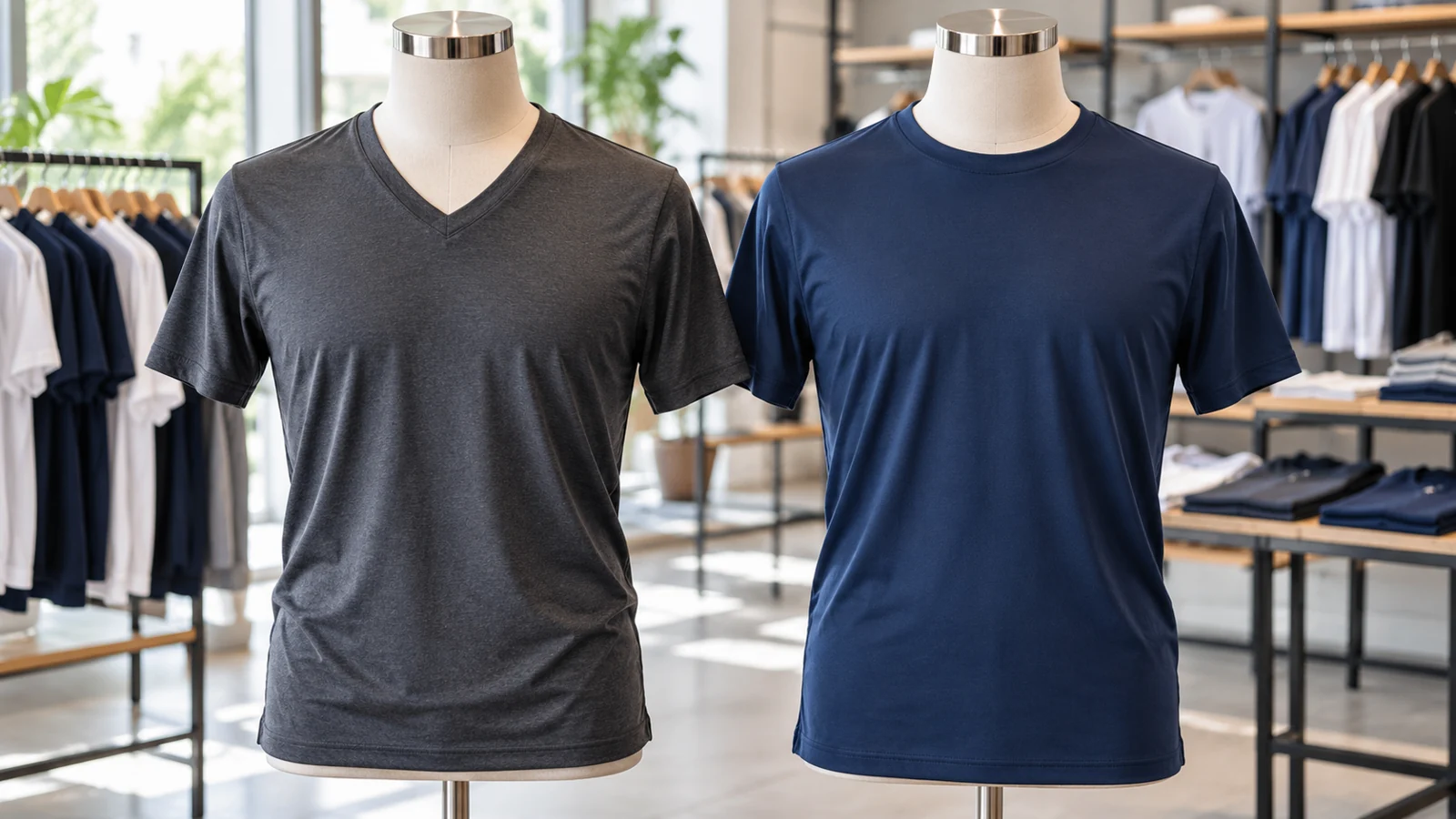
Choosing a neckline sounds like a small decision, yet it changes how a whole team looks at reception, on the shop floor and in photographs. A crew neck makes a familiar uniform shape; a V-neck creates a different frame around the face and can feel less restrictive to some wearers. The right answer depends on the work, the fabric and how the shirts will be branded, rather than fashion alone.
The point of a good uniform specification is to reduce uncertainty for buyers and make daily wear comfortable for the people who receive it. Compare samples in the workplace, and separate requirements that are essential from preferences that can change. Clear documentation helps prevent a beautiful mockup from becoming an inconsistent or difficult-to-reorder product.
Start with the job, not the mannequin
For a public-facing team, consider whether staff bend, lift equipment or wear identification lanyards. A high crew neckline offers predictable coverage during movement, while the depth of a V-neck varies considerably between products. A modest V may work perfectly well in an office but need checking for a busy service counter. Set one dress standard that employees can follow without constantly adjusting their shirts.
Ask two staff members with different body shapes to test each sample while standing, sitting and reaching. Photograph the result at normal viewing distance instead of judging only a close-up product picture. This simple step uncovers differences in neckline depth and how fabric drapes on different people.
Compare the collar edge and stitching
A crew neck normally uses a ribbed band or a bound edge, and its resilience affects how tidy the shirt looks after laundering. V-necks join at an angled point that deserves careful finishing. Inspect the seam intersection, any uneven puckering and whether the fabric springs back when gently stretched. Heavy decoration near the neck can make these areas feel even more rigid.
On a sample, look inside the neckline for neat stitching and check whether the seam scratches the skin. If the neckline twists or gaps after a first wash, a large order is unlikely to improve it. Include a washed sample when durability matters more than a showroom-first impression.
Keep logo positioning consistent
Small logos usually sit over the chest, but their perceived position changes with the neckline shape. A graphic measured from a V-neck opening may look lower than the same measurement on a crew-neck shirt. Establish a consistent reference point such as the garment centreline and the shoulder seam, then approve mockups on both styles.
For a mixed neckline order, request separate placement guides rather than assuming one print coordinate fits everything. The available heat-press and DTF service may be relevant for detailed marks, while simpler artwork can be evaluated for other methods depending on fabric and quantity.
Choose fabric before selecting the neckline
A soft cotton jersey and a slippery polyester performance knit do not sit identically around the collarbone. Knit recovery, garment weight and cut can make one neckline feel snug and another loose. Ask to see the actual colour and fabric in both shapes. If different blanks are used, shades that look identical online may be visibly different under office lighting.
A uniform that looks coordinated in a catalogue can become inconsistent when styles come from unrelated product lines. Choose a common colour family, decide how close the shade must be and keep the product model codes in your purchasing record. Avoid promises of an exact match without comparing physical swatches.
Plan sizes and future top-ups
Staff typically select T-shirt sizes by chest, length and preferred ease rather than neckline alone. Two products marked medium can still have different shoulder widths or lengths. Record the measurements of approved samples and ask employees to select by size chart, not by guessing. Future hires should be able to receive a shirt with the same appearance as the initial batch.
Keep a simple order sheet listing model, colour, neckline, size and decoration location. If one cut goes out of stock, compare replacements side by side and decide whether to standardise on a close substitute. Recording the original specification protects consistency across months of reorders.
Make the final decision with a short trial
Do not poll staff on appearance only. Let a small group wear both styles for a normal shift and note heat, collar comfort, coverage and laundry behaviour. A crew neck may win on simplicity, while a V-neck may be preferred in a suitable role; neither is automatically more professional. A trial makes the decision grounded in the real workplace.
If the team has distinct tasks, a shared colour and logo can sometimes accommodate two necklines without losing cohesion. The important point is to document the approved alternatives and the reasons for them. Seek a quote only after the garment choice, approximate sizes and print positions have been settled.
Four details to confirm before ordering
| Item to check | Why it matters |
|---|---|
| Neckline depth and coverage | Confirm during normal movement, not only in a product photograph. |
| Actual sample sizes | Use measurements and wearer feedback to avoid sizing assumptions. |
| Logo placement by cut | Agree on the final specification and check a physical sample where practical. |
| Fabric recovery after washing | Agree on the final specification and check a physical sample where practical. |
For a quotation, prepare the intended quantity, preferred size or format, available artwork, colour direction and expected date of use. Ask the supplier to identify which decisions are fixed and which are still assumptions. Where a sample is needed, plan enough time to review it before final approval instead of compressing all checks into the final production week.
Frequently asked questions
Is a V-neck less formal than a crew neck?
Not automatically. Depth, fabric, fit and overall styling matter more than the name of the neckline.
Can both styles carry the same printed logo?
Usually yes, subject to fabric and available print area; separate placement proofs are sensible.
Should I order a single size chart for both?
No. Check measurements for each specific blank or manufacturer model.
Make the next order easier
If you are comparing options for an upcoming order, review the available garments and product styles alongside the relevant service information, then request a specification-based quotation. A shortlist supported by samples will usually lead to a better outcome than ordering solely from a catalogue image. For more uniform buying advice, you can also browse SingaporeUniform.com.