

SWITCH 2026: Build a One-Page Product Sheet for Fast Booth Conversations
SWITCH 2026 runs from 27 to 29 October at Marina Bay Sands Expo & Convention Centre, with the official event site listing more than 400 global exhibitors and a trade floor built around rapid discovery and networking. In that setting, a one-page product sheet can work better than a thick brochure when it helps a visitor understand the product, remember the conversation and take one clear next step.
In This Article
Use the Event Context to Define the Job of the Sheet
Build the Page Around Five Questions
Do Not Force Every Audience Into One Sheet
Use QR Codes as a Bridge, Not the Main Content
Estimate Quantity From Booth Traffic and Handover Rules
Current Local Reference
Frequently Asked Questions
Direct Answer
Design the sheet for a conversation that may last only a few minutes. Lead with the problem, product and proof; keep technical detail selective; and give the reader one obvious follow-up path. The printed sheet should extend the booth discussion, not duplicate every slide on the company website.

Use the Event Context to Define the Job of the Sheet
The official SWITCH site lists the event for 27–29 October 2026 at Marina Bay Sands Expo & Convention Centre and describes a trade floor with more than 400 global exhibitors. That density changes how printed collateral should work. Visitors are likely to compare many companies in a short period, so the sheet must help them remember what was different about the product after they leave the booth.
This is a practical recommendation rather than an official SWITCH printing rule. The event context simply makes information hierarchy more important: one strong takeaway is more useful than a dense company profile when the reader may collect several pieces of collateral in the same day.
Build the Page Around Five Questions
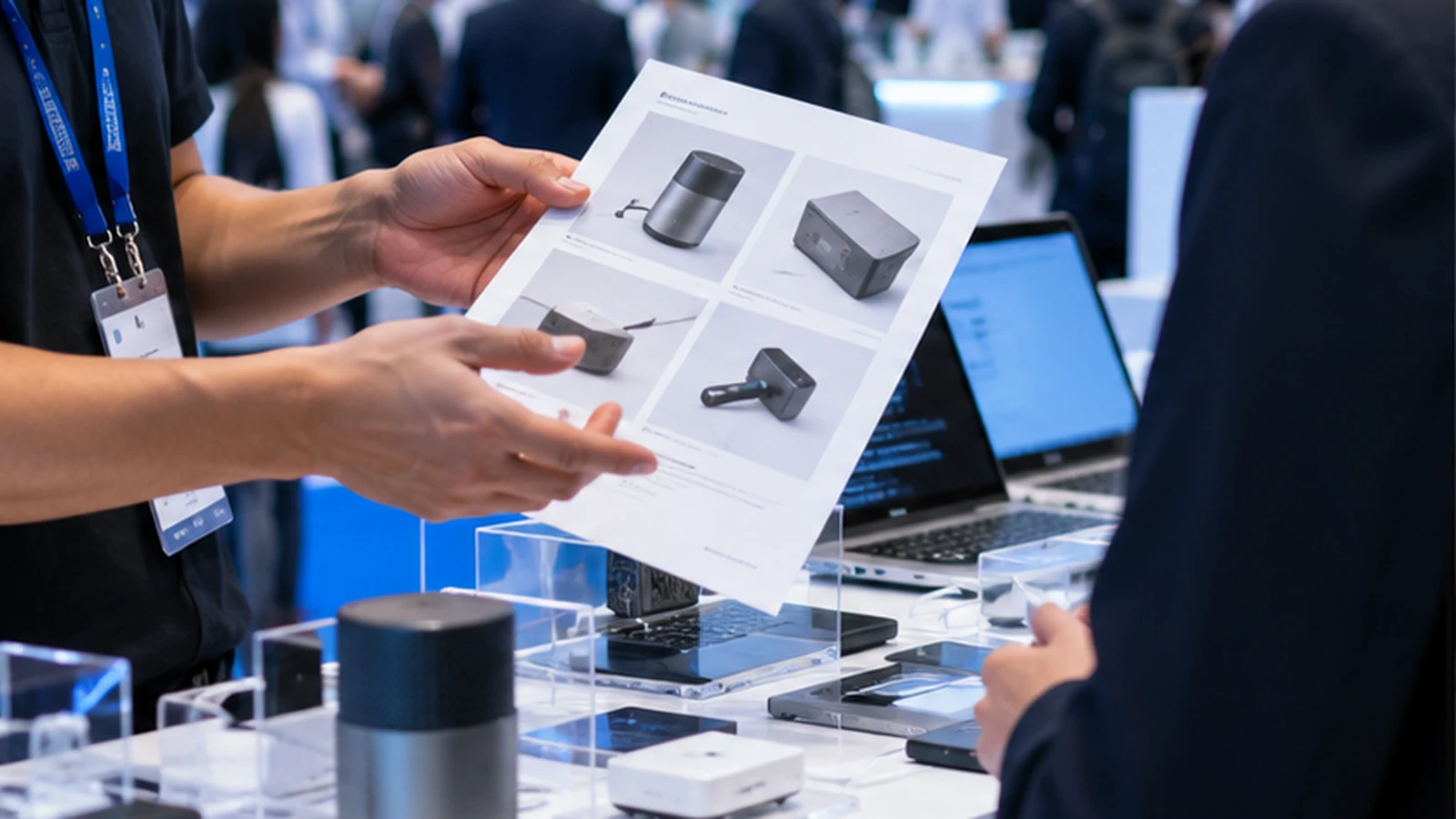
A useful one-page sheet can answer five buyer questions in sequence: What problem does this solve? What is the product? Who is it for? What evidence supports the claim? What should I do next? Put the answers in that order rather than starting with a long company history. A short headline, one product visual and three to five proof points usually create a clearer scan path than several equal-sized text boxes.
If the product is technical, choose evidence that can be understood without the full demo. That may be a performance metric, deployment example, certification category or simple diagram. Keep the detailed specifications for a linked technical page or a separate sheet used only when a visitor asks for deeper information. Use short labels and bold subheads so a visitor can recover the main points later without remembering the original spoken explanation.
| Page Element | Purpose | Keep It |
|---|---|---|
| Headline + product visual | Recognition | Immediate and specific |
| 3–5 proof points | Credibility | Scannable |
| Technical detail | Qualification | Only what supports the first conversation |
| QR / contact action | Follow-up | One clear destination |
Do Not Force Every Audience Into One Sheet
SWITCH brings together founders, investors, industry partners and technology buyers, and the same product can be relevant to each for different reasons. If the booth team regularly has two distinct conversations, create two clearly controlled versions rather than squeezing both into one page. For example, a buyer-facing sheet can focus on use cases and deployment, while a partner-facing version may emphasise integration or channel opportunity.
Version control matters once two sheets exist. Put a small internal revision code in the artwork file and brief the booth team on which version belongs to which conversation. That avoids handing an investor a page dominated by installation details or giving a technical buyer a sheet full of fundraising language.
Use QR Codes as a Bridge, Not the Main Content
A QR code is useful when it leads directly to the next useful asset: a demo request, technical specification, case study or contact page. Avoid sending everyone to a generic homepage where they have to search again for the product they just discussed. The printed page should still make sense if the reader never scans the code.
Before printing, test the QR code at final physical size on the actual paper. Scan it with more than one phone and confirm the destination works without login friction. If campaign tracking is used, keep the redirect under company control so a changed URL does not make the printed stock obsolete. Print the plain-text URL in small type beneath the code when the destination is important enough to preserve even if a camera cannot scan.
Estimate Quantity From Booth Traffic and Handover Rules
Do not choose quantity only because a larger print run has a lower unit price. Estimate how many booth conversations are likely to justify a sheet, multiply by the event days, then add a sensible buffer. If the team expects 120 qualified conversations per day for three days and roughly half need printed follow-up, base demand is 120 × 3 × 0.5 = 180 sheets before the buffer.
Also decide when staff should hand one out. A sheet given automatically to every passer-by disappears quickly and may create waste, while a sheet used to close a meaningful product discussion becomes part of the sales process. The quantity calculation should follow that handover rule.
Current Local Reference
Current Singapore context: the official Singapore Week of Innovation and Technology site lists SWITCH 2026 for 27–29 October at Marina Bay Sands Expo & Convention Centre and describes a trade floor with more than 400 global exhibitors.
A good trade-show product sheet helps the visitor remember the conversation after the booth staff are no longer there.
Frequently Asked Questions
When is SWITCH 2026?+
The official SWITCH site lists 27–29 October 2026 at Marina Bay Sands Expo & Convention Centre.
Should the sheet include every technical specification?+
Usually not. Include enough to support qualification, then link deeper specifications for readers who need them.
How many sheets should an exhibitor print?+
Estimate from expected qualified conversations and the team's handover rule, then add a modest buffer rather than printing blindly.
Preparing Product Sheets for SWITCH 2026?
JCP can produce short-run product sheets once the final size, stock, quantity and artwork are confirmed.