

Singapore’s Warm October Weather: Planning Uniform Layers for Indoor-Outdoor Staff
Meteorological Service Singapore expects daily maximum temperatures around 34–35°C on most days in the first half of October 2026, with thundery showers on some days. For staff who move between outdoor heat and strong indoor air-conditioning, one heavy garment rarely solves the whole comfort problem.
In This Article
Use the Current Weather Outlook as a Planning Input, Not a Marketing Claim
Choose the Base Shirt for Heat, Sweat and Drying Time
Use a Removable Layer for Air-Conditioned Spaces
Treat Short Rain Exposure Separately From Sweat Management
Run a Full-Shift Trial Before Standardising the Combination
Frequently Asked Questions
Direct Answer
Build the uniform as a small system: a breathable base shirt for heat and movement, plus a light removable layer only where indoor cooling, rain exposure or role presentation requires it. Test the combination during a real shift instead of choosing fabric from an air-conditioned showroom alone.
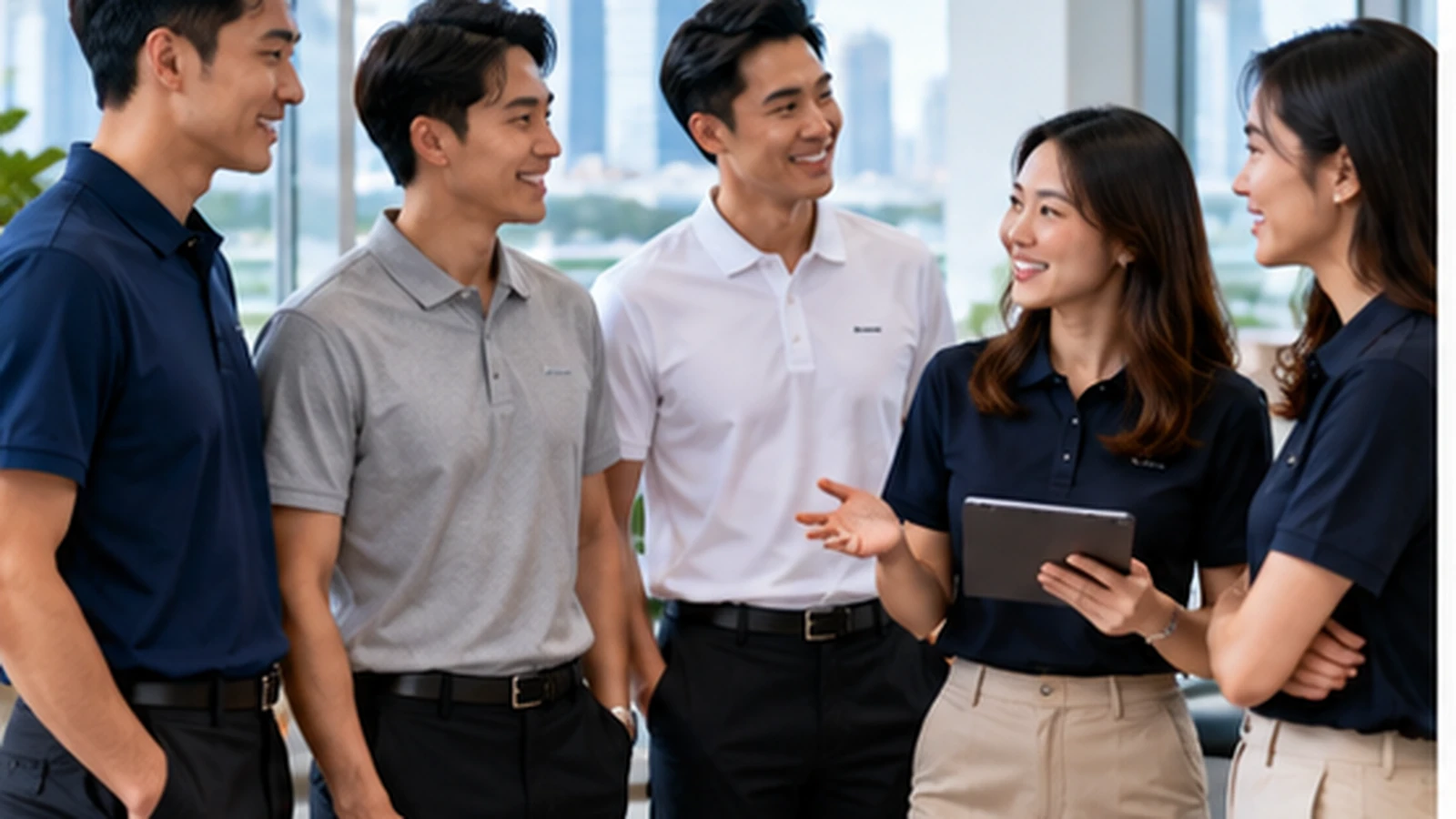
Use the Current Weather Outlook as a Planning Input, Not a Marketing Claim
Meteorological Service Singapore said on 1 October that the first fortnight would stay warm, with maximum temperatures of 34–35°C on most days and thundery showers over parts of the island on some days. That confirms two practical conditions for outdoor-facing staff: heat load can be high, and short wet periods can still occur even when total rainfall is below average.
The forecast does not mean every role needs the same uniform. A lobby concierge, outdoor promoter, delivery coordinator and technician experience different exposure. Map the actual minutes spent outdoors and indoors before choosing the garment system.
Choose the Base Shirt for Heat, Sweat and Drying Time
A lightweight polo or T-shirt with good moisture movement and a quick drying construction can be useful for staff who spend meaningful time outside. Polyester-based performance fabrics typically dry faster than absorbent cotton after heavy perspiration or light rain, while cotton may still be preferred for softness in lower-activity indoor roles. The choice is therefore about the job rather than a universal “best fabric”.
Check whether the fabric becomes clingy when damp, whether the collar stays presentable and whether the colour shows sweat noticeably. A one-shift wear trial gives more useful information than comparing GSM alone.
| Work Pattern | Base Garment Priority | Optional Layer |
|---|---|---|
| Mostly indoors | Comfort and presentability | Light jacket if air-conditioning is cold |
| Frequent outdoor/indoor movement | Quick drying, breathable base | Packable/light outer layer |
| Short rain exposure | Fast drying + spare plan | Rain layer only when operationally needed |
| High-activity outdoor role | Moisture management and mobility | Role-specific weather protection |
Use a Removable Layer for Air-Conditioned Spaces
Staff who repeatedly enter cold offices, showrooms or transport hubs may benefit from a lightweight jacket or overshirt that can be removed outside. This is more flexible than selecting a thick polo and asking the same garment to handle both midday heat and extended indoor cooling.
The layer should pack or hang easily, allow the base uniform branding to remain visible when appropriate and avoid excessive bulk at the counter. If the role requires a polished appearance indoors, make the outer layer part of the visual standard rather than an improvised personal cardigan.

Treat Short Rain Exposure Separately From Sweat Management
Quick-dry fabric helps after light moisture, but it is not the same thing as a waterproof shell. Staff who spend long periods exposed to rain may need a dedicated rain layer or operational shelter policy rather than expecting the polo fabric to solve weather protection. For short transfers between buildings, fast drying and a spare shirt may be enough.
Define the real exposure so the uniform specification does not become overbuilt. A waterproof layer worn all day in hot weather can create a different comfort problem if it is only needed for a few minutes.
Run a Full-Shift Trial Before Standardising the Combination
Give the proposed base shirt and optional outer layer to staff in the actual role for several shifts. Ask about drying time, collar comfort, heat while walking outside, chill indoors and how often the layer is actually used. Inspect the garment at the end of the shift rather than relying only on wearer memory.
Record the chosen model, colour and layering rule so future hires receive the same system. The aim is not to make every employee wear two pieces all day; it is to give indoor-outdoor roles a controlled way to adapt without losing a consistent company appearance.
Current local reference: Meteorological Service Singapore, 1 October 2026 weather outlook.
For indoor-outdoor staff, solve heat and air-conditioning with layers that can change—not one garment that tries to do everything.
Frequently Asked Questions
What does the October 2026 Singapore forecast say?+
Meteorological Service Singapore expects maximum temperatures around 34–35°C on most days in the first fortnight, with thundery showers on some days.
Is quick-dry fabric waterproof?+
No. Quick drying and waterproofing solve different problems; prolonged rain may require a separate protective layer.
Should every staff member receive a jacket?+
Only if the role and indoor conditions justify it. Test the actual work pattern before adding another garment to the uniform issue.
Planning Uniforms for Indoor-Outdoor Staff?
JCP can help compare ready-made polos, performance shirts and lightweight outerwear for the actual work pattern.