

Matching Sports Jerseys and Shorts: A Teamwear Ordering Checklist
Check jersey-and-shorts combinations for sizing, fabric, legroom, numbering and replacement sets before ordering.
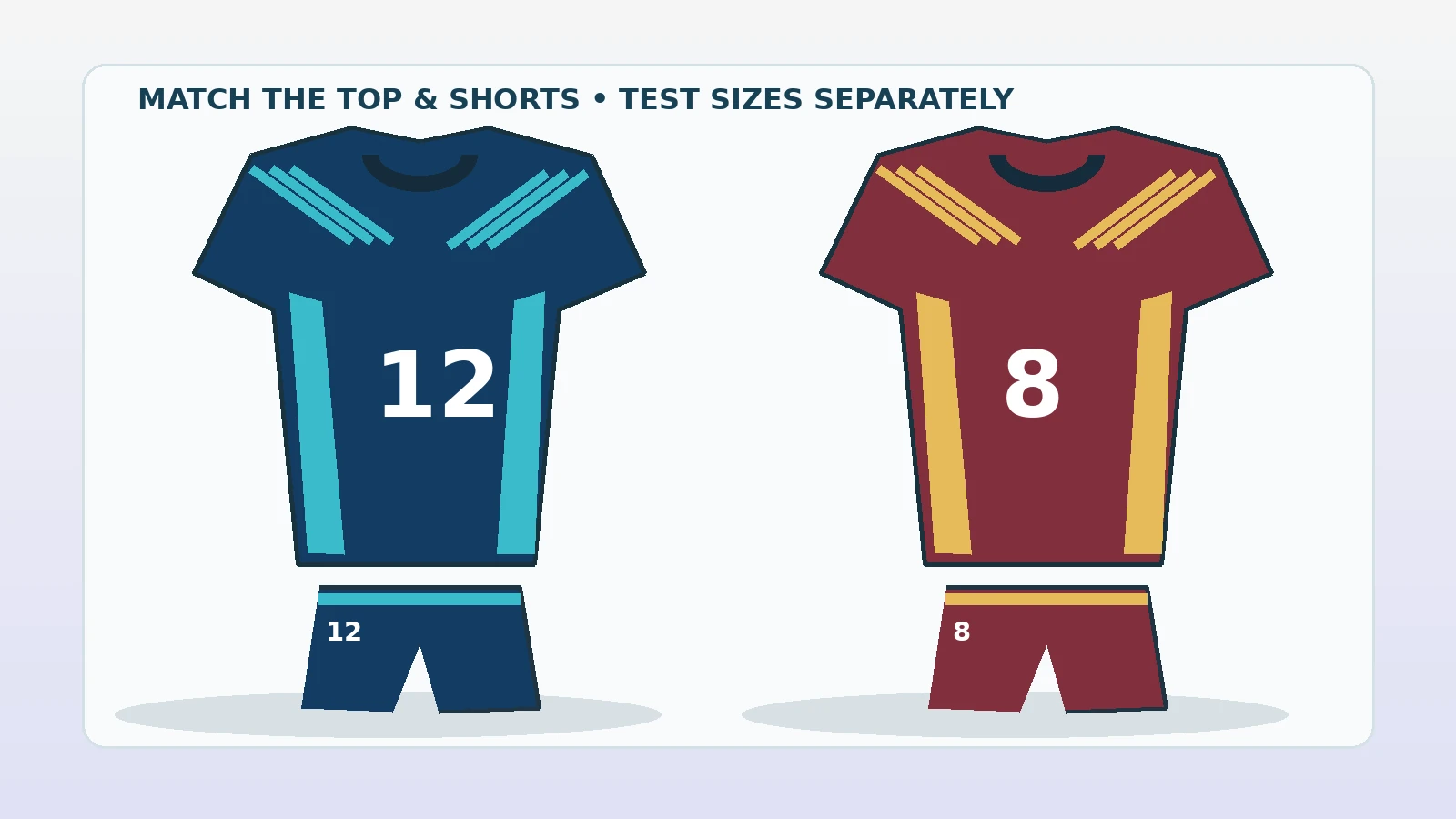
Teams usually spend more time discussing shirt colours and player numbers than the shorts that complete the kit. Yet a matching outfit can fail in practice because the shirt stretches differently from the shorts, the waistband size is misunderstood or players receive inconsistent cuts. Evaluating both garments as one system prevents small annoyances from becoming match-day complaints.
For a company fitness club, volunteer team or recreational sports group, a sensible kit should support movement, wash easily and remain recognisable. It need not imitate a professional league uniform. A coordinated design and reliable replacement strategy often matter more than extra graphics.
Start with the activity and movement
Football, badminton, running and informal company sports days put different demands on apparel. A running group may prefer very lightweight shorts, while an indoor sports group might want more coverage and secure movement during lunges. Before selecting a style, list the activities the same kit must cover and identify whether it will also be worn casually.
Have several players test basic movements: sprinting, squatting, reaching and sitting. Watch for shorts riding up, waistbands slipping and shirt hems catching at the hip. The kit that feels good while standing in a group photograph may not be the best choice during a two-hour session.
Check fabric and lining together
Jersey materials commonly use polyester-based constructions, but the feel varies with knit, thickness and finish. Shorts can have a different fabric weight, lining arrangement and stretch profile from the shirt. Combining pieces from unrelated series may produce a visible shade mismatch or an awkward balance between a clingy top and bulky bottoms.
Ask for composition and care information for both pieces. If the shorts are unlined, assess opacity and comfort in bright light. If lined, check breathability and whether the inner layer restricts stride length. Never assume the name of a material guarantees the same performance across two product lines.
Understand size labels across garments
A person who wears an M jersey may need L shorts because waist, hip and thigh measurements follow a different pattern. For group ordering, collect separate top and bottom sizes and discourage automatic matching pairs. Include garment measurements and any fit tolerance in the order sheet rather than relying solely on the label.
An easy form has separate columns for jersey size, shorts size, player name and number. When the supplier offers both pieces as a kit, confirm whether mixed-size pairing is allowed. Order one sample size set first, especially when the team includes a wide range of body types.
Place numbers without crowding the design
Back numbers should remain legible against the shirt pattern; chest sponsors, names or badges must not fight for the same space. If shorts also carry a small player number, the scale and location need separate proofing. Busy sublimated backgrounds can make even large white numbers hard to read from a distance.
Print the proposed numbering at actual size and view it several metres away. Decide whether the full name or a short name is needed. JCP’s apparel-printing service supports teamwear customisation, but clear size and artwork decisions are still the buyer’s responsibility at approval.
Coordinate colour and wear over time
A set with identical digital colour codes may still look different once printed on fabrics of different sheen or thickness. Heat transfer numbers can also behave differently from fully sublimated designs. Decide whether a close match is acceptable or whether the garments must come from one coordinated manufacturing programme.
Wash one completed kit and photograph shirt and shorts together afterward. Examine seams, graphics and any trims under daylight. Keep the approved master artwork, garment sizes and colour reference so a replacement player does not receive an obviously different shade in the same team lineup.
Budget for spare pieces and replacements
The cheapest set is not always the best group purchase. Consider missing sizes, last-minute joiners, damaged shorts and the ability to reorder only one half of the kit. Personalised names and numbers may reduce the usefulness of spare jerseys, while plain matching shorts can often be stored as flexible replacements.
Create a kit handover sheet noting each person’s top, bottom and identifier. Order a small reserve of common sizes where budget permits, and distinguish named garments from unassigned pieces. A little administrative discipline makes the next season easier than starting the entire design and size collection again.
A full-kit sample matters
Ask two players of different sizes to try the whole outfit during a short practical exercise, not only while standing. A waistband that fits when still may shift during repeated movements, and a printed shirt can catch differently when tucked or untucked. Check these details before collecting final measurements from everyone.
Create one visual proof showing front, back and shorts together, with actual name and number examples. Keep a blank spare kit in an easy-to-reorder colour. For new participants, separate inventory decisions from artwork decisions so a missing player name does not delay an entire replacement.
At a glance
| Option | What to consider | Use or action |
|---|---|---|
| Top | Shoulder, chest, length, print area | Movement and visibility |
| Shorts | Waist, hip, inseam, pockets | Comfort and safety |
| Together | Colour, care, reordering | One consistent kit |
Questions buyers often ask
Should jersey and shorts sizes match?
Not necessarily. Treat them as separate garments and use each piece’s measurements, rather than assuming that one size label fits both.
Is sublimation suitable for jerseys?
It is commonly used on suitable polyester fabrics for full-colour teamwear, but proof the actual material and all name and number placements.
Can we replace one piece later?
Often, subject to stock or production availability. Keep full specifications and ask the supplier about minimum quantities and colour consistency for future batches.
Ordering a good sports set is a balance of appearance and useful movement. Test the combination before collecting final sizes, confirm clear numbering and keep a spare-piece plan. Teams are much more likely to wear the uniform regularly when the kit feels like sports equipment rather than a promotional outfit.
For relevant product specifications and quotation preparation, consult sports shorts and teamwear styles and apparel customisation services.