

How Laser and Ozone Finishing Are Changing Apparel Production
Laser and ozone are two of the most talked-about garment-finishing technologies because they can change the appearance of a product with more control than some traditional methods. For factories, they are part of a broader shift toward more programmable finishing.
In This Article
Direct Answer
Laser and ozone finishing are production technologies used to modify the look of garments, especially washed or fashion-driven products. Laser uses controlled light energy to create patterns or faded zones, while ozone helps change colour effects through a controlled atmospheric process. Together, they support more consistent and programmable finishing workflows.
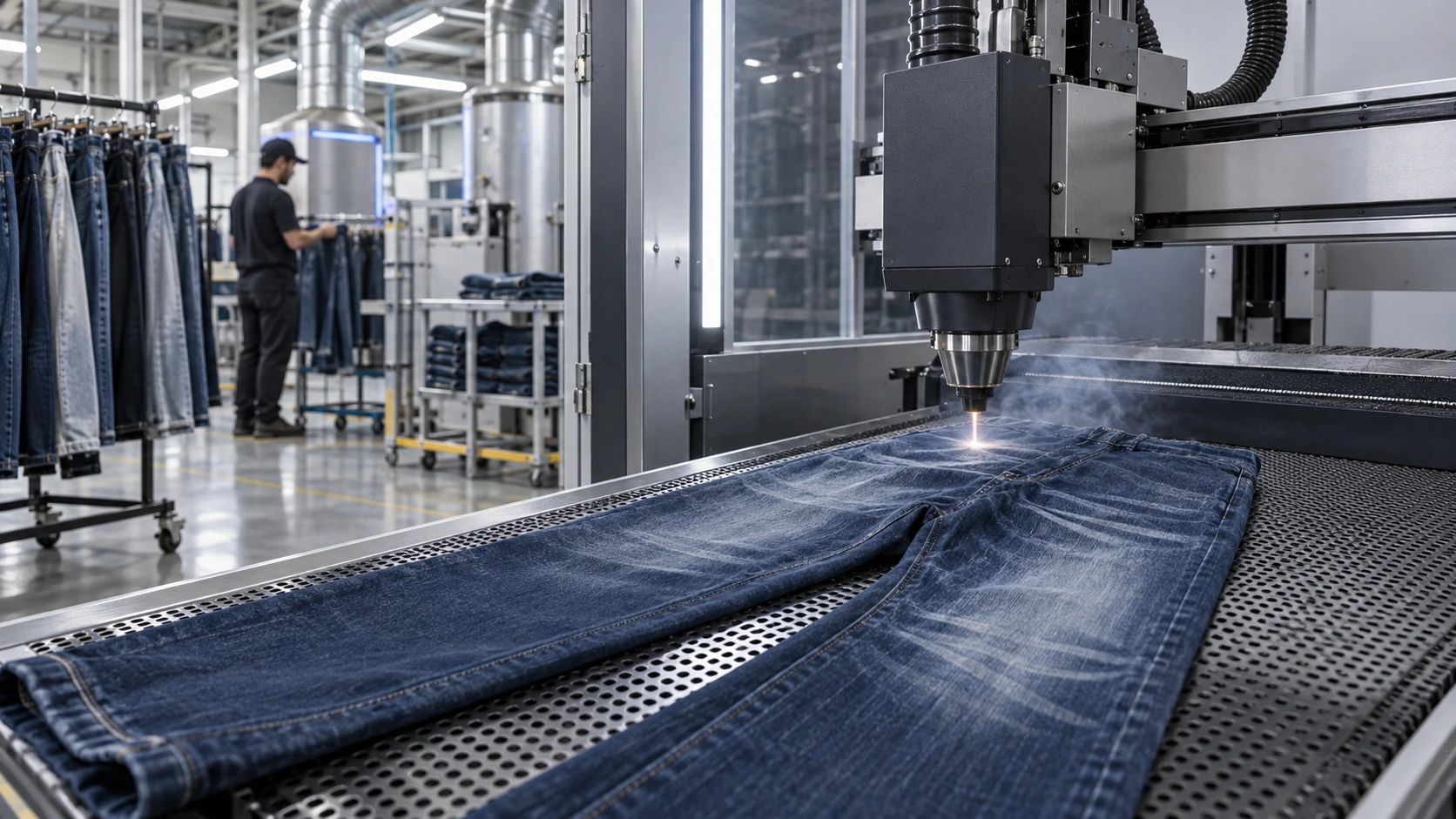
How Laser Finishing Works
Laser finishing uses a digitally controlled beam to modify selected garment areas. In practice, that allows manufacturers to create faded zones, worn-looking details or visual patterns with high placement precision.
This approach is especially useful when a brand wants the same effect repeated reliably across multiple production runs.
Because the design can be controlled digitally, factories can adjust appearance without relying entirely on manual distressing or more variable processes.
| Technology | Typical production role |
|---|---|
| Laser | Creates localised patterns, fading or design effects with digital precision |
| Ozone | Helps alter overall colour or fading effects through controlled process conditions |
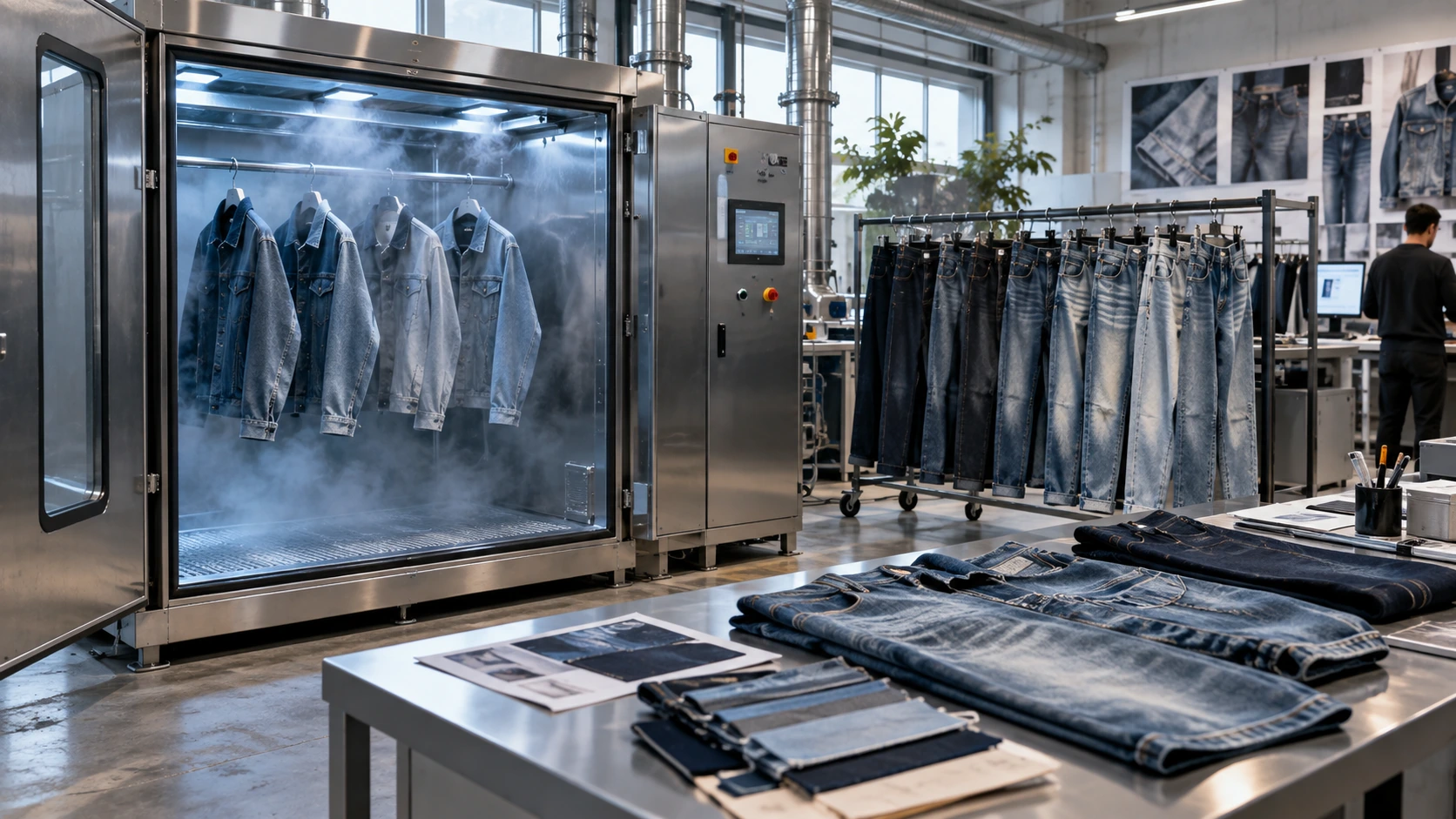
How Ozone Finishing Works
Ozone finishing is commonly used to alter garment colour or create faded effects. It has become especially well known in denim processing, but the wider lesson is that factories can use it as part of a more controlled finishing system.
Used correctly, ozone becomes one more programmable step in the garment recipe rather than an isolated experiment.
Why These Methods Matter
The main value of laser and ozone is not that they sound advanced. Their real value is better control. Factories can repeat a look more reliably, document settings more clearly and reduce the amount of trial-and-error needed to get the desired result.
That supports both product development and consistent bulk production, which is why these technologies keep attracting attention.
What They Do Not Solve
Neither laser nor ozone automatically makes a process sustainable or suitable for every garment. Factories still need to evaluate the full workflow, including chemistry, energy use, fabric response and the final customer requirement.
A good-looking technical process is only valuable if it works reliably at the right cost and with the right product outcome.
Relevance Beyond Fashion
Although fashion and denim often dominate the conversation, the deeper lesson matters for uniforms too. Factories increasingly want better control over how a garment feels, looks and performs from run to run.
Any finishing technology that improves process control and repeatability can eventually influence uniform sourcing, especially when buyers want consistent replacements or more specialised garment effects.
Laser and ozone matter because they turn garment appearance into something factories can control more precisely and reproduce more consistently.
Final Takeaway
Laser and ozone finishing are best understood as part of a broader digital finishing toolkit. They help factories turn visual and surface effects into repeatable process settings rather than relying only on manual judgement.
That makes them important not just as finishing machines, but as contributors to more controlled apparel production.
Frequently Asked Questions
Are laser and ozone only used for denim?+
They are strongly associated with denim, but the wider manufacturing lessons about process control and repeatability apply much more broadly.
Does laser finishing mean the garment is cut by a laser?+
Not in this context. Here the laser is used to create visual or surface effects on the garment, not to cut pattern pieces.
Why should a uniform supplier care?+
Because better finishing control can improve consistency, reorders and the way garments behave before decoration.
Need Help Choosing a Uniform?
Tell us your staff role, quantity and branding needs. We can help you compare practical uniform options for your team.
Discuss Your Uniform Requirements