

Polo Uniform Fit: A Checklist for Frontline Teams
Plan comfortable corporate polo uniforms for reception, sales and service employees with this fit, fabric and sizing checklist.
A frontline polo is judged at two distances: close up when an employee serves a customer, and across a room when someone needs to recognise the team. A clean colour palette helps, but a suitable collar, cut and fabric are what make the uniform wearable for a whole shift. Before ordering, separate the visual standard from the comfort needs of individual roles.
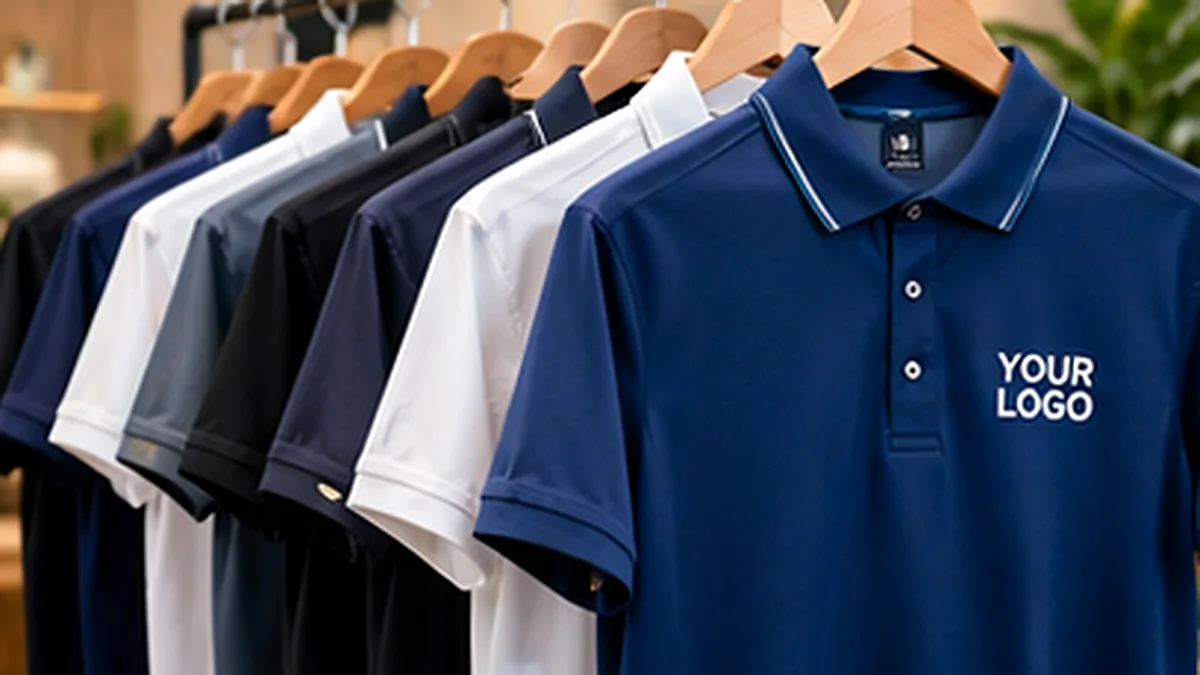
Define how employees spend their shifts
Reception staff often need a tidy shape that works with trousers, a belt and a lanyard. Retail staff may reach, bend and move stock throughout the day, while an outdoor promoter needs greater attention to heat and sweat. One matching colour can unify these roles without forcing everyone into the identical fit or fabric weight.
Write a simple role list and ask employees what bothers them about the current shirt: tight upper arms, collars that curl, long hems, visible sweat patches or fabric that feels sticky. Those observations are more reliable than choosing a uniform from its catalogue photo alone.
Select fabric by movement and care
Cotton-based polos can feel soft and familiar; polyester performance knits may dry more quickly after activity; blends can offer a balance of structure and care. Exact construction matters more than the generic fabric name. Ask about weight, breathability, opacity, stretch and the washing routine your team will actually follow.
For customer-facing staff, inspect the collar and placket after laundering a sample. A collar that keeps its shape is useful for a polished look. For employees standing beneath strong shop lighting, check whether the colour and fabric become unexpectedly translucent.
Test more than one person’s fit
A size chart is a starting point, not proof of fit. Compare chest, shoulder, sleeve and body length measurements to a current shirt that fits well. Give employees a sample across representative sizes, including those who prefer a looser silhouette. Ask them to raise their arms, sit and reach as they would at work.
A unisex cut can simplify stock management, but it may not suit every wearer. Depending on the available range, different cuts can share the same base colour and logo specification. Do not change a colleague’s requested size without checking the actual measurements.
Keep the branding simple
A small embroidered chest logo may work on a structured polo; a printed mark may be more appropriate for a larger design. Coordinate colours and logo contrast before decorating the shirts. Avoid placing thick graphics across areas that stretch repeatedly. If different outlets or departments need labels, decide whether these belong in a badge, on a sleeve or on the back.
Purchase checklist
| Confirm | Suggested action |
|---|---|
| Role and activity level | Separate desk, floor and outdoor use |
| Fabric and collar | Check washed and worn samples |
| Size distribution | Record actual measurements and sign-off |
| Branding | Agree on logo dimensions and placement |
| Repeat supply | Keep SKU, colour and approved artwork |
The most useful uniform is one a team will actually wear consistently. Review SingaporeUniform’s apparel services and JCP’s corporate uniform range when comparing suitable products and decoration options.
Frequently asked questions
Should every employee wear the same polo cut?
Consistency can come from colour, collar and branding while size and cut remain appropriate to individual staff.
Should we size up for comfort?
Not automatically. Compare real garment measurements and try on samples before changing sizes.
More on JCP services: JCP production methods and material guide. Specific fabric, sizing, stock and lead-time recommendations should be confirmed for your order.