

Embroidery or DTF for Polo Shirts: Which Should You Choose?
Both embroidery and DTF can work on company polos, but they do not create the same feel, cost structure or design result. The best choice depends on your artwork, garment type and how the shirt will actually be used.
In This Article
Direct Answer
Choose embroidery when you want a classic, textured and slightly more formal finish, especially for smaller logos on chest positions. Choose DTF when your artwork has gradients, fine colour changes or a larger graphic that would be difficult or expensive to stitch cleanly.
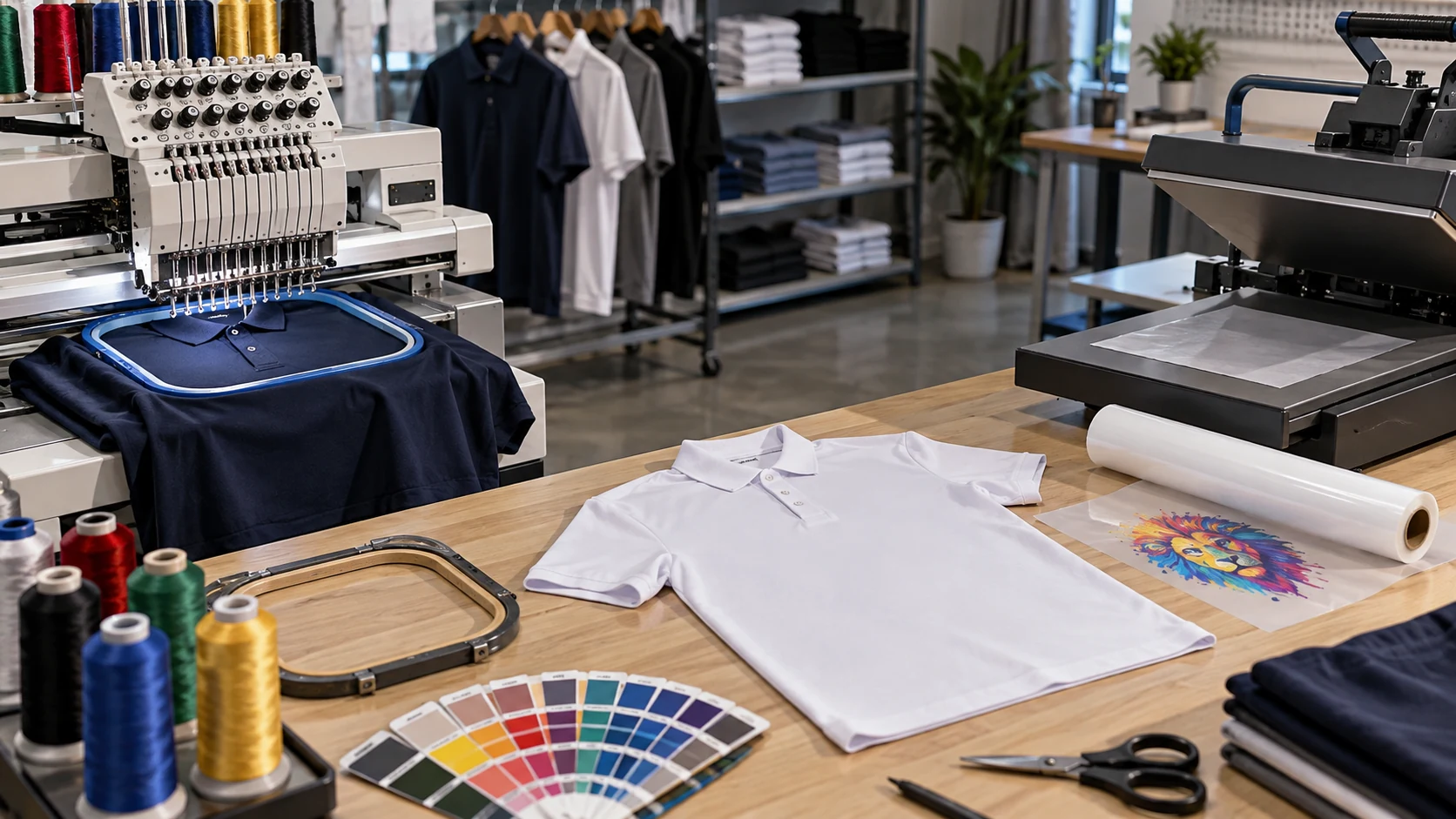
When Embroidery Usually Wins
Embroidery suits logos that are simple, compact and repeated over a long period. It works well for many corporate and service uniforms because the raised texture feels durable and established. If your team operates from places like Raffles Place, one-north or elsewhere in Singapore and you want a neat, standardised polo for regular wear, embroidery often feels appropriate.
When DTF Makes More Sense
DTF is stronger when the artwork contains multiple colours, soft shading or illustration-like detail. It can also be helpful when you want a larger front or back print without the weight and stitch complexity of embroidery. For campaign apparel, event crew shirts or temporary promotional polos, DTF can be the more flexible option.
| Factor | Embroidery | DTF |
|---|---|---|
| Best for | Simple logos and classic uniform looks | Detailed, colourful or larger artwork |
| Texture | Raised stitched finish | Smooth printed finish |
| Visual detail | More limited on tiny complex detail | Stronger for gradients and illustration-like graphics |
| Typical use | Long-term staff polos | Promotional, campaign or design-led polos |
Garment Feel and Practicality
Decoration is not only about appearance. Embroidery adds thread density and can feel heavier on lighter fabrics, while DTF leaves a smooth printed layer. Neither is automatically better. Think about where the logo sits, how long staff wear the garment, and whether heat, movement and comfort matter more than a premium stitched look.
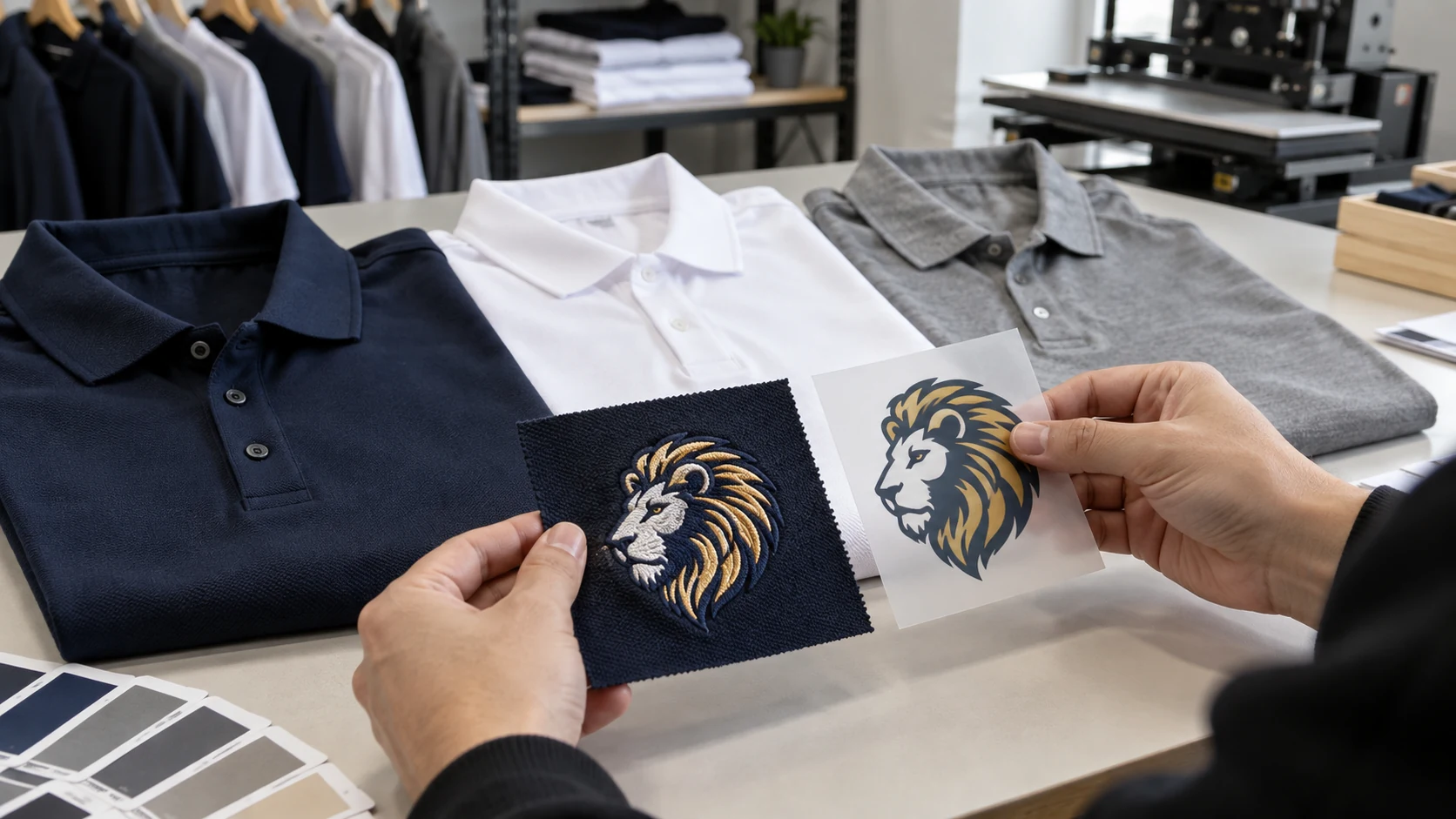
Cost, Sampling and Reorders
Small, simple logos can favour embroidery over time, while complex full-colour artwork can become more practical with DTF. Sampling matters because an on-screen file does not show thread thickness or print hand-feel. JCP's service range includes both embroidery and apparel printing methods, so it makes sense to test the decoration against the actual shirt before a larger run.
A Simple Decision Rule
If the logo is small, clean and long-term, start with embroidery. If the artwork is detailed, graphic or campaign-driven, start with DTF. Then sample both if the decision still feels close.
The right decoration method is the one that fits the artwork and the job. A method that looks good on a mock-up can still feel wrong once it is worn on a real polo in daily work.
Frequently Asked Questions
Does embroidery always look more premium?+
Not always. It often looks more formal and traditional, but a well-produced DTF graphic can be the better choice for the design.
Can DTF be used on polos as well as T-shirts?+
Yes, provided the shirt fabric and print placement are suitable.
Should I decide from a digital mock-up alone?+
No. A physical sample is much safer when appearance and comfort matter.
Need help comparing logo methods?
If you already have artwork or an existing polo design, use the contact page to discuss which customisation method is likely to fit the shirt and use case better.
Discuss Your Polo Design