

How Embroidered Company Shirts Build a Professional Image in Singapore
Embroidery can make a company shirt look established and consistent—but only when logo detail, stitch size, garment fabric and placement are planned together.
A uniform is part of the customer experience
For Singapore companies seeking a high-value uniform programme with efficient quotation and Malaysia-to-Singapore coordination, the company shirt is often seen before a sales conversation or service interaction begins.
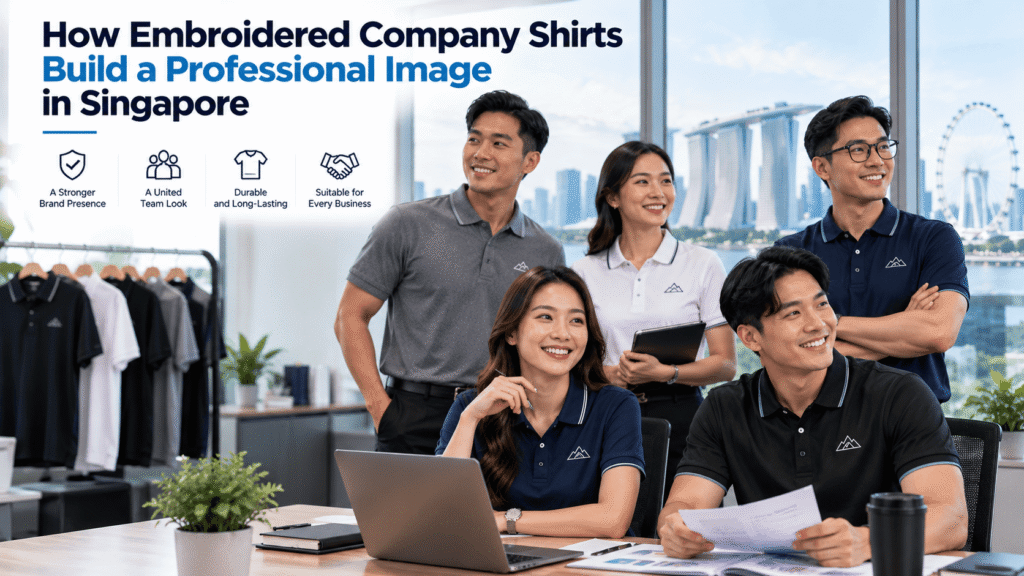
A controlled embroidered logo helps staff look like one team. It supports identification, makes uniforms easier to standardise for repeat orders and gives a tactile finish that many buyers associate with durable corporate wear. However, embroidery is not automatically the right answer for every graphic or garment.
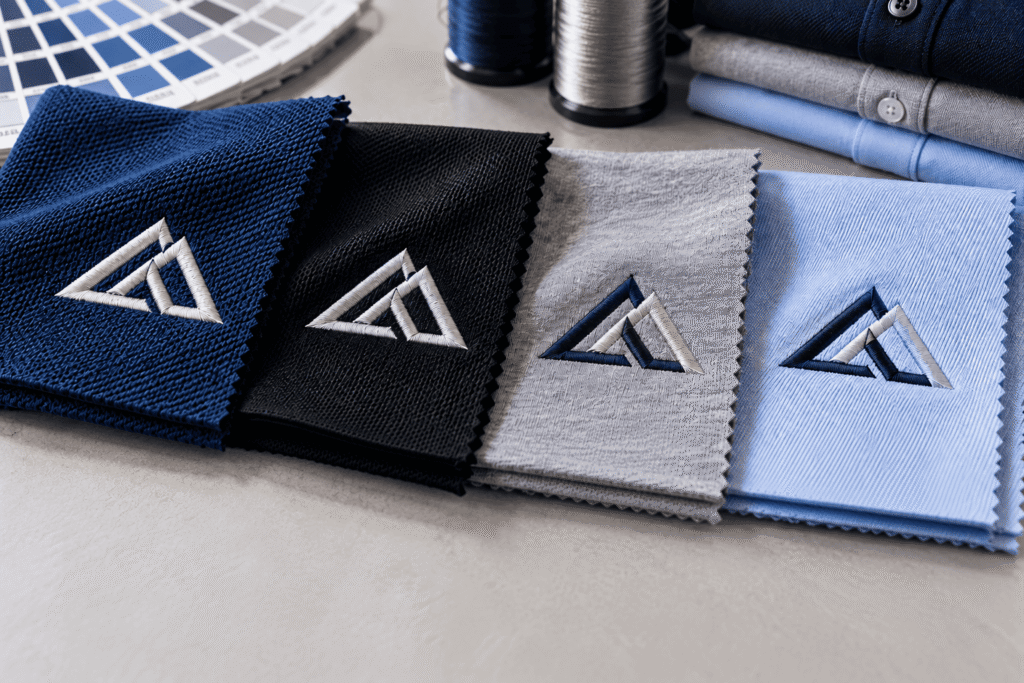
The best result comes from adapting the artwork for thread, choosing a stable placement and matching the stitch construction to the fabric. Simply sending a complex screen logo and asking for it to be “copied exactly” can produce small text, crowded borders or a stiff patch.
Quick buyer summary
Logo size
Set dimensions by placement and garment size; test small lettering before production.
Fabric choice
Use a garment stable enough for the planned stitch density and daily working conditions.
Repeatability
Record the approved embroidery file, thread references, position and sample for future orders.
How embroidery supports company image
Recognition: consistent logo placement helps customers identify staff quickly in retail, service, event and operational settings.
Perceived care: a clean stitch finish, balanced logo scale and suitable shirt create a more deliberate impression than a poorly positioned mark.
Uniform consistency: documented specifications help new staff and later branches receive shirts that match the established look.
Durability: embroidery can be a durable option when thread, backing, stitch density and garment care are appropriate. Durability still depends on correct production and washing practices.
Choose logo size by viewing distance
Left-chest logos are usually compact and should prioritise readability. Sleeves suit secondary marks or short department identifiers. Larger back embroidery can work for simple designs, but dense oversized stitching may feel heavy and can distort some garments. Ask the supplier to confirm the practical dimensions after reviewing the actual artwork.

Fabric selection changes the embroidery result
| Shirt material | Business use | Embroidery consideration | Buyer check |
|---|---|---|---|
| Cotton polo or tee | Office-casual, retail, events | Soft or lightweight knits can pucker under dense stitching | Fabric weight, stretch, stabiliser and wash care |
| Polyester performance polo | Outdoor, active and warm environments | Smooth technical fabric needs controlled tension and backing | Breathability, snag resistance and sample appearance |
| Poly-cotton shirt | Office, service and general uniform use | Often provides a practical balance of structure and comfort | Weave, colour, shrinkage guidance and placement |
| Woven corporate shirt | Formal front-of-house and office teams | Stable areas usually support crisp marks; seams and pockets limit space | Pocket relationship, placket clearance and inside finish |
Embroidery limitations buyers should know
- Very small text may close up or become difficult to read in thread.
- Fine gradients, photographic detail and complex shadows usually need simplification.
- Thread colours do not reproduce every screen or Pantone colour exactly.
- Dense, oversized logos can make lightweight fabric stiff, wavy or uncomfortable.
- Seams, pockets, zips and narrow sleeve areas restrict hooping and placement.
- The embroidery file is a stitch programme, not just an image conversion; stitch direction, underlay and density matter.
Prepare a quotation that can be priced correctly
A supplier needs more than a logo and total quantity. Share the garment type, colour, size breakdown, wearer environment, embroidery location, required dimensions, artwork file, packing method, delivery point and required date.
Quotation checklist
Approve the physical result, not only the screen preview
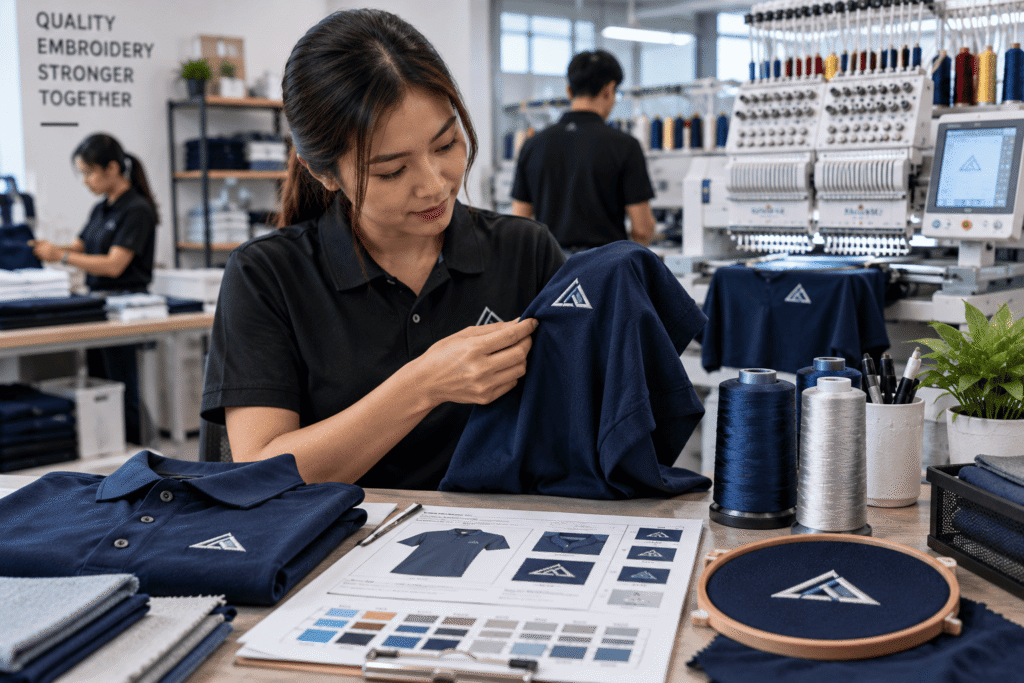
Digital approval checks spelling, proportions and thread mapping, but a stitched sample or sew-out reveals real density, edge quality, small text and fabric behaviour. For a new logo or important rollout, confirm whether a sample stage is appropriate before bulk production.
After approval, keep a record of the garment code, colour, logo width, thread references, stitch file version and placement measurement. This specification becomes the control point for repeat orders.
Use embroidery as a system, not a decoration afterthought
Embroidery can strengthen company image when the logo remains readable, the shirt supports the stitch work and every order follows the same approved specification. A professional result is less about adding the largest possible logo and more about proportion, consistency and suitability for the wearer’s job.
Frequently asked questions
What is the best size for a left-chest logo?
There is no single size for every logo or garment. The correct width depends on the artwork shape, text detail, shirt size range and placement. Ask for a recommendation based on the actual file and approve the scale before production.
Can every logo be embroidered exactly as designed?
No. Tiny text, thin lines, gradients and photographic detail may need simplification. A good embroidery setup protects the logo’s recognisable features within the limits of thread.
Which fabric is best for embroidered company shirts?
Structured polos, poly-cotton garments and suitable woven shirts are common choices, but the best fabric depends on work conditions, comfort, wash frequency and stitch density. Evaluate the garment and decoration together.
What should be kept for repeat orders?
Keep the approved garment code and colour, size chart, stitch file, thread references, logo dimensions, placement measurements and an approved physical sample or clear production record.
Prepare a clearer embroidery quotation
Send your logo, garment preference, quantity, size range, placement, delivery location and required date. Singapore Uniform can review whether embroidery is suitable and clarify the production specification.
Visit Singapore Uniform to request a quotationRelated Printing & Uniform Service Network
Choose the location or service that best matches your order and delivery needs.