

When Should Staff Wear Dry-Fit Instead of Cotton?
There is no single best shirt fabric for every team. Dry-fit and cotton feel different, wear differently and solve different problems, especially in Singapore's warm conditions.
In This Article
Direct Answer
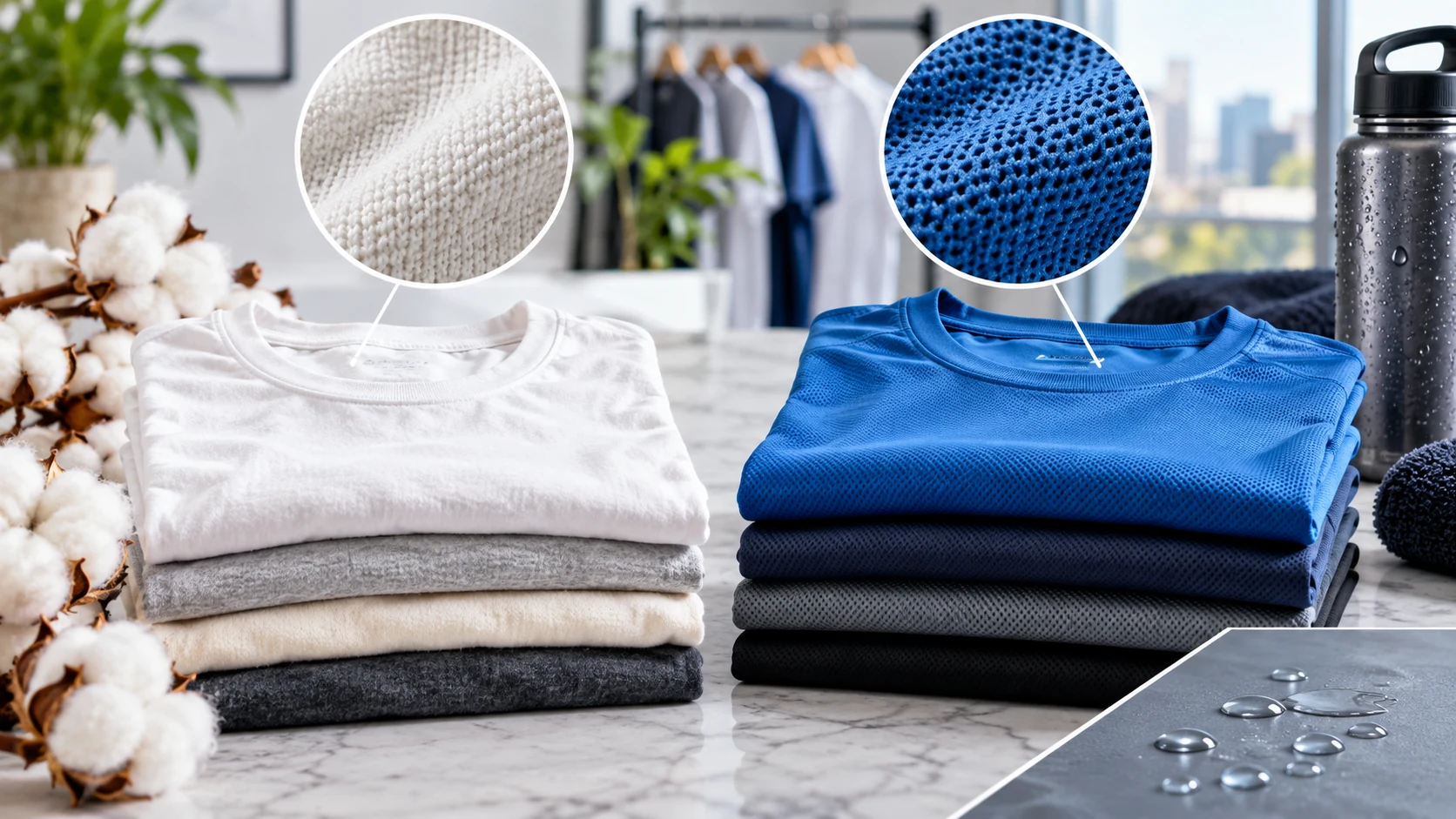
Choose dry-fit when staff move a lot, work outdoors, set up events or spend long periods in heat. Choose cotton when a softer hand-feel, more casual look or quieter fabric texture matters more than moisture management.

Where Dry-Fit Is Usually Better
Dry-fit helps in active roles such as delivery, setup crews, outdoor promotions and some operations work. It is also common for event teams, sports-related activity and high-movement roles where sweat control affects comfort. If your team spends time moving between loading areas, roadshows or field visits, dry-fit often earns its place.
Where Cotton Still Has an Edge
Cotton can feel more familiar and natural against the skin. It often suits casual retail tees, lifestyle-branded uniforms and situations where the visual texture of the garment matters more than performance. For some teams, especially where air-conditioned environments dominate the day, cotton remains perfectly practical.
| Question | Dry-Fit | Cotton |
|---|---|---|
| Heat and movement | Usually stronger | Depends on weight and knit |
| Hand-feel | More technical | Softer and more natural |
| Brand impression | Sporty / functional | Casual / classic |
| Typical use | Event, operations, active roles | Lifestyle, casual retail, office-casual tees |
Appearance, Comfort and Brand Fit
Performance is only one factor. Dry-fit fabrics can read as more athletic or functional, while cotton often feels softer and more relaxed. The uniform should still match the business image. A sales event, warehouse crew and boutique retail team may all make different decisions for valid reasons.
Think About the Job, Not Only the Weather
Singapore weather matters, but job type matters more. An indoor office team in a cool environment does not necessarily need the same fabric strategy as a roadshow crew in a public atrium or a team working near Tuas industrial sites. Choose fabric around activity level, environment and expected wear time.
How to Decide
If comfort complaints are about sweat and heat, test dry-fit first. If they are about stiffness, texture or overall look, cotton may be the better starting point. For many companies, a mixed system also works: one fabric for active roles, another for everyday front-facing roles.
Fabric choice is not a moral choice between premium and basic. It is a practical choice about how a team works and how a brand wants to be seen.
Frequently Asked Questions
Is dry-fit always cooler?+
It often handles moisture better, but comfort also depends on garment cut, fabric weight and working conditions.
Can cotton still work in Singapore?+
Yes. Many teams wear cotton successfully, especially in lower-activity or indoor roles.
Should one company use more than one fabric type?+
Sometimes yes, especially when different departments do very different jobs.
Unsure which fabric suits the job better?
The contact page is the right place to compare use cases, garment types and customisation needs before choosing a fabric direction.
Discuss Fabric Options