

Printed Tote Bags for Bras Basah and Bugis Shops: What to Specify
In the Bras Basah and Bugis area, books, design, shopping and visitor activities all create opportunities for useful merchandise. A printed tote can carry a purchase, hold an event programme or become an everyday bag after the visit. Before choosing colours, work backwards from what recipients will actually put inside it.
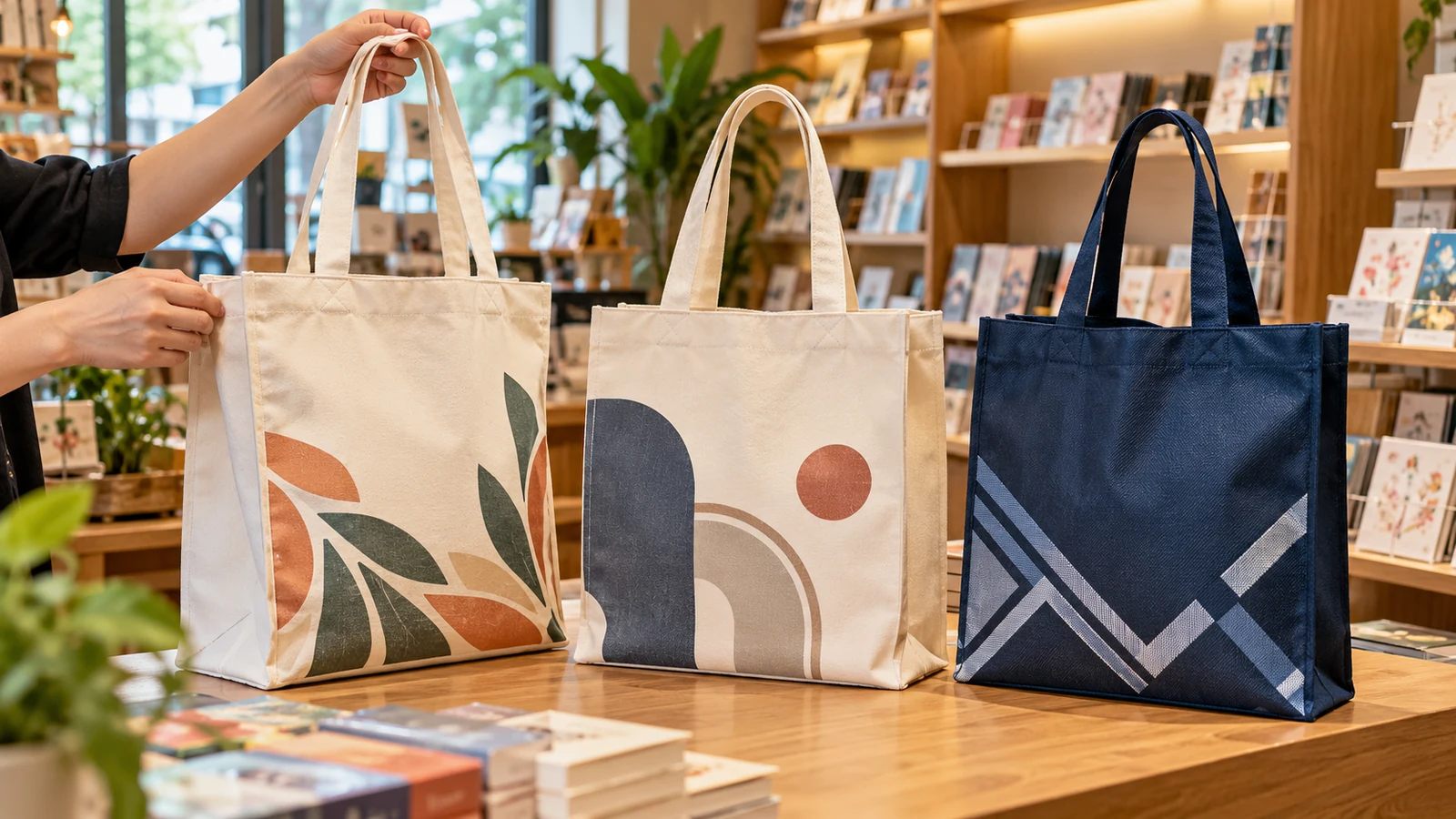
Decide what the bag must actually carry
A tote handed out with a lightweight leaflet has a different job from one carrying books, bottled drinks or boxed souvenirs. Begin with the heaviest plausible contents and their dimensions. Gusseted bottoms create useful depth, while flat bags pack neatly and can be economical for thin items. Choose handles long enough for the intended carrying style instead of copying another bag just because its photograph looks appealing.
Check whether a recipient will carry the tote over a shoulder, in a hand or together with several other purchases. A narrow strap can dig in when the bag is loaded. Ask for seam strength and handling samples without relying on unverified “heavy duty” marketing terms. A proper bag test includes a real load and a short walk, not simply placing something inside for a photograph.
Pick the material before planning the artwork
Cotton canvas has a familiar soft appearance and can complement lifestyle and bookshop brands, while non-woven polypropylene may offer a different structure and cost profile for giveaways. Fabric weight, thickness and colour affect both feel and printing choices. Sustainability claims need evidence about material content and real reuse rather than assumptions based on a green colour or a material name. Choose an option that customers are likely to keep and use.
For a boutique, a muted base fabric may make one-colour artwork look refined. For a busy event, colour coding and strong contrast may be more important than subtle detail. A sample is useful for examining creases, seam alignment and how the bag sits upright. Photograph the filled sample to see whether the design distorts when it is actually carried.
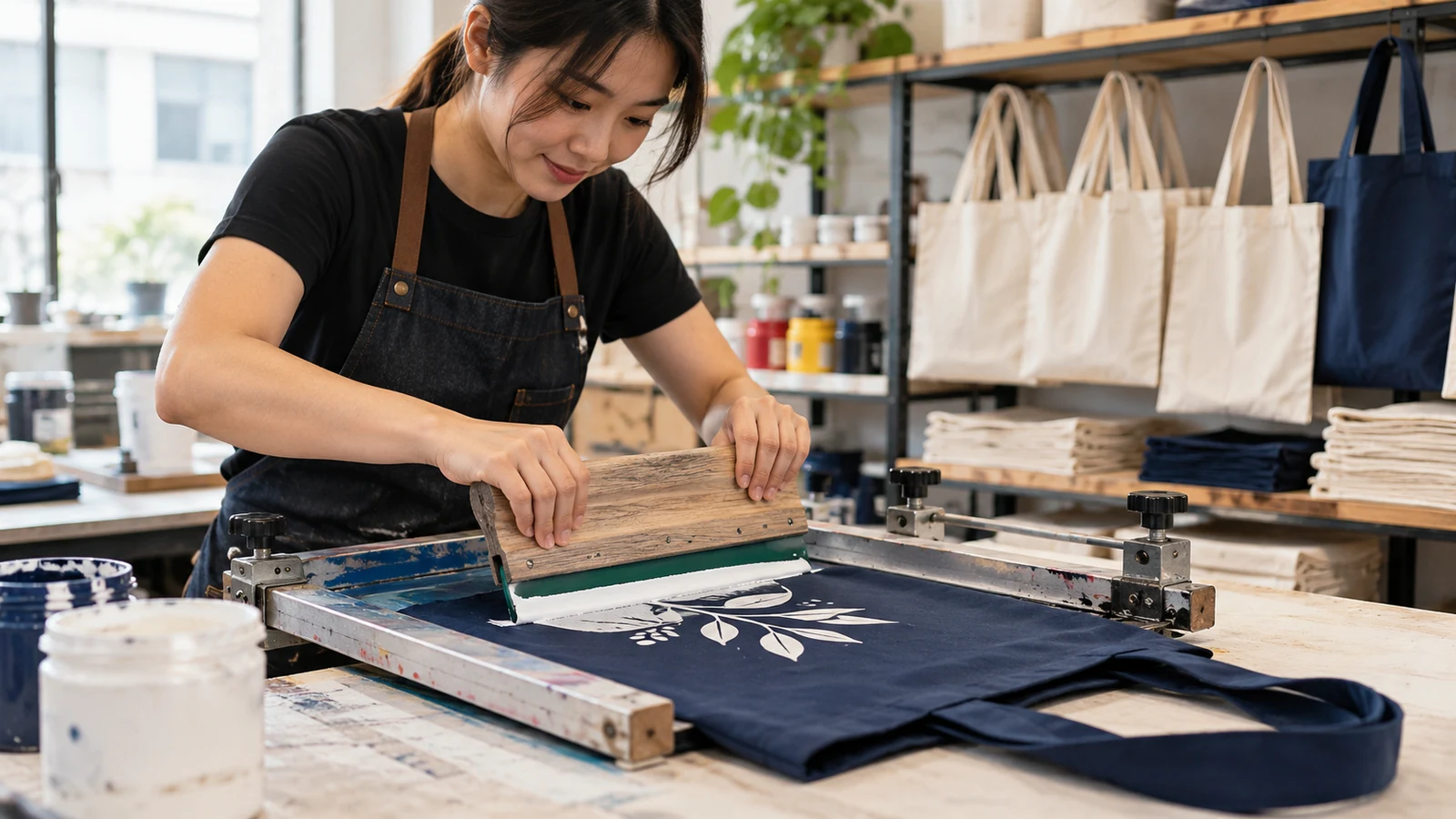
Keep the print inside the useful area
Design on the printer’s confirmed artwork rectangle, not across the whole bag mock-up. Leave clearance from side seams, gussets and the handle attachments. Fine text can become difficult to read when printed onto textured fabric, particularly when the tote is wrinkled. A single bold illustration or short brand name often performs better than a miniature brochure of services.
Print techniques vary by fabric and required colours, so provide the desired appearance and ask for a recommended production method. Artwork previews should show the real base colour, expected print size and whether one or both sides are decorated. If a QR code is essential, request a physical printed test and scan it under normal lighting. Do not assume a QR code that scans on a screen will work well on coarse fabric.
Budget for distribution, not only printing
The bag cost is only one line of a campaign budget; packing, bundling, transport and staff distribution all affect the experience. A bag that folds flat saves setup space at a crowded counter. If visitors collect other merchandise, leave enough room for everything to fit without crushing it. For staged giveaways, number the bundles or separate stock by design to simplify replenishment.
Consider how long the artwork will remain useful after an event. A design that refers only to one date may be less reusable than a timeless motif with a small removable insert. Store final artwork and colour specifications for future orders. A tote is most effective when customers continue to find a practical reason to carry it.
Think like a customer carrying books or retail purchases
In a cultural or retail district, a tote’s usefulness often depends on whether it can fit books and other flat merchandise without bending corners. A deep gusset may help with boxed goods but add bulk when bags are stored behind a narrow counter. Use the typical customer purchase as the test load rather than an idealized empty bag mock-up.
When the artwork is tied to a one-off market or exhibition, decide whether the bag should be date-specific or useful after the event. A timeless design with a separate insert can give staff more flexibility with remaining stock. Consider how sales assistants fold and hand over the bag during busy periods. A design that packs well is operationally valuable, not merely visually tidy.
A quick decision table
| Situation | Start with | Test or verify |
|---|---|---|
| Small books or flyers | Flat bag with readable front artwork | Test book corners |
| Boxed gifts | Gusseted bag with adequate base | Test handle load |
| Event giveaway | Pack-flat design | Check count and distribution space |
Frequently asked questions
Can a tote be printed on both sides?
Many designs allow it, but the availability and artwork area depend on the bag and production process.
Should a shop use a large QR code on a tote?
Only after a sample print has been scanned successfully on the actual fabric. Simple artwork tends to read more reliably.
Local context: Singapore Tourism Board – neighbourhood and visitor information. Product recommendations in this article are general purchasing considerations, not official requirements from that source.