

Fabrics & Comfort
Uniform Care Labels Explained: Laundry Symbols for Cotton, Polyester and Blends
A uniform care label is a small detail with a large operational impact. Employees often wash polyester polos, cotton shirts and blended workwear together, then discover that one item has shrunk, another feels stiff and a heat-applied logo has deteriorated. A useful care policy begins with the actual label on the garment, not a general rule printed on a noticeboard. The symbols communicate fabric and finishing limitations that should shape washing, drying and ironing decisions.
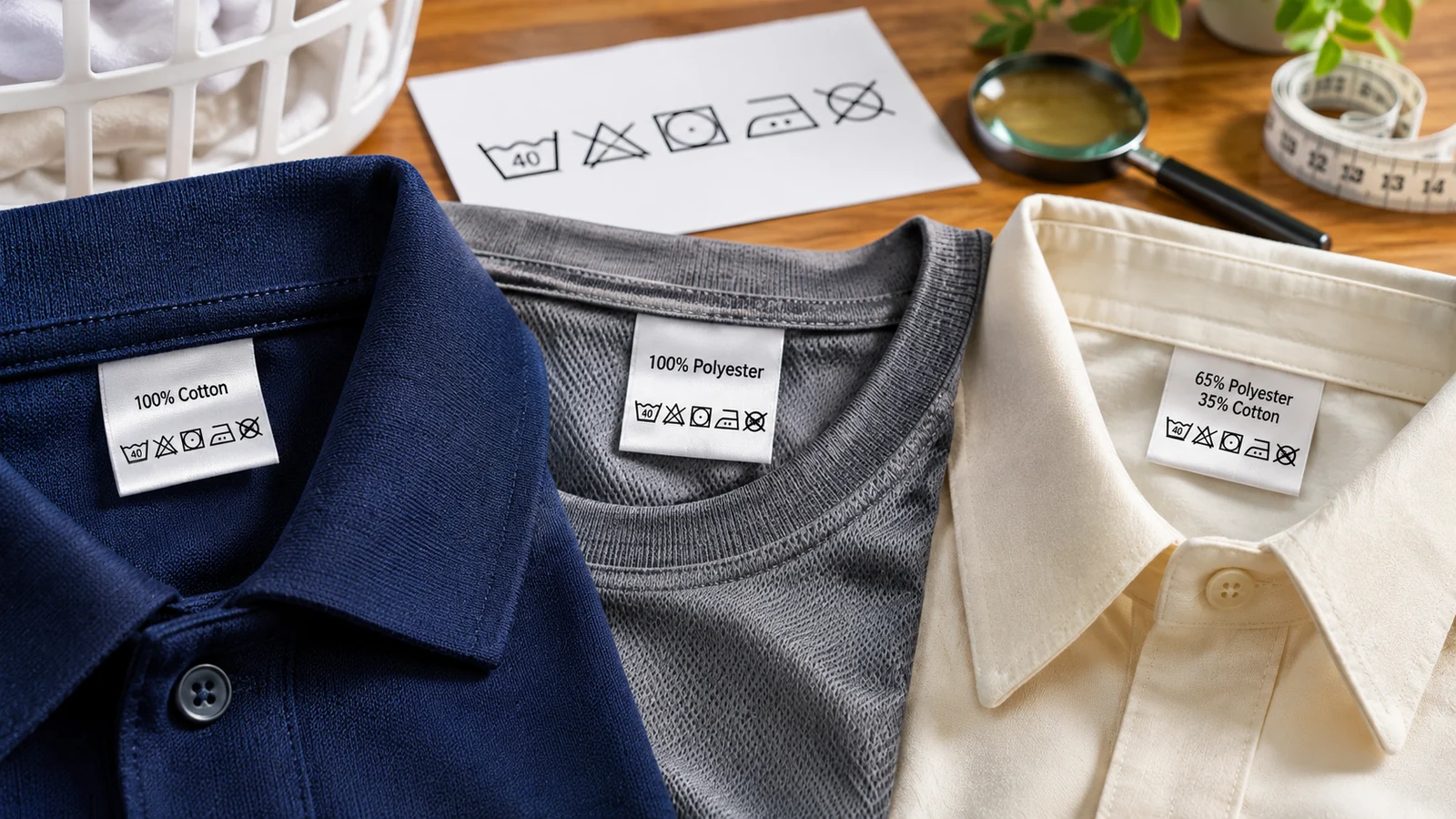
Read the entire label rather than one symbol
The washtub icon communicates the permitted wash process, while the number inside gives a maximum temperature rather than a temperature that must be used. A hand symbol suggests a gentler process; a line underneath indicates reduced mechanical action. Always read the drying, ironing and bleaching symbols as a set, because a cool wash does not imply that a hot tumble dryer is acceptable.
If the neck label is missing, check the supplier product information and decoration instructions before guessing. A staff handbook should describe the actual garment model or approved batch, not claim that every company polo tolerates identical treatment. A simple photograph of its sewn label can reduce misunderstanding when employees no longer have the original packaging.
For teams using several shirt styles, add the approved care instructions to a central ordering sheet. This is especially useful when replacing discontinued stock or adding a different fabric blend. One incorrect shared instruction can produce inconsistent shrinkage, faded panels or damaged logos across a uniform programme.
Cotton, polyester and blends behave differently
Cotton feels absorbent and familiar, yet many cotton constructions can shrink if exposed to excessive heat. Dark cotton may also show gradual colour loss after aggressive washing. Polyester generally holds shape well and dries faster, but high temperatures can damage finishes, set wrinkles or affect heat-applied decoration. Blends balance characteristics, though the percentage alone cannot predict every garment response.
Test the complete item including seams, ribs, buttons and branding. A cotton shirt with a contrasting polyester collar may behave differently from a plain cotton tee. A performance polyester shirt with mesh panels may also require gentler handling than a dense interlock knit. The final instructions should reflect the constructed garment, not only the dominant fibre printed in a catalogue.
Ask staff to avoid soaking mixed dark and light colours without checking colourfastness, especially during the first wash. If uniforms are issued in different colours, a short separation rule is more useful than a broad claim that any dye will remain unchanged indefinitely.
Protect embroidery, prints and heat-applied logos
Embroidery uses thread and a backing system; repeated high-friction washing may abrade raised stitches or stress the surrounding fabric. Heat-transfer graphics and some vinyl applications can be more sensitive to heat and abrasion. Printed areas should not be scrubbed directly with stiff brushes, and unnecessary high-temperature ironing across the design should be avoided unless the decoration supplier specifies otherwise.
Turning garments inside out often reduces rubbing against zippers and other hard items in the wash. Fasten hook-and-loop straps and separate garments with metal accessories where practical. These are simple risk controls rather than guarantees: artwork size, print chemistry and garment material still determine the actual durability of a finished uniform.
When ordering new team uniforms, request care advice for both the selected garment and the decoration method. JCP lists embroidery, heat press, silkscreen and sublimation among its apparel services, but final care requirements must be confirmed against the specific production combination.
Make drying decisions before issuing garments
Drying is often where an otherwise careful wash routine fails. Direct heat can distort elasticated cuffs, shrink some cotton garments and reduce the life of temperature-sensitive decoration. Line-drying in a ventilated, shaded area may be a sensible default when a label allows it, but wet garments should not remain bunched together in a laundry basket for long periods.
In shared staff accommodation or humid climates, plan drying capacity as carefully as washing frequency. A uniform that takes too long to dry may lead employees to use hotter settings than recommended. Offering more than one set per person can reduce the pressure to speed up drying through inappropriate heat.
If tumble drying is necessary, use only a cycle permitted by the garment label and document the setting. When a batch changes, test the new article rather than assuming it reacts exactly like an earlier supplier model.
Explain iron and bleaching symbols precisely
Dots on the iron icon denote heat limits, and a crossed-out iron means ironing should not be used. Staff may interpret a low setting as permission to iron directly over plastic-like lettering, which is not always safe. Show where ironing can be applied, whether a protective cloth is appropriate, and which decorative areas should be kept away from direct contact.
The triangle family concerns bleach. A crossed triangle indicates bleaching should be avoided, while other variants distinguish permitted types. Strong stain-removal chemicals can change both fabric colour and thread appearance even when the stain itself disappears. Patch-test an approved method on an inconspicuous area rather than applying a harsh treatment to the most visible chest panel.
For housekeeping, catering and outdoor teams, include a realistic stain response procedure. Prompt rinsing, approved detergent and supplier guidance generally offer a safer starting point than a last-minute chemical experiment.
Turn the care information into a usable staff routine
Good guidance is short enough for a new employee to follow. Separate the instructions into before washing, cycle selection, drying and finishing. Identify the few exceptions: a printed jersey, a cotton office shirt and a reflective work jacket may require different steps even when all carry the same company logo.
Issue a small care card alongside the first set, and keep a digital copy where staff can find it. The card should reference the garment style and date, so it can be updated when the organisation changes suppliers. Supervisors can also compare a trial-washed sample with the approved new garment to spot shrinkage or twisting before a large batch is distributed.
For a repeat order, ask the supplier whether the base fabric, dye, trims or print process has changed. Matching the previous care policy to the new specification is a practical part of quality control, not an administrative afterthought.
Before approving production
- Photograph the sewn-in care label on every approved garment model and store it with the purchasing record, not only the supplier catalogue description.
- Check washing and drying instructions for the garment and any print or embroidery before issuing a single policy for the complete uniform range.
- Trial wash a representative sample and compare collar, hem, colour and decoration with a retained unworn reference.
Frequently asked questions
Does polyester always need a cold wash?
Not always. Follow the specific label; lower temperatures are often preferred where they clean adequately, but the permitted maximum depends on the garment and finish.
Can I iron a printed uniform?
Use the garment and decoration instructions together. Avoid placing a hot iron directly on an unverified heat-transfer or vinyl print.
Why do uniforms shrink differently?
Fibre blend, knit structure, finishing and drying heat all matter. Two products with similar fibre percentages can still respond differently.
Should every staff member receive the same care card?
Use one shared card only when the garment models and decoration methods are compatible. List exceptions clearly.
Preparing a similar project? Confirm your material, artwork and sample requirements before ordering. For available apparel, print and display services, see the JCP printing service overview and request a project-specific quotation.