

Buying & Pricing
Corporate Gift Bottles: Coating, Logo Method and Sample Checks
An insulated bottle can be a useful corporate gift because people carry it into offices, meetings and daily travel. Yet a bottle that looks attractive in a catalogue may be awkward to decorate. Coated metal, brushed stainless steel and curved shapes all respond differently to printing, engraving and handling. The smartest buying decision begins with the actual bottle finish and expected use, then matches the brand mark to a suitable application method rather than choosing the cheapest logo option first.
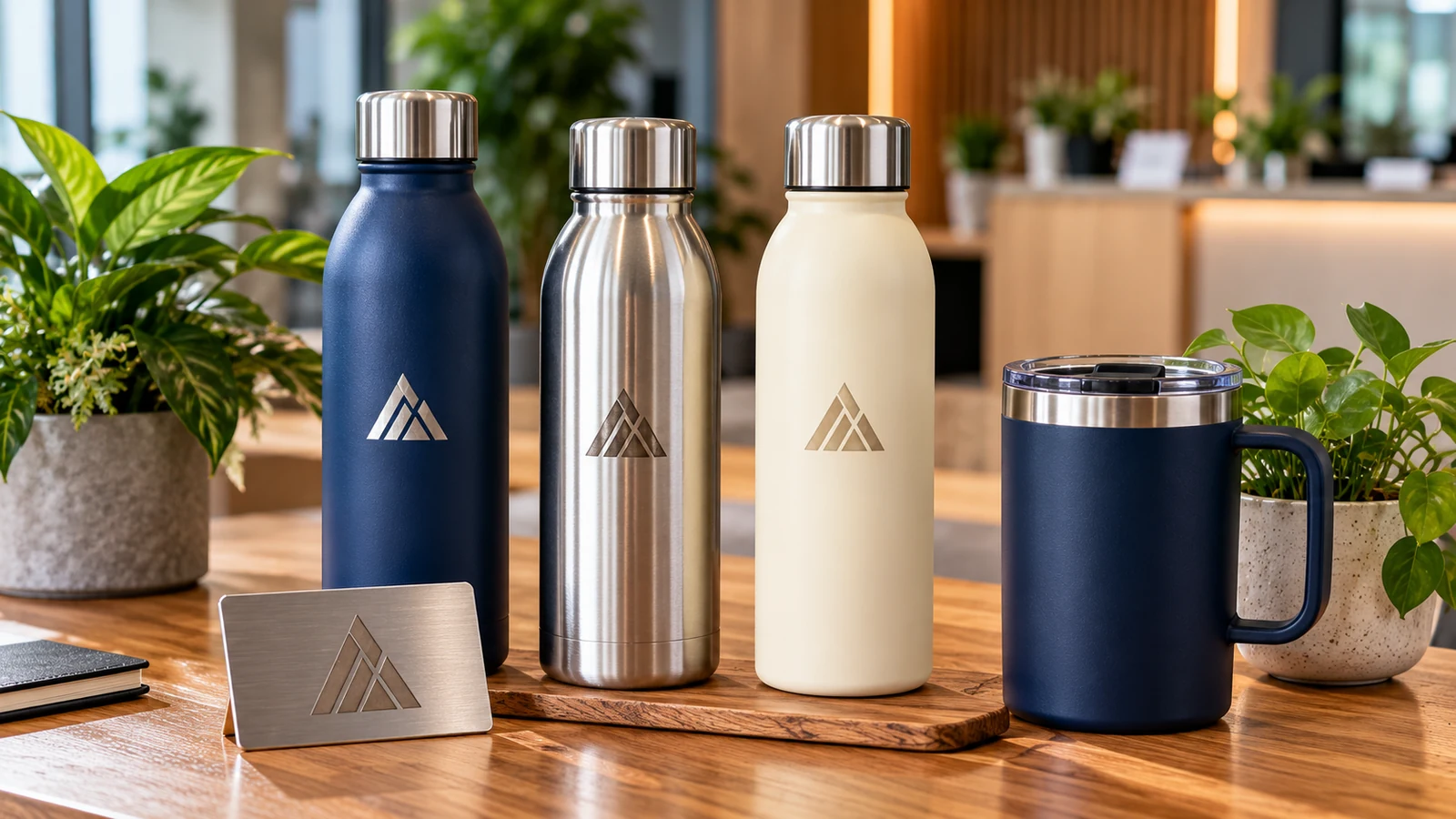
Match the gift to how people will use it
Think about the recipient’s routine. A commuter may prefer a leak-resistant screw cap, while desk-based staff may value a stable base and easy opening. A wide-mouth bottle may be easier to clean and fill with ice but less convenient for sipping while walking. Capacity is relevant, but an unnecessarily large gift can be heavy and difficult to fit in a bag. Ask for the actual dimensions, closure type and care guidance of the model being considered.
Function should also guide what gets branded. A beautiful large design adds little value if the recipient stops using the bottle because the lid leaks or the finish scratches easily. Handle a sample before approving the purchase, including testing how the cap feels and how the bottle fits common cup holders if that matters to the audience. Do not assume all double-wall bottles maintain temperatures for an identical period; performance depends on construction and should be supported by model-specific information.
Understand the surface beneath the decoration
Powder-coated bottles usually offer a coloured outer finish, while bare stainless steel presents a metallic surface with different reflectivity. Painted, textured and matte coatings can affect how transfers adhere and how a printed mark looks. Laser engraving on some coated models reveals the underlying material, but the resulting colour and contrast depend on the finish. Screen or pad printing may suit some bottle shapes, while other surfaces require a compatible transfer system.
Ask the supplier to recommend a method for the exact model, not just for stainless steel generally. A logo that looks sharp on a flat swatch may distort when wrapped across a tapered body. If an image includes many colours or tiny details, check whether the chosen process can reproduce them cleanly. Decoration durability should be tested under realistic washing and handling conditions; no printing process can be called universally dishwasher-safe without product-specific evidence.
Plan the logo’s visual size and location
The front-facing area of a cylindrical bottle is limited. A long wordmark may wrap out of view, making the first and last letters difficult to see from one angle. A shorter symbol, stacked lockup or discreet vertical placement can often improve legibility. Compare the design in a paper wrap at actual size and photograph the bottle from the front, side and three-quarter view before selecting the final location.
Consider how the bottle is held. Fingers, carrying straps and protective sleeves may cover a low-positioned logo. A mark too close to the shoulder can be affected by curvature, while one too near the base may be hard to see on a desk. When supplying gifts in multiple colours, plan contrasting decoration options that retain the same brand identity. A navy logo on a black surface may disappear even though the digital mockup looks sophisticated.
Test cleaning and handling before a bulk order
Recipients will wash and repeatedly touch the item. Ask whether hand washing is recommended, how the lid should be disassembled and whether abrasive cleaning could damage the coating. Printed or transferred marks may have different care needs from engraved designs. Perform a reasonable sample-use test: hold the bottle with damp hands, wash it according to the instructions and inspect the logo after several cycles. Record any visible changes rather than relying on a marketing phrase.
Care claims also matter when gifting bottles to an entire team. If the selected product cannot go into a dishwasher, that limitation should be communicated with the gift. Inspect sample lid seals, threads and contact surfaces for easy cleaning, and check whether replacement parts are offered. Do not promise a specific temperature-retention period, coating warranty or food-contact certification without documentation for the exact product being sold.
Evaluate packaging, names and distribution
A presentation box, simple sleeve or reusable bag changes the gift’s appearance and may protect the coating during delivery. Decide whether individual employee names are required: personalisation can improve perceived value, but it introduces additional spelling and allocation checks. Prepare the name list from a controlled spreadsheet, proof unusual spellings and match labels to boxes before dispatch. If the gifts are for clients, avoid adding personal data that would be visible during transport.
Bulk packing should be considered when reviewing quotes. Ask whether the quoted price includes the chosen bottle, logo decoration, packaging and delivery arrangement, and confirm order quantities by colour. JCP’s published printing services demonstrate wider branding capabilities, but that general page does not verify the availability or decoration options of any particular bottle. Request the precise bottle specification and sample before making product claims.
Approve a reference sample for every colourway
A digital render is useful for initial positioning, but final approval should include the actual coated or uncoated surface with the chosen logo process. Examine the result in ordinary light, check edge sharpness, compare position with the approved measurement and verify that a seam or curve does not interrupt the mark. Review any personalised text carefully. If the order spans multiple bottle colours, approve a representative physical decoration for each version rather than assuming all finishes behave identically.
Store the approved artwork version, decoration size, chosen product model and any care instructions with the purchase record. Future orders may use different production lots or finishes, so a photograph alone should not stand in for the technical specification. The best corporate bottle is one that is pleasant to use, simple to recognise and dependable enough that recipients actually keep it in service. Branding quality follows from that practical foundation.
Frequently asked questions
Is laser engraving always more durable than printing?
It can be a robust option on appropriate materials, but results depend on the coating and product. Ask for a sample and care guidance rather than making a blanket comparison.
Can a full-wrap design be used on any insulated bottle?
No. Tapers, seams and handle attachments can limit wrap coverage. Confirm the printable area and method for the specific bottle model.
Should every bottle colour use the same logo colour?
Not necessarily. Different backgrounds may need adjusted thread or ink contrast to preserve legibility and brand consistency.
What should be included in a gift quotation request?
Specify bottle model or preferred features, quantity, colour mix, artwork, personalisation requirements, packaging, destination and requested delivery date; ask the supplier to confirm availability and suitable branding methods.
Preparing an order? For garment, artwork and print specifications, consult JCP’s official printing-service information and request a quotation for the exact item and quantity.