

Oxford vs Poplin Corporate Shirts: Fabric Choice for Daily Office Uniforms
Compare Oxford and poplin shirts for office uniforms by weave, drape, climate, care, logo decoration and reorder consistency.
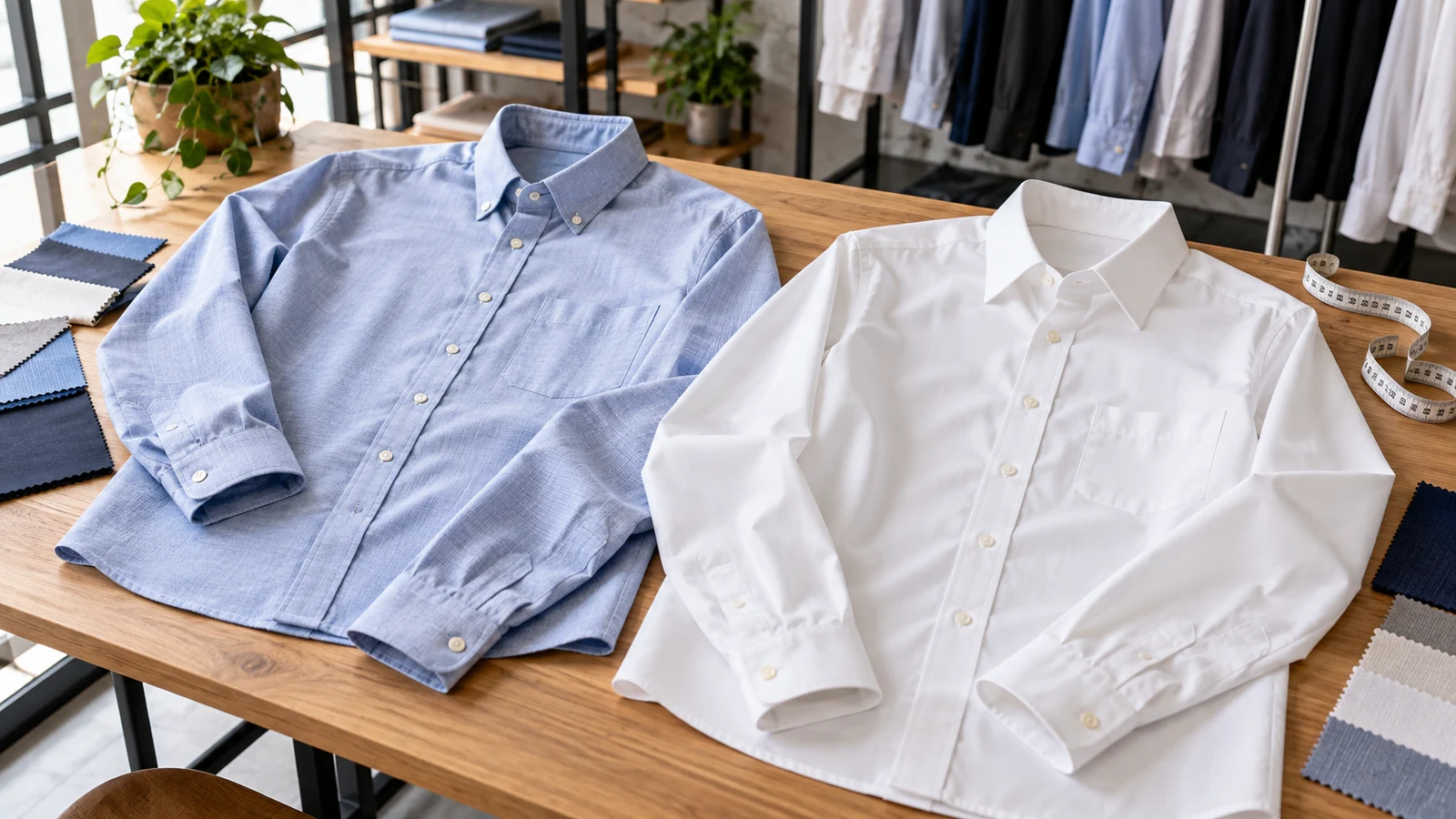
Two business shirts can look nearly identical in a product photograph and still behave very differently through a working week. An Oxford shirt usually shows a more textured weave and a relaxed character, while poplin tends to appear smoother and crisper. For a team order, that difference influences comfort, ironing, logo presentation and the impression staff make at reception or during customer meetings.
The best uniform is not automatically the softest or most formal garment. It is the one that fits the working environment, can be reordered consistently and remains presentable after repeated laundering. Before selecting a colour from a screen, evaluate a physical sample under workplace lighting and have more than one employee test the fit.
Start with the weave, not the name
Oxford cloth often uses a basket-like weave that creates a visible texture. Depending on the yarn and finishing, that texture can help the shirt look less severe than a very smooth business shirt. Poplin generally uses a plain weave and a finer, flatter face. Neither term guarantees cotton content or an exact thickness, so confirm the actual composition and weight of the specific item offered.
A purchasing team might choose Oxford for customer-facing staff who alternate between desks and warehouse walk-throughs, but favour poplin for formal front-desk roles. Hold both fabrics up to natural light, bend a sleeve and check opacity before treating a supplier description as a full specification.
Think about working conditions
A crisp poplin shirt may suit a cool indoor office yet reveal creases quickly during commuting or frequent reaching. Textured Oxford can disguise some small wrinkles, although heavier versions may feel warm in a humid environment. There is no universal winner for tropical use: fibre blend, weave density, finishing and ventilation all affect the experience more than the label alone.
Ask staff what happens during a normal shift: extended sitting, lifting cartons, travelling between sites or working outdoors. Test a sample after two washes, then compare how quickly it dries and how much pressing it needs. A shirt that requires special care becomes a recurring operating cost.
Compare shape and fit across sizes
A shirt that looks sharp on one model can pull across another employee’s shoulders or balloon around the waist. Assess collar stand, shoulder seam, arm mobility, sleeve length and the lower hem, especially for people who tuck their shirts in. A fitted shape is not necessarily more professional when it restricts movement or shows stress lines around the buttons.
Record the actual flat measurements rather than relying on S, M or L labels between brands. If the uniform order includes both men’s and women’s cuts, test each pattern separately. Give staff a small choice of sizes and note their approved selections for simpler future reorders.
Choose logo decoration for the fabric
Embroidery provides texture and a classic branded finish, but dense stitches can pucker fine or lightweight shirting if the logo is too large. A print may suit fine detail or smaller quantities, although application temperature and placement must match the garment. The proper method should be decided after the shirt fabric is chosen, not treated as a last-minute artwork option.
A small left-chest symbol often has greater longevity than a complicated multi-line mark. Request a logo proof at actual size and place it on the relevant shirt sample. JCP lists embroidery and apparel-printing methods in its current service range, making it possible to compare treatments without changing the uniform concept.
Build a practical colour plan
White and pale blue project a familiar formal look, but sweat, makeup, ink marks and frequent washing can reveal themselves quickly. Dark navy may conceal some stains yet attract visible lint. A coloured shirt should also provide enough contrast for a name tag or logo without forcing the brand to use an awkward thread or print colour.
Pick one core shirt shade and one approved alternative before inviting personal preferences. Photograph the samples in the actual office, warehouse or reception. Keep the approved fabric reference, supplier code and decoration specification together so later hires receive garments that look like the original batch.
Calculate lifetime convenience
The initial garment price is only one part of a uniform budget. Add the time required for ironing, replacement rates, colour consistency, size exchange and any special washing instructions. A lower unit cost loses its advantage if shirts become uncomfortable or difficult to maintain after a few weeks.
For a fair comparison, run a small wear trial using Oxford and poplin samples of similar colour and weight. Ask wearers to assess comfort, creasing and fit after several shifts. Finalise the result against the cost of the full issue, including spare shirts and future recruits.
A fair sample test
If procurement must choose between two affordable shirt ranges, invite three employees with different job routines to wear them on separate normal shifts. Record whether collars stay neat, whether cuffs become uncomfortable and whether shirts need extensive pressing before the next day. Compare results alongside the full quantity cost, not only the price of one showroom sample.
Give the test a clear pass-or-fail decision: acceptable fit after movement, no unexpected fabric distortion, readable logo proof and replenishable colour. If the trial shows different strengths for different job roles, a shared corporate identity can still be maintained through approved variants.
At a glance
| Option | What to consider | Use or action |
|---|---|---|
| Oxford | Textured, relaxed appearance | Office and mixed-duty teams |
| Poplin | Smooth, crisp appearance | Formal reception and businesswear |
| Either | Composition and weight vary by product | Confirm with physical samples |
Questions buyers often ask
Which material is cooler?
Neither weave name alone determines coolness. Compare actual fabric weight, fibre content and ventilation, then have staff try samples in their usual working conditions.
Can both be embroidered?
Yes, often, but finer poplin can need careful backing and a restrained stitch area. Ask for a production sample rather than assuming every logo will translate equally.
Should we use one fit for everyone?
Usually not. A consistent colour and branding standard can coexist with different approved cuts, provided fabric and finish remain closely matched.
A considered shirt programme begins with real samples and ends with a simple reordering record. If your team needs to compare formal shirts with polos or other workwear, review the available corporate-uniform selection and discuss fabric and logo proofs before purchasing. Consistency is easiest to achieve when comfort, appearance and replenishment are planned together.