

Raglan vs Set-In Sleeves: Designing Team Shirts That Move Well
Learn how raglan and set-in sleeve construction changes fit, seam visibility and team-shirt artwork.
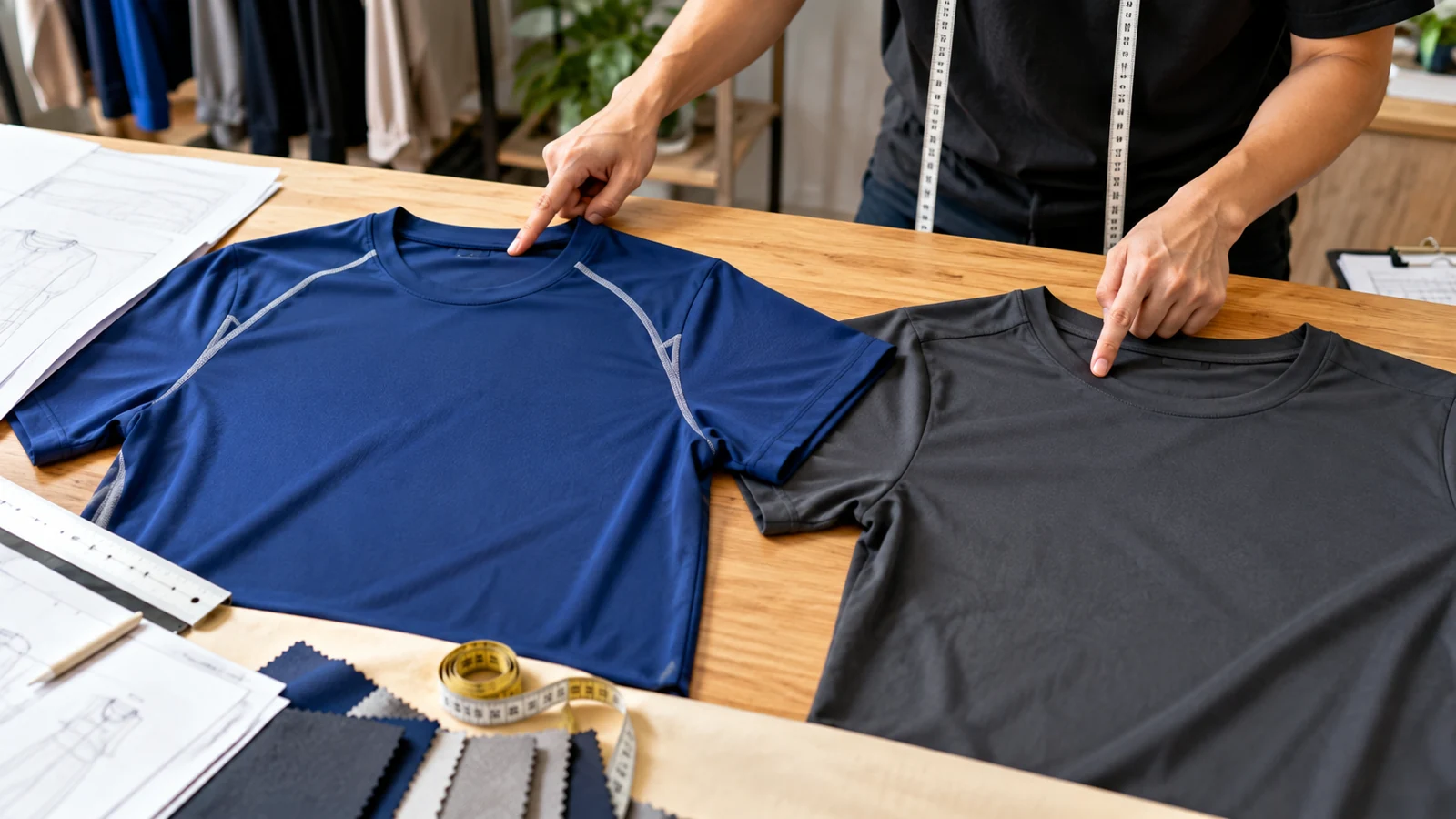
The shoulder is one of the busiest parts of a working or sports shirt, yet sleeve construction often gets less attention than the colour scheme. Raglan and set-in sleeves can create noticeably different silhouettes and artwork boundaries. Choosing between them means looking at movement, fit and branding space together rather than declaring one cut universally more comfortable.
The point of a good uniform specification is to reduce uncertainty for buyers and make daily wear comfortable for the people who receive it. Compare samples in the workplace, and separate requirements that are essential from preferences that can change. Clear documentation helps prevent a beautiful mockup from becoming an inconsistent or difficult-to-reorder product.
Learn what the seam actually changes
A set-in sleeve normally joins at a seam near the shoulder point, creating the familiar T-shirt silhouette. A raglan sleeve extends diagonally toward the neckline, moving the seam away from the shoulder point. Neither guarantees a looser fit or better ventilation; those outcomes depend on pattern dimensions and fabric. The construction does, however, influence the visual panels available for contrasting colours.
Place both shirts flat and identify the seams before discussing designs. If the brand artwork uses shoulder blocks or diagonal stripes, it may be easier to follow the raglan lines. For a simple left-chest logo, a set-in sleeve may give a more familiar, uninterrupted shape.
Test reach and range of motion
Staff who frequently reach above shoulder height, lift boxes or demonstrate exercises should try sample garments during realistic tasks. Raglan seams can suit certain movement-focused patterns, but a well-cut set-in sleeve can also feel comfortable. The key factors are armhole depth, sleeve width, fabric stretch and overall ease, not just the seam name.
Observe whether the hem rides up and whether fabric bunches under the arm. Repeat with the exact sample size staff would select. A shirt that works during a stationary fitting may feel restrictive after half an hour of movement, so it is worth documenting feedback before ordering.
Work with the seam when placing artwork
A large print extending across the sleeve and chest can distort where panels meet. For raglan shirts, diagonal seam lines may visually interrupt lettering or geometric graphics. For set-in shirts, designs placed too near the sleeve cap can wrap unexpectedly. Ask for a production mockup showing front, back and side angles.
Keep critical wording a safe distance from seams. If the team wants a dynamic full-colour look, sublimation and full-uniform customisation options can be explored for suitable fabric and production methods. Do not assume every print technique produces the same result on seams or dark materials.
Choose colour-blocking with a purpose
Contrast sleeves can help differentiate volunteers, departments or team roles, but too many panels can make a design busy. A raglan shirt naturally highlights diagonal colour changes. A set-in shirt tends to communicate a more classic sports silhouette. Pick one visual hierarchy so the logo, staff role and colours are not all competing for attention.
Try the design at actual shirt scale, not just on a full-screen desktop preview. Stand several metres away and check whether the important mark remains identifiable. Photograph a sample in both sunlight and indoor light, particularly when working with saturated blues and reds.
Compare fabric and stitching quality
Construction is not separable from fabric performance. Stretchy knits can recover well but may reveal puckering if seams are poorly handled. Heavier cotton can provide structure while feeling warmer in active use. Look at thread tension, seam allowances, fabric grain and whether panels twist after washing.
Turn a sample inside out to examine the shoulder and underarm join. Wash it according to the care label and measure it again. Significant twisting, differential shrinkage or uncomfortable stitching should trigger a discussion with the supplier before the artwork and bulk order are signed off.
Document the style for replacement orders
When a team adds new members, a different sleeve pattern is instantly noticeable even if the colour is close. Record the model, pattern type, approved colour blocks, sizes, print dimensions and care notes. If the supplier proposes a replacement, compare samples side by side.
A good ordering pack includes front and back mockups, a photograph of the actual sample and approval notes about the seam position. These small records reduce confusion when different staff members order replacements several months later.
Four details to confirm before ordering
| Item to check | Why it matters |
|---|---|
| Seam shape and mobility | Agree on the final specification and check a physical sample where practical. |
| Artwork safe zones | Agree on the final specification and check a physical sample where practical. |
| Panel fabric and wash sample | Agree on the final specification and check a physical sample where practical. |
| Replacement model code | Agree on the final specification and check a physical sample where practical. |
For a quotation, prepare the intended quantity, preferred size or format, available artwork, colour direction and expected date of use. Ask the supplier to identify which decisions are fixed and which are still assumptions. Where a sample is needed, plan enough time to review it before final approval instead of compressing all checks into the final production week.
Frequently asked questions
Do raglan sleeves always increase mobility?
No. Movement depends on the whole pattern, fabric and fit.
Can I print across a raglan seam?
Sometimes, but seam transitions can interrupt artwork and should be evaluated in a physical sample.
Which sleeve works best for corporate wear?
Both can work; choose based on the role, visual direction and garment quality.
Make the next order easier
If you are comparing options for an upcoming order, review the available garments and product styles alongside the relevant service information, then request a specification-based quotation. A shortlist supported by samples will usually lead to a better outcome than ordering solely from a catalogue image. For more uniform buying advice, you can also browse SingaporeUniform.com.