

Embroidered Polo Logos: Placement and Stitching
Choose the right logo size, position, stitch detail and fabric for a professional embroidered corporate polo.
A neat embroidered logo can make an ordinary polo feel like a company uniform. Yet even a well-designed mark can look untidy if it is too dense for the fabric, sits too close to a seam or becomes hidden when staff wear lanyards. Embroidery planning should therefore start with the garment and wearer, not just a logo file.
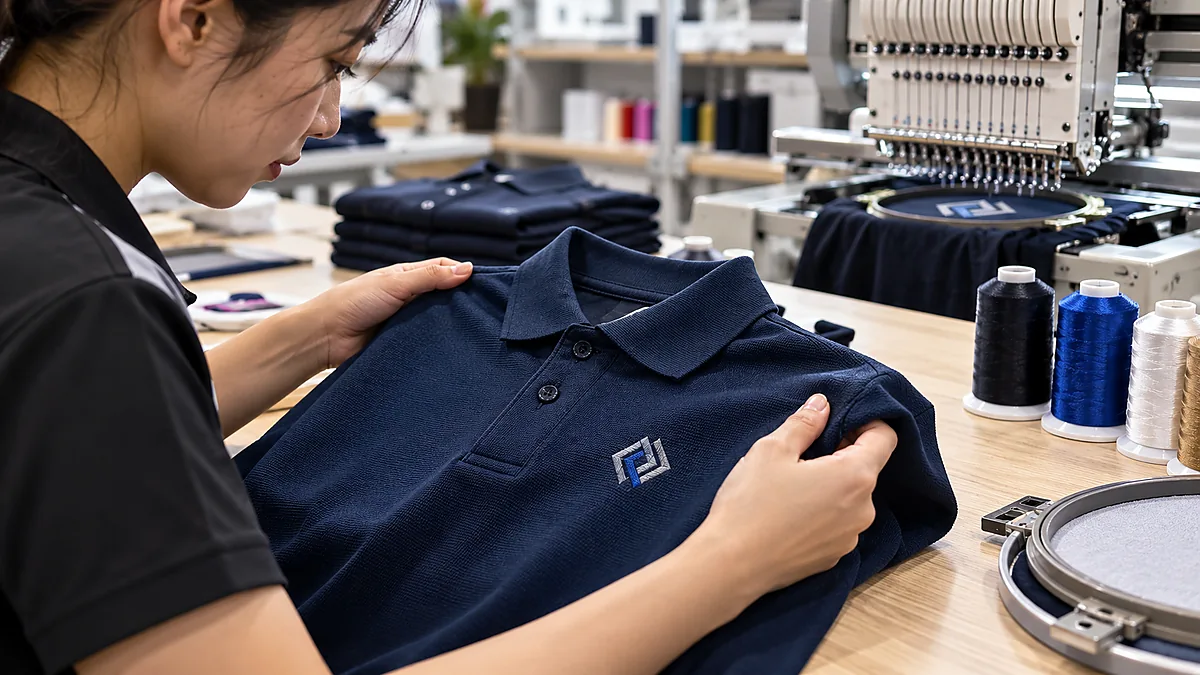
Choose the logo location around real use
The left chest is a common position for a compact business mark, but it is not mandatory. If employees wear badges, radios or aprons, the mark may be obstructed. Check the design while the shirt is worn, buttoned and untucked or tucked according to policy. Marking an approximate spot on a flat shirt can be misleading because the fabric shifts on the body.
A sleeve logo can be useful for a secondary mark, while a large back identity may be more appropriate for a printed application. The strongest placement is usually the one customers can see clearly without forcing the logo to compete with a pocket or the collar placket.
Simplify small details before digitising
Embroidery recreates a design using thread rather than ink. Fine outlines, small negative gaps, tiny captions and delicate gradients may need adjustment so the result remains legible. A skilled operator converts the mark into an embroidery stitch file and decides stitch directions, density and underlay. A graphic’s appearance on screen does not reveal those production decisions.
Provide the logo in vector format if you have it, and tell the supplier which elements must remain exact. A simple flat mark with clear edges is often easier to reproduce than a logo with several hairline outlines. If the original has a very small tagline, compare a version without the tagline rather than attempting to force unreadable text into thread.
Different polos respond differently
Piqué polo fabric, smooth polyester interlock and softer blended knits do not behave identically under dense stitching. Dense embroidery on thin stretchy material can produce a stiff patch or puckering around the edges. Stabiliser choice, hooping, stitch count and fabric construction all affect the result. Examine a decorated sample on the actual shirt style, not a generic fabric swatch.
Pay attention to thread colour against the fabric in indoor and outdoor light. Navy-on-black combinations can be subtle to the point of disappearing. High contrast is valuable when the uniform needs quick staff identification.
What to confirm on a sample
| Inspection | Why it matters |
|---|---|
| Chest placement on multiple sizes | Position can appear different on small and large garments |
| Outline and lettering readability | Tiny details can merge when stitched |
| Puckering and backing comfort | Dense logos may distort lighter fabrics |
| Thread colour under normal lighting | Brand colours and contrast must remain usable |
| Laundry response | The stitching and garment should remain tidy after care |
Keep the approved recipe for reorders
Record the supplier’s stitch file reference, thread selections, garment SKU, logo width and position. Ordering ten extra polos months later becomes much easier when the original specification is available. Ask how the embroidery will be sampled and what constitutes an approved logo, especially when the company has strict visual identity rules.
Read JCP’s embroidery service overview and explore SingaporeUniform before requesting a sample and quotation. This is a good purchase to specify carefully because the logo can stay on staff clothing for a long time.
Frequently asked questions
Does embroidery work on every lightweight polo?
Not necessarily. Fabric stability and logo stitch density need to be checked together.
Can a complex photo-style logo be embroidered exactly?
Photographic gradients usually require simplification or another decoration method. Check a sample at the intended size.
More on JCP services: JCP production methods and material guide. Specific fabric, sizing, stock and lead-time recommendations should be confirmed for your order.