

Embroidered or Woven Patches? A Tuas Workwear Decision Guide
Tuas combines different manufacturing and industrial operations, making repeatable workwear identifiers a practical issue. When a team orders jacket or shirt patches, tiny artwork details can affect whether a department mark remains clear. The choice between embroidery and woven construction should be made at the intended finished size.
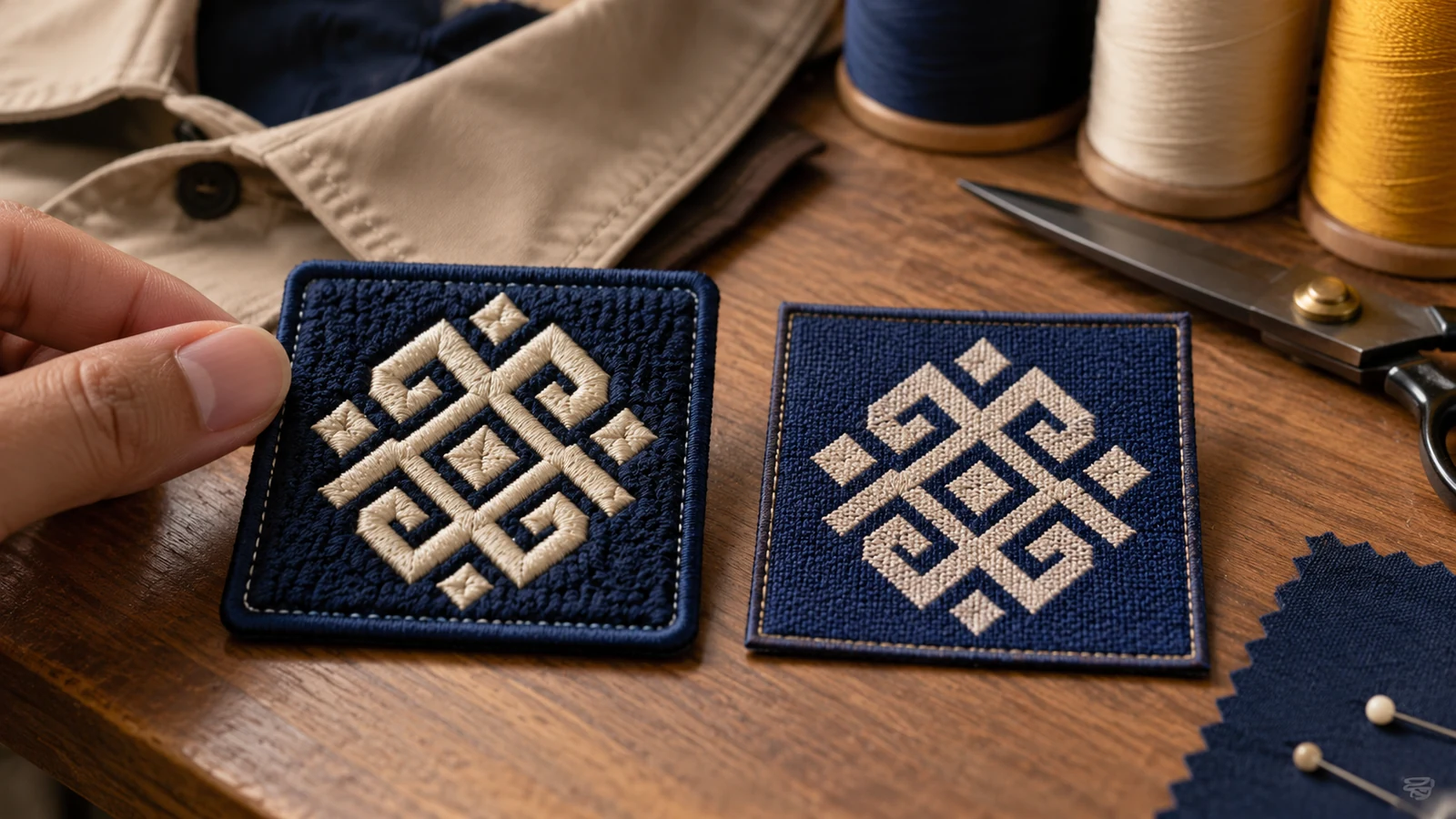
Understand the surface difference
An embroidered patch builds its picture from raised thread stitches, making simple shapes and strong borders feel tactile. A woven patch uses finer interlaced threads, which can reproduce tighter lines and small details more smoothly. Neither method is universally better: it depends on the artwork and the distance from which it must be recognised. Start with the actual logo, not an attractive sample using a completely different design.
Fine wording, small symbols and tightly spaced strokes are warning signs for conventional embroidery. On the other hand, a bold crest may look excellent with the depth of embroidery even when a woven patch could produce it more precisely. A proof should show both colour contrast and edging. Do not approve from a screen image alone because thread thickness and fabric texture change the result.
Select a sensible size and attachment
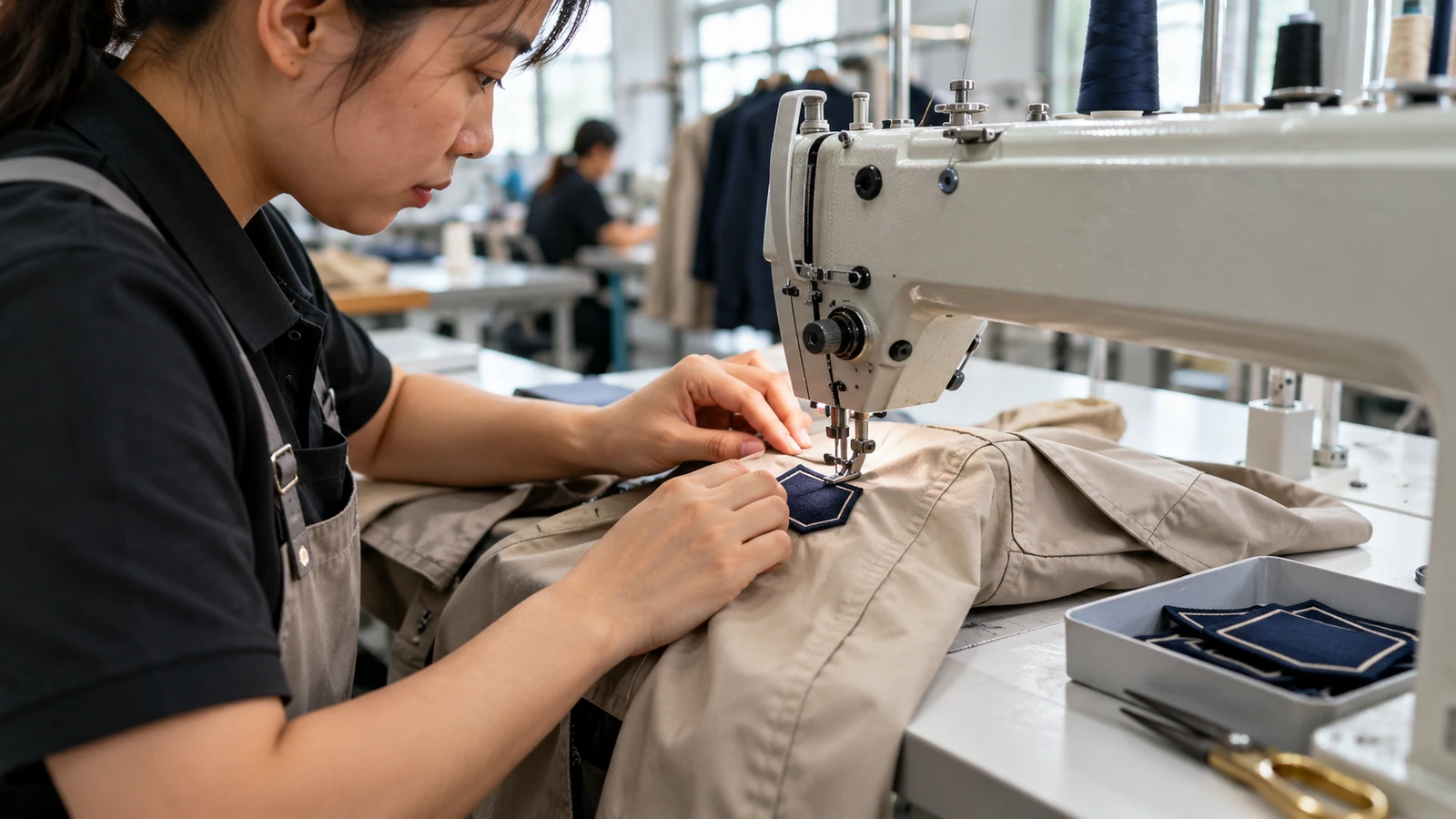
A cap, jacket sleeve and front chest panel provide very different amounts of flat working area. Ask for the intended placement dimension before shrinking artwork to fit. Sewing gives a durable mechanical attachment when correctly matched to the garment, while hook-and-loop systems can be useful for approved changeable identifiers. Heat-bonded backings may be available, but their suitability depends on garment fabric, washing and the patch specification.
Check the back of any jacket before allowing needle holes through a protective membrane or lining. On technical garments, decoration can change water resistance and may affect product performance. For uniformed teams with department changes, decide whether names or roles need to be removable. A patch plan should describe not only appearance but also what happens when a garment is washed, repaired or reassigned.
Build artwork for thread, not pixels
Convert gradients and shadows into a small palette of deliberate solid colours, where appropriate. Give letters breathing room, simplify tiny borders and look for places where adjoining colour areas may blend together. Supply vector artwork if it exists, plus a clear reference image for colour intent. Ask the decorator to confirm the smallest reliable details for the proposed patch size.
Approving a mock-up on a computer is an intermediate check, not the final one. Look at a sewn or woven sample under ordinary workplace light, and compare it against the garment fabric. A high-contrast border can stop a dark patch disappearing into a dark jacket. If the design is meaningful only when enlarged on a monitor, it is not yet ready for a small uniform patch.
Plan wear, laundering and replacements
A patch has to survive the same daily routine as its host garment. Record how often the uniform is washed and whether staff work against straps, harnesses, desks or warehouse racks that may rub the patch edges. Position patches away from friction points when possible. Strong stitching around a border is useful, but it still needs occasional inspection.
Keep a record of the approved size, thread colours, border finish and garment location. Without that specification, repeat orders can drift into visibly different styles across departments. Order enough spare patches to address replacements, while checking that older and newer batches look consistent. Uniform consistency is mainly a documentation problem after the first design is finalised.
Tuas workplaces need identifiers that stay consistent
JTC identifies the Tuas estate as a location for industries including general manufacturing, precision engineering and oil and gas. That diversity means patches might appear on an office visitor jacket, a production-team shirt or a non-protective outer layer. Establish the garment purpose first, especially where regulated safety attire must be kept distinct from corporate identity clothing.
Where shifts and teams change frequently, a consistent department identifier can be more useful than a decorative crest. Keep separate artwork files for departments and store their approved thread or woven colour references. Ask whether a removable attachment is appropriate for the garment, and do not alter certified protective workwear without approval. A clear specification saves the next purchasing officer from guessing at the previous order.
A quick decision table
| Situation | Start with | Test or verify |
|---|---|---|
| Bold crest | Embroidered patch | Review raised thread and border |
| Detailed logo | Woven patch | Check tiny type at final size |
| Changeable role marker | Compatible removable patch | Check permitted attachment and safety requirements |
Frequently asked questions
Can patches be applied to a waterproof jacket?
Sometimes, but needle holes or heat can compromise its protection. Confirm the garment construction and approved application method first.
Which finish handles small text better?
Woven construction often supports finer detail than embroidery, but the sample must be checked at actual size.
Local context: JTC – JTC Space @ Tuas. Product recommendations in this article are general purchasing considerations, not official requirements from that source.