

How to Choose Sticker Material for Food, Retail and Delivery Packaging
A sticker that works perfectly on a dry cardboard box can fail on a chilled bottle, oily takeaway pack or reusable container. Before choosing finish or shape, choose the face material and adhesive for the surface and environment.
In This Article
Direct Answer
Choose sticker material by exposure: moisture, oil, refrigeration, heat, handling, surface texture and how long the label must remain attached. Paper is economical for dry indoor packaging; synthetic films are usually safer where water, condensation or repeated handling are expected.
For food packaging, material performance is only one part of the job. Singapore Food Agency labelling requirements still apply to prepacked food.
Paper Labels: Best for Dry, Controlled Conditions
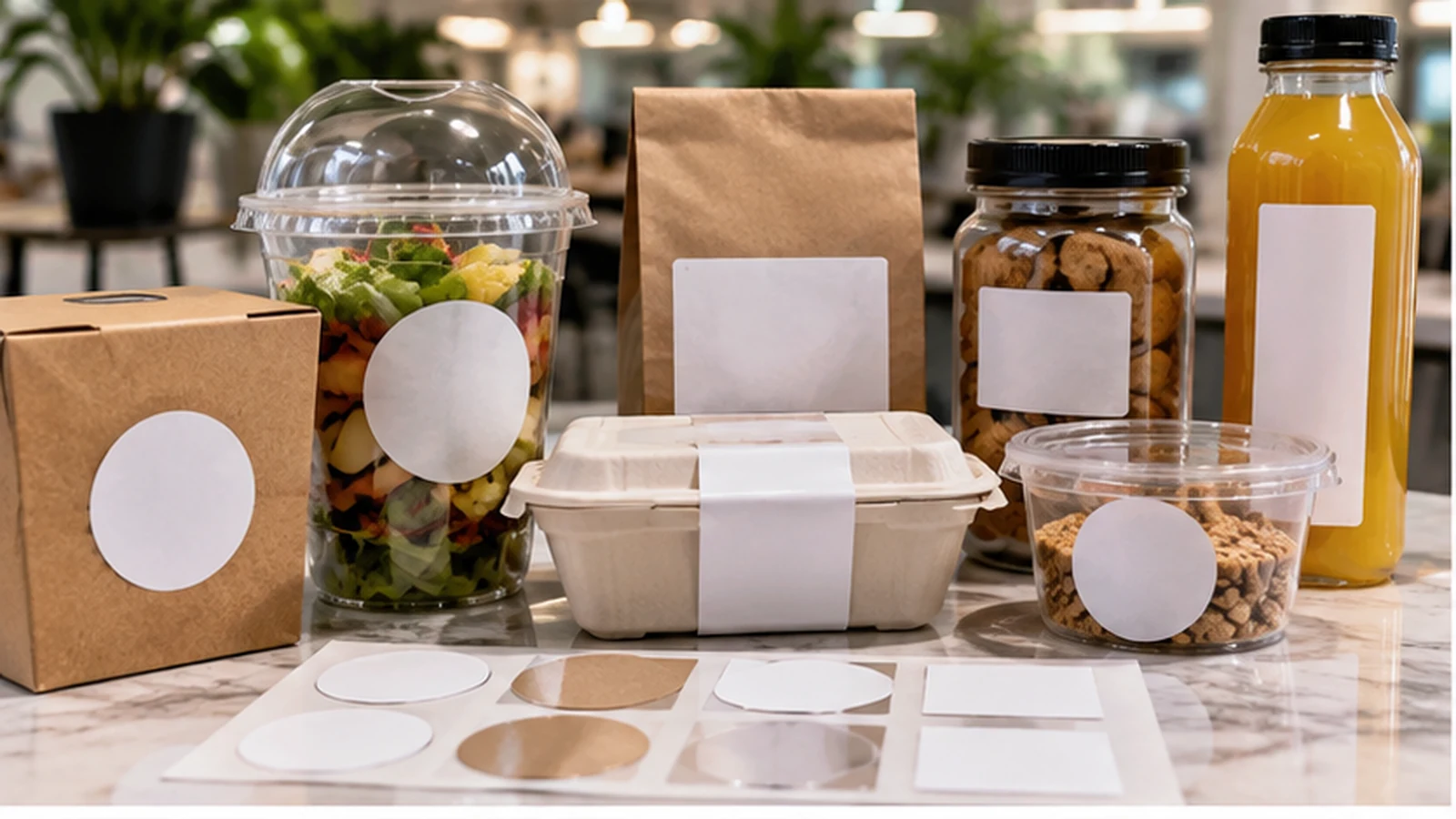
Paper labels are often the simplest option for cartons, paper bags, dry jars and short-life retail packaging. They print well, are easy to write on and can look premium with the right stock.
The weakness is exposure. Condensation, splashes and oil can soften the face material or cause edges to lift. Do not assume a laminated paper label automatically behaves like a true synthetic film in wet use.
Synthetic Labels: Better for Moisture and Handling
Polypropylene-type synthetic labels and similar films resist water better than ordinary paper and are useful on chilled drinks, bathroom products, delivery containers and packaging that may be wiped.
Adhesive still matters. A water-resistant face stock can fail if the adhesive does not bond well to a curved, textured or cold surface. Always test the complete label construction on the real package.
| Use Case | Good Starting Material | Main Test |
|---|---|---|
| Dry carton / paper bag | Paper label | Adhesion to fibre and clean removal if needed |
| Chilled bottle / condensation | Synthetic film | Wet adhesion and edge lift |
| Oily takeaway packaging | Oil-resistant synthetic option | Oil exposure and handling |
| Temporary retail promotion | Removable label | Residue after removal |
| Reusable container | Durable removable / suitable synthetic | Repeated handling and cleaning conditions |
Food Labels: Separate Printing Choices From Compliance
Singapore's Singapore Food Agency states that prepacked food sold in Singapore must comply with the Food Regulations. Its current guidance also says sticker labels can be used for mandatory English labelling information when the sticker is firmly attached and does not cover other required information.
That means a beautiful label that peels off in refrigeration can become more than a cosmetic problem. The print supplier can help with material choice, but the food business remains responsible for ensuring the required information is present and compliant.
Permanent, Removable or Repositionable?
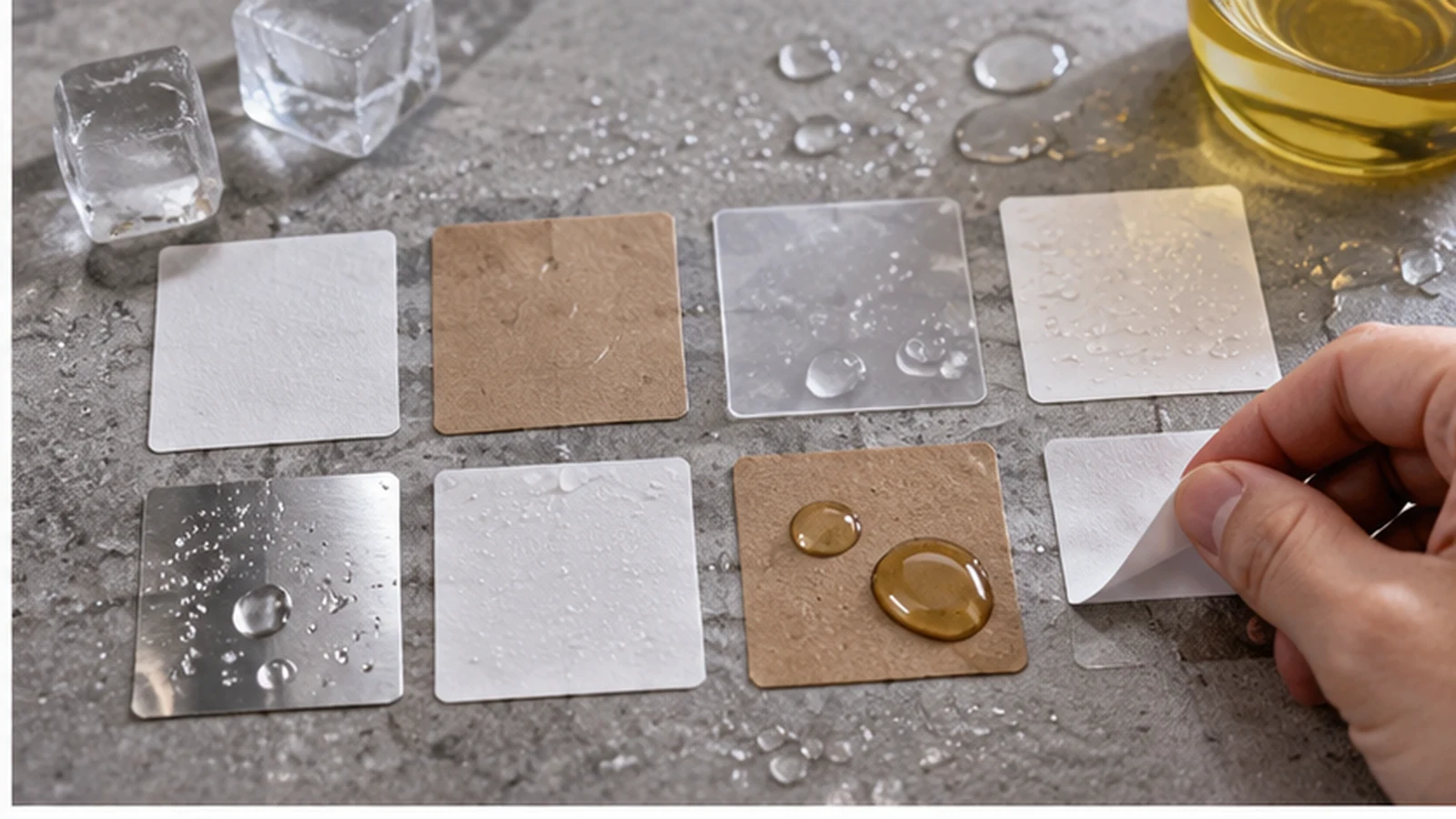
Permanent adhesive suits labels that should stay on through the product's life. Removable adhesive makes sense for temporary pricing, short-term campaign labels or reusable containers where residue is undesirable. Repositionable labels can help during application but may not be suitable for every long-term use.
Never choose adhesive only from a catalogue description. Surface energy, texture, dust, condensation and application temperature all change real-world performance.
Run a 24-Hour Real-Package Test
Apply sample labels to the actual package. Put chilled items into the refrigerator, expose takeaway packs to normal oil and handling, curve labels around bottles, and test removal where removability matters. Check edge lift after several hours, not only immediately after application.
For a café in Tanjong Pagar or any other Singapore F&B business, this small test is more valuable than choosing material from a screen mock-up.
Choose the Environment First, Then the Finish
Gloss, matte, shape and colour are design decisions. The first technical decision is whether the label survives the package's real life.
A sticker is only successful when the face material, adhesive, package surface and environment all work together.
Frequently Asked Questions
Are waterproof stickers always waterproof in real use?+
The face material may resist water while the adhesive or print finish may still fail. Test the complete label.
Can I use a sticker to add mandatory food information?+
SFA guidance allows sticker labels in certain circumstances, but required information must remain compliant and the sticker must be firmly attached without covering other essential information.
Should labels be applied to cold bottles?+
Some adhesives perform poorly on cold or wet surfaces. Test the actual application condition or apply before chilling when appropriate.
Need Labels for a Real Packaging Environment?
If you have the package, expected exposure and quantity ready, JCP's printing team can review suitable sticker and label production options with the actual use case in mind.
Discuss Your Label Requirements