

Buying & Pricing
Polo Uniform Size Sets: How to Fit a Mixed Team Before Bulk Ordering
A corporate polo order often looks straightforward until the size boxes arrive. Two people who usually buy medium can have different shoulder widths, preferred ease and expectations about shirt length. Meanwhile, two brands marked medium may use different garment measurements. The practical way to reduce wrong-size uniforms is to approve an actual size set before collecting everybody’s order. This guide explains how to run that fitting process without turning it into an endless staff survey.
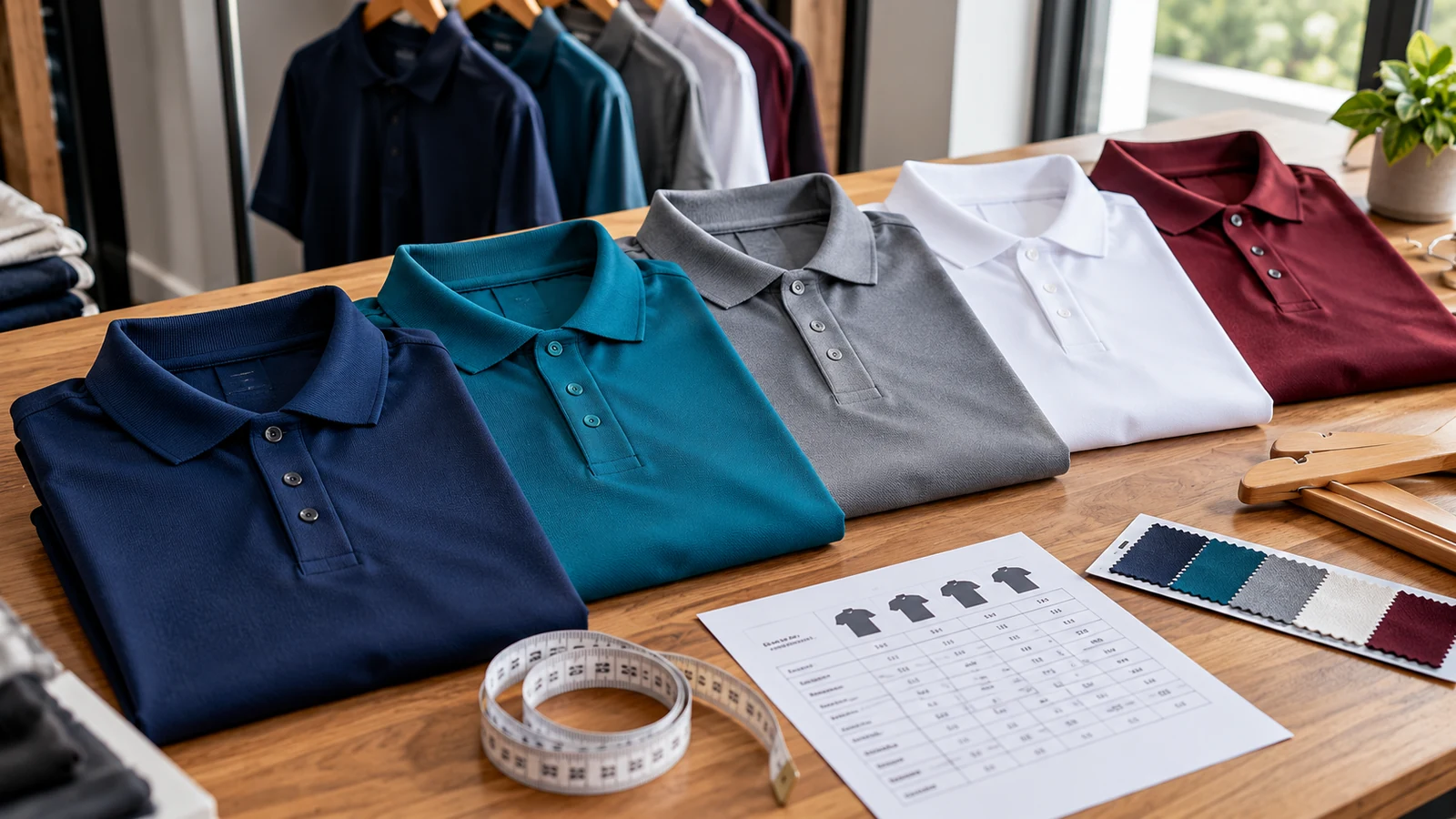
Start with garment measurements, not everyday size labels
A supplier’s size chart describes a particular garment, not a universal body size. Compare chest width, body length and shoulder measurement against a polo already worn comfortably by a representative team member. Confirm whether the chart uses flat garment dimensions or body circumference; confusing the two can produce a very large error. If the seller has more than one cutting or fabric series, treat each chart as a separate product rather than combining them into one form.
Use a simple example: a staff member’s favourite polo measures comfortably across the chest when laid flat, yet a new fabric has less stretch. Selecting only by the printed letter on the neck label is unlikely to account for that difference. Measurement plus try-on gives a better decision. Record the actual sample size that fits and take a note of shoulder position, sleeve opening and whether the wearer needs to lift their arms during work.
Build a representative fitting set before collecting the final list
A fitting set does not have to include every combination of every colour. It should represent the actual style and fabric being ordered across its available size range, including larger sizes and any alternate cuts. If staff have different roles, invite examples from front desk, warehouse, delivery and management instead of using only office colleagues. The aim is to discover how the design behaves on real bodies and during real tasks, not to rank anybody’s measurements.
Choose one sample in the exact model whenever practical. Substituting a plain cotton shirt for a quick-dry polyester polo can hide differences in drape and recovery. If only a comparable sample is available, label the trial as provisional and ask the supplier to confirm deviations before ordering. An online size guide is useful preparation; it is not proof that the neckline, collar height and sleeve shape will be comfortable for a full working shift.
Run a short fitting session with consistent questions
Give staff a private, clear way to try samples, check the mirror and select the size they feel comfortable wearing. Ask them to sit, reach forward and raise their arms, because a standing pose can conceal restricted movement or a shirt that rides up. Keep the questions consistent: Is the shoulder seam in the right place? Does the hem remain comfortable when moving? Is the collar acceptable when buttoned? Are the sleeves restrictive?
Avoid collecting personal body measurements unnecessarily. Record staff identifier, chosen garment model, size and any agreed special adjustment only. A spreadsheet with one row per wearer prevents double counting when different departments submit lists. For team leads, note which entries are complete and which still need confirmation; do not silently convert a missing size into the most common size. A single mistaken assumption can result in several unusable uniforms.
Check logo positions and colour choices on different sizes
Branding can change the visual balance of a polo. A left-chest embroidered logo that looks discreet on a large sample may feel crowded close to the placket on a small one. Use a printed paper mockup or stitched sample to judge the distance from the front opening and shoulder seam. Small logos should be checked for readability; large logos need enough open fabric to sit flat without pulling the front panel.
Dark and pale colours can also make a logo appear different even when the stitch or print dimensions are identical. When planning mixed colourways, approve how thread or ink colours will change, and ensure the same style code is ordered for everyone. JCP’s verified apparel printing and embroidery information is relevant when discussing the intended logo method, but the final placement and fabric suitability still need to be confirmed for the selected shirt.
Build an order sheet that supports reorders and replacements
The final sheet should identify the product code, colour, selected fit, size and quantity by person or department. Add a separate total by size and colour so the supplier can reconcile quantities without seeing unnecessary staff information. Check whether men’s, women’s or unisex patterns have been mixed and whether the size code means the same thing across those patterns. Lock the approved version and number subsequent changes so earlier spreadsheets are not mistakenly used.
Consider the next six months as well as the first delivery. New starters, role changes and damaged items create a need for repeat orders. Keep a reference sample and a record of the approved logo size, placement and fabric code; a photograph alone cannot preserve every detail. Request information about model continuity, but do not assume the same garment will remain in stock indefinitely. A simple reorder protocol is more useful than guessing today’s total perfectly.
Avoid the common fitting-session shortcuts
One shortcut is to let everybody select from a social-media photograph. A picture reveals colour and general cut, but not sleeve ease, cloth weight or collar feel. Another is to estimate quantities by the sizes of existing T-shirts. Those may use different knits and be worn much looser than a client-facing uniform. Finally, approvals based on only one manager’s size can overlook employees with different movement needs or body shapes.
Allow an explicit exception path where standard samples do not fit. A person may need a longer hem or alternative cut; their response should not be treated as a failed survey. Confirm whether the supplier can accommodate the requirement before promising it. The objective is not to eliminate every exchange but to prevent predictable mistakes. A consistent, respectful fitting session turns an ambiguous bulk purchase into an order with evidence behind it.
Frequently asked questions
Can employees select their usual clothing size without trying a sample?
They can use it as a starting guess, but a try-on is safer when changing garment brand, cut or material. At minimum, compare a known comfortable polo’s dimensions with the supplier’s garment chart.
Should we order extra units in the most common sizes?
Only after confirming the budget and supplier’s reorder conditions. Extra units are useful for replacements, but disproportionate extras can tie up money in sizes that are never needed.
Do different colours fit differently?
They should share a specification within the same model, but production lots and finishing can introduce variation. Check actual samples if consistency is important, particularly when ordering across different series.
What is the minimum information to send for a quotation?
Send style or model preference, colour, provisional quantities by size, branding artwork, proposed logo position and deadline. Ask the supplier to confirm stock, minimum order conditions and sample options.
Preparing an order? For garment, artwork and print specifications, consult JCP’s official printing-service information and request a quotation for the exact item and quantity.