

Chinos vs Cargo Pants for Staff Uniforms: Choosing by Role
A practical guide to choosing chinos, tailored trousers and cargo pants for staff uniforms, including fit, pockets, fabric and repeat stock.
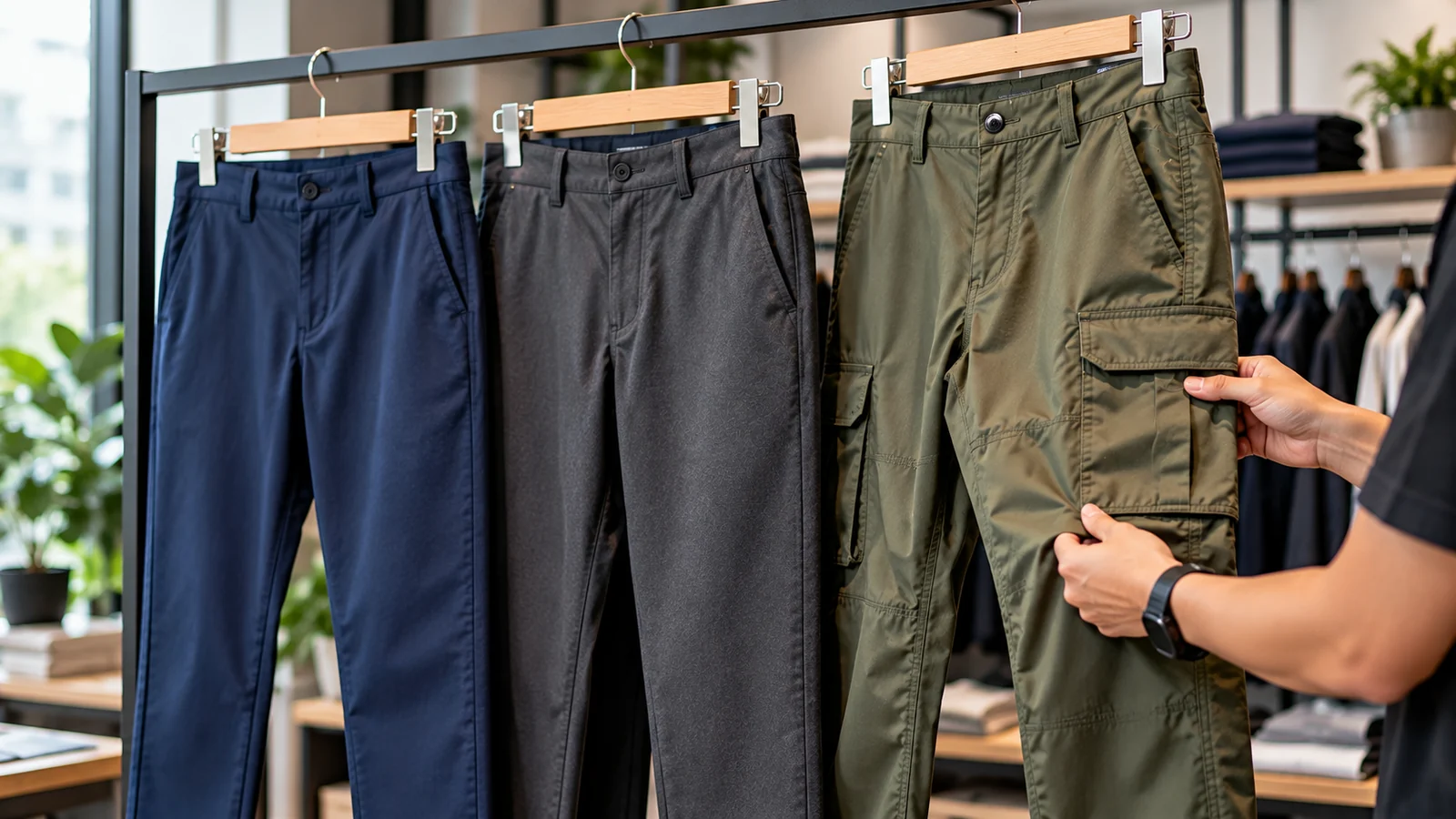
Uniform discussions often focus on polo colours and embroidered logos, while trousers receive a quick decision at the end. That can be costly. Staff bend, kneel, sit and travel in their trousers all day, so comfort and movement have a direct effect on how practical the uniform feels. For Singapore businesses managing different roles, choosing between chinos, tailored trousers and cargo styles is a decision about function as much as appearance.
It is possible to use one colour across several trouser styles and still maintain a coherent team identity. A front-desk employee might need a neat slim or regular silhouette, while a maintenance worker benefits from larger utility pockets. The important starting point is to decide which work tasks the trouser must support before settling on a product photograph or label.
Compare the job, not just the cut
Chinos tend to offer a versatile smart-casual appearance, making them a possible choice for reception, retail management and field sales. A regular or tapered cut can be paired with polos, oxford shirts or lightweight jackets. Yet a style that looks polished when standing may pull across the knees or waist when someone spends the day crouching, climbing steps or handling inventory.
Cargo trousers solve a different problem by adding usable storage, often with side pockets and tougher detailing. More pockets are not automatically better; bulky contents can catch on furniture or alter how trousers hang. Ask workers which items they truly carry, how often they reach for them, and whether separate belts or pouches already provide safe storage.
Fabric weight, breathability and care
A lightweight fabric can feel comfortable in warm conditions, but may show wear quickly around high-friction areas. Heavier cotton-rich or blended fabrics may hold their shape well, although some feel warm or take longer to dry after washing. There is no single fibre composition that guarantees ideal comfort. Weave, treatment, stretch, lining and garment design all contribute to the finished result.
Request material details and practical care instructions before comparing quotations. Consider whether employees wash uniforms at home or use a central laundry service. Ask how the fabric handles repeated washing and whether shades can be reordered consistently. Suppliers' ranges change, so retaining a fabric reference and sample matters when new employees join months later.
Get the fit right for real movement
Trouser fit should be checked at the waist, seat, thighs and rise rather than selecting only by the stated waist measurement. Ask two or three staff members to try representative sizes and perform realistic tasks: sit in a vehicle, reach to a low shelf and walk briskly. A uniform that pinches at the thigh or rides down when bending will be uncomfortable regardless of how good the catalogue photo looks.
Check the hem length with the shoes actually used at work. Do not assume one standard length suits everyone, and consider whether alterations are available and who will coordinate them. Size conversion varies between brands, especially for unisex or slim-fit styles. You can review the JCP apparel catalogue for examples of chino and cargo options, then agree on a single tested size guide before ordering a bulk quantity.
Think about pockets and worksite rules
Pocket position should support the job without creating hazards. A side cargo pocket may be helpful for non-sharp handheld items but unsuitable where loose fabric could catch on equipment. For a role involving chemicals, heat or machinery, choose clothing according to the employer's hazard assessment and applicable protective standards rather than using ordinary trousers as a substitute for certified PPE.
Teams with mixed duties may need two approved trouser styles in a matching colour rather than one compromised option. Keep the shirt branding consistent and use an issue register to record which cut each person receives. The Singapore uniform enquiry site can be used to discuss the overall look while the apparel and customisation catalogue helps narrow the available uniform combinations.
A useful order specification
- Job roles and expected tasks, including seated and outdoor duties.
- Preferred leg silhouette, fabric composition and colour reference.
- Pocket requirements, closures, belt loops and any prohibited loose details.
- Sample sizes representing the full team, including different body shapes.
- Alteration policy, care instructions and future reorder expectations.
Consider lifecycle cost rather than lowest purchase price
Trousers incur costs after purchase through washing, alterations, repairs and replacement. An inexpensive pair that loses colour quickly can be poorer value than a slightly higher-priced option with reliable repeat stock. Ask how the supplier handles different inseam lengths and whether the chosen shade is likely to remain available. A discontinued cut can make a once-uniform team look inconsistent after a few hiring cycles.
When comparing quotations, request the same information from each provider: fibre content, fit designation, size availability, pocket configuration and expected reorder process. Do not compare a basic chino against a specialist cargo trouser solely on price per pair. They are not necessarily intended for the same daily workload. Record which departments need utility features and which benefit from a more tailored appearance.
Run a wear trial with a few representative staff
A one-week wear trial can identify issues that a ten-minute fitting misses. Ask participants to note waistband comfort, pocket utility, fabric warmth, seam durability and how the trousers look after washing. Try to include someone who drives or sits frequently, someone who moves stock and someone from a customer-facing role. Their feedback will be more useful than a general vote about which design looks fashionable.
Collect the results in simple terms such as fit acceptable, alterations needed and unsuitable for task. If only a handful of sizes are tested, do not assume the outcome automatically covers every body shape. Use the trial to refine the style and then confirm the full sizing range. This approach makes a larger order more predictable without turning uniform selection into a complex research project.
Common questions
Are cargo trousers too casual for a company uniform?
Not necessarily. A streamlined design in a consistent colour can look coordinated with a polo or work shirt. Decide based on the role and the desired customer-facing impression rather than the cargo label alone.
Does stretch fabric always fit better?
Stretch may help movement, but garment measurements and seam construction still matter. A poorly chosen waist or rise can remain uncomfortable even when the cloth contains elastane.
Should office and warehouse employees wear identical trousers?
A shared palette can unify departments while allowing different cuts for different tasks. Testing separate options usually produces a better result than requiring one trouser design for every work environment.