

One-North Demo Day Teamwear: Build a Clear Startup Event Kit
One-North brings together start-ups, research organisations and technology businesses. At a demo day, visitors may see several teams presenting complicated products within the same space. A simple, coherent apparel and identifier kit helps people locate the right staff without making the team look like a walking advertising board.

Start with a garment that suits a long demo day
Presenters may stand under warm lights, bend over a prototype or hold a microphone for an extended session. A breathable, correctly sized shirt is easier to wear confidently than a stiff style chosen only from its catalogue photo. If the setting is formal, a clean polo with a restrained logo may be suitable; a creative startup might prefer a neat T-shirt. The point is consistency across the group, not forcing every company into the same silhouette.
Ask each team member for their actual garment measurements where possible, and confirm whether a unisex or fitted cut is preferred. Check sleeve and shoulder movement while leaning forward as if demonstrating equipment. Leave enough space around a chest mark so a lanyard does not conceal it. Bring a spare unprinted garment to the trial fitting if the final decoration method may influence placement.
Make role identification instantly understandable
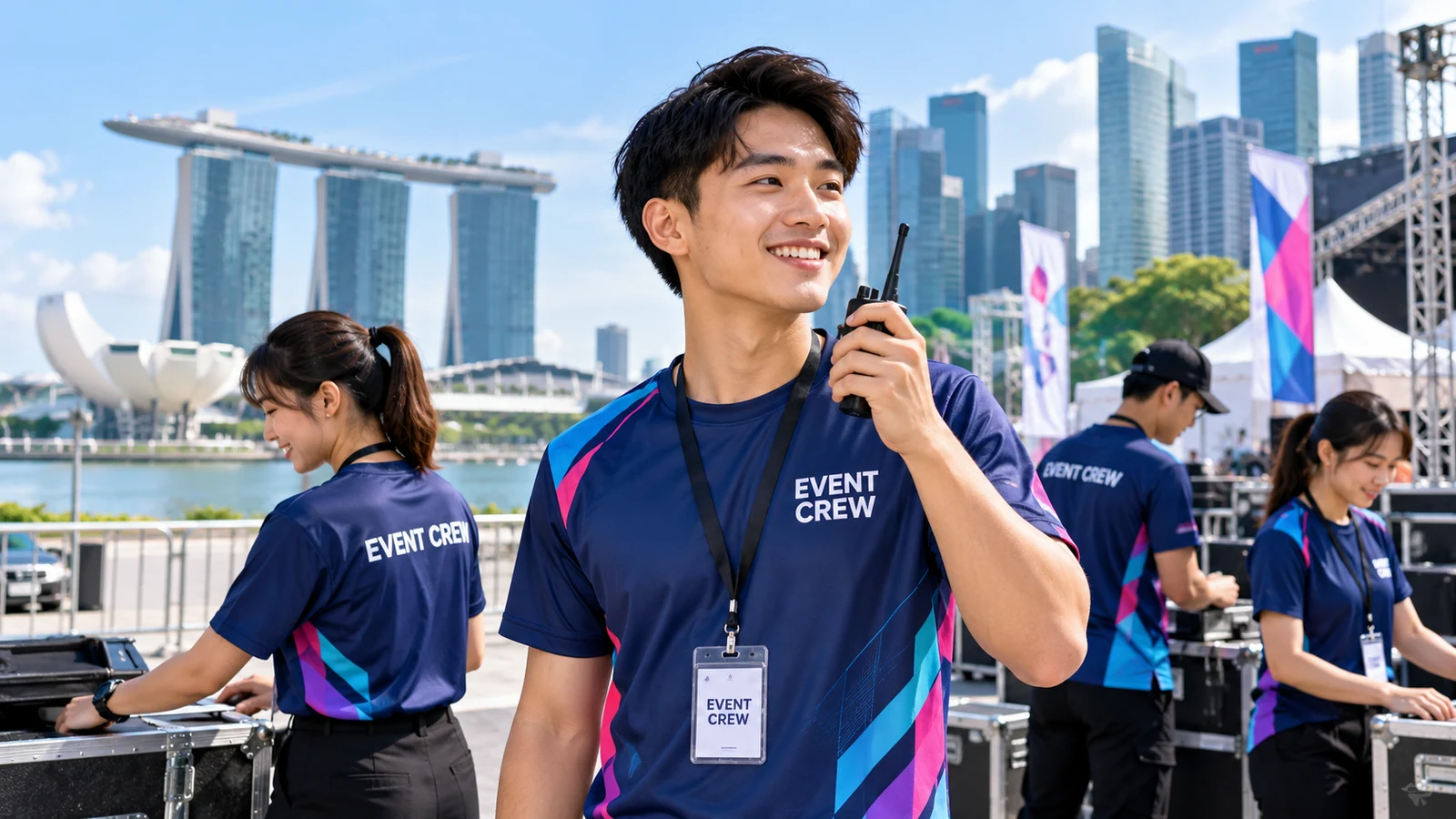
People attending a demo day need to know who can answer a technical question, provide a brochure or handle logistics. Keep role names short and legible. If using lanyards, ensure their badge position remains visible when an employee sits behind a table. Consider different role-colour accents rather than printing an entire shirt of text.
Badges should be tested with a normal standing conversation distance in mind. If visitors struggle to read tiny labels, simplify the content and enlarge the important information. Avoid unnecessary personal contact details on public-facing badges. Give organisers a plan for replacing an ID safely when someone changes roles during the day.
Choose handouts that support, rather than distract from, the product
A one-page product explanation and a short meeting follow-up card can be more useful than several dense brochures. Keep diagrams high contrast and avoid text so small that it becomes unreadable under booth lighting. If QR codes connect to the live demo or booking page, print and scan actual samples before approval. Include a plain-language description so the handout still makes sense when the visitor sees it later.
Think about what a visitor already carries when they arrive. Heavy giveaways can crowd a small booth and discourage people from taking the essential information. If you use a tote, it should hold the full kit without crushing the contents. Bundle materials by intended audience, such as partners or general visitors, instead of asking staff to sort individual items under pressure.
Run a final handover checklist
Create a simple inventory list for all garments, IDs and printed items. Assign one person responsibility for the final approved artwork, size chart, delivery address and on-site distribution plan. Ask the supplier to confirm the options and final order details rather than relying on assumptions. A spreadsheet with the person or role assigned to each kit is enough to prevent many day-of-event problems.
Before opening the booth, check that the shirts match the approved sample and that every badge holder is complete. Place replenishment stock where staff can reach it discreetly. Keep extras separate from issued kits and count them at the end. Note what was genuinely used so the next event order becomes more accurate.
Use one-north’s mixed business audience as the starting point
JTC describes LaunchPad @ One-North as part of an ecosystem for start-ups, incubators, accelerators and investors. Presenters in that environment may move from technical demonstrations to customer conversations and then to a group photo. Choose comfortable shirts that look tidy in each context, and keep identification obvious without overwhelming the product being shown.
Instead of giving everyone the same label, distinguish the presenter, booth helper and organiser in a small readable area. Consistent base colours can tie the team together even if roles need different IDs. Have spare shirts in a few sizes for last-minute replacements. Test the look under the actual indoor lighting planned for the booth.
A quick decision table
| Situation | Start with | Test or verify |
|---|---|---|
| Presenters | Smart polo or simple shirt | Comfort during demonstration |
| Booth assistants | Clearly identified team shirt | Role visibility at a glance |
| Event coordinators | Staff ID badge and practical pockets | Easy access to supplies |
Frequently asked questions
Should a startup print a large logo across every shirt?
Not necessarily. A neat front mark and readable staff identifier often provide more useful clarity than a large complex graphic.
How early should the team make a sample?
Allow time to check fit, logo readability and colour against the actual garment before confirming the order; do not assume a fixed production lead time.
Local context: JTC – LaunchPad @ One-North. Product recommendations in this article are general purchasing considerations, not official requirements from that source.