

Outdoor Work Uniforms: What to Review Before Singapore’s New Heat-Stress Measures Take Effect
Singapore’s Ministry of Manpower announced on 28 August 2026 that four heat-stress practices will become mandatory from 1 December 2026, including suitable clothing that can mitigate or protect workers from excessive heat stress. Uniform buyers therefore have a concrete reason to review what outdoor crews actually wear.
In This Article
Direct Answer
Treat the uniform as one control within a wider heat-stress programme. Review fit, colour, drying behaviour and PPE interaction, but do not treat clothing as a substitute for hydration, rest, shade, acclimatisation or WBGT controls.

Map clothing to the task, not the job title
Two employees with the same title may face very different heat loads. A facilities technician walking between shaded buildings, a landscaper in direct sun and a loading-bay worker moving cartons all produce and absorb heat differently. List the task, time outdoors, work intensity, sun exposure and required PPE before selecting garments. Observe what staff do when they become hot: rolled sleeves, unofficial shirts and open vests are evidence that the issued system may be fighting the job. Use those observations to identify fit, ventilation and layer problems. Then test changes with the real role rather than assuming one outdoor shirt suits every crew.
Evaluate the whole clothing system
MOM’s current framework calls for loose-fitting and light-coloured clothing at higher WBGT bands, and suitable protective clothing becomes a mandatory element from 1 December 2026. That does not mean every worker should receive the thinnest short-sleeve tee. Some roles need long sleeves for solar exposure, abrasion or site rules, and others must wear high-visibility layers or harnesses. Evaluate the base garment with every layer worn above and below it. A breathable polo can still feel oppressive under heavy PPE. The useful question is whether the complete system permits safe work without unnecessary insulation.
Turn comfort into a buying specification
Write measurable requirements instead of “cool material”. Record garment weight range, sleeve length, fit allowance, colour family, pocket needs and compatibility with protective layers. For performance knits, assess drying after saturation; for woven shirts, inspect seam bulk and shoulder movement. Run a wear trial with several body sizes during normal hotter-period work. Check whether the fabric becomes heavy when wet, whether dark panels heat in sun and whether branding creates stiff zones. Keep the approved sample as the reorder control.
Plan the transition before December
If a new shirt fits differently, old and new stock may not share the same size mapping. If the colour becomes lighter, mixed generations may look inconsistent. Decide which staff receive full replacement sets, which old garments remain acceptable for indoor duties and how new hires will be sized. Freeze the approved specification, supplier style code, decoration placement and size issue log. Finish testing before the effective date so corrections and production are not compressed into the final weeks. A compliance-driven change still needs ordinary inventory discipline.
| Planning area | What to verify |
|---|---|
| Map clothing to the task, not the job title | Decision rule and operational check |
| Evaluate the whole clothing system | Failure mode and control |
| Turn comfort into a buying specification | Decision rule and operational check |
| Plan the transition before December | Failure mode and control |
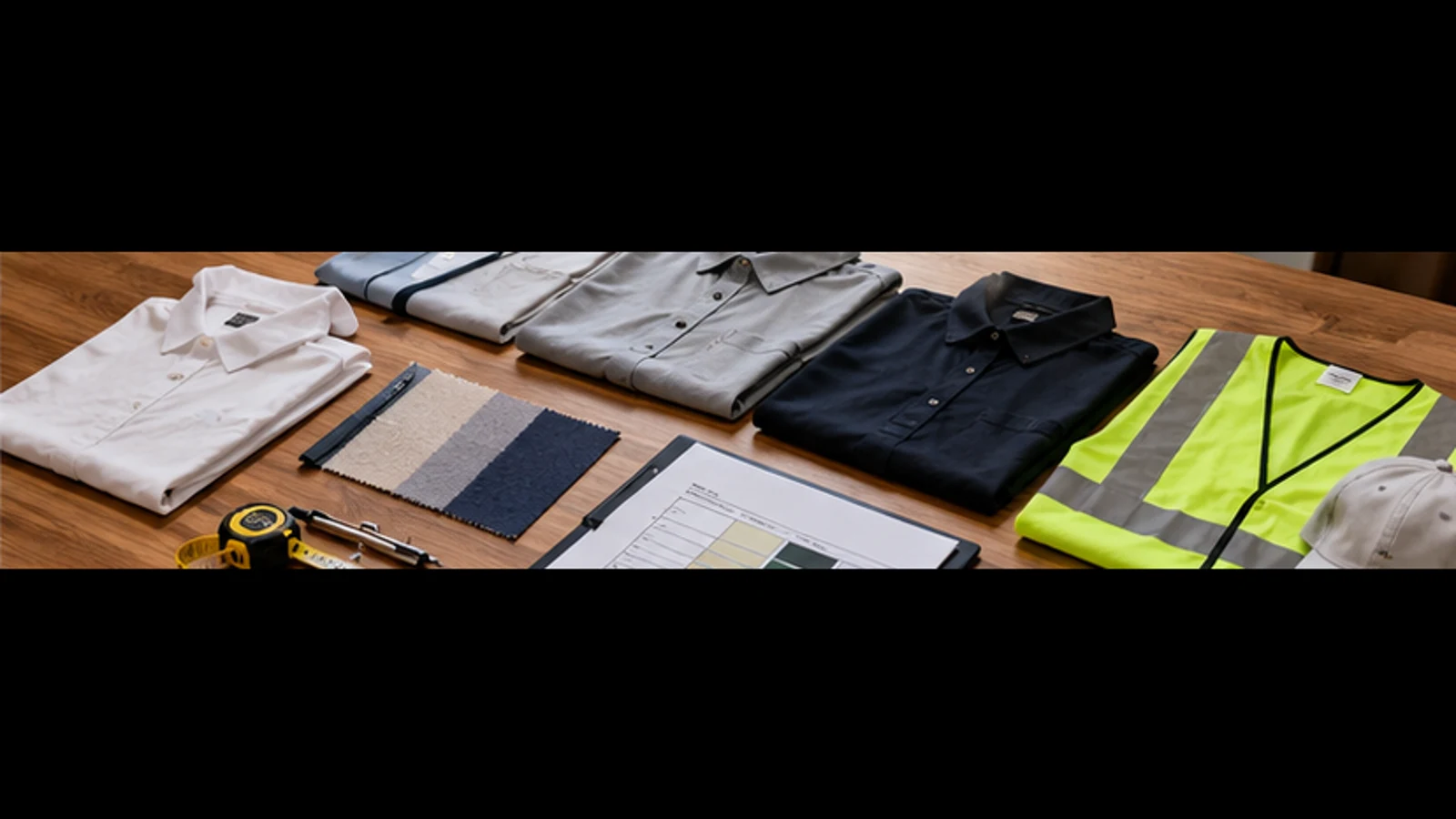
Make the specification measurable, test it in the real operating environment, and keep the approved reference for the next reorder.
Frequently Asked Questions
Should we test before a full run?+
Yes. A production-size sample exposes fit, handling, adhesion or durability problems that are easy to miss on screen.
What should be kept for reorders?+
Keep the approved specification, artwork version, supplier reference and a physical control sample where practical.
Is the lowest unit price the best buying decision?+
Not necessarily. Include replacement risk, obsolete stock, reprint frequency and operational failure in the total cost.
Need Help With the Production Specification?
JCP can help with relevant garment, print, label or business-print production when you are ready to turn the specification into an order.
Discuss Your Requirements