

Can Conductive Yarn Turn Clothing Into a Movement Sensor?
Conductive yarn can turn a textile from a passive material into part of an electrical circuit. Harvard researchers recently combined conductive yarn with shape-changing knitted structures to create soft switches that can count movement and control electronics.
In This Article
Direct Answer
Yes, conductive yarn can be integrated into clothing so the textile becomes part of an electrical sensing system. Harvard researchers demonstrated this by knitting fine conductive yarn into multistable fabric. When the fabric snapped between mechanical states, its electrical state changed, allowing the textile to function as a soft switch that could count steps or control an LED.
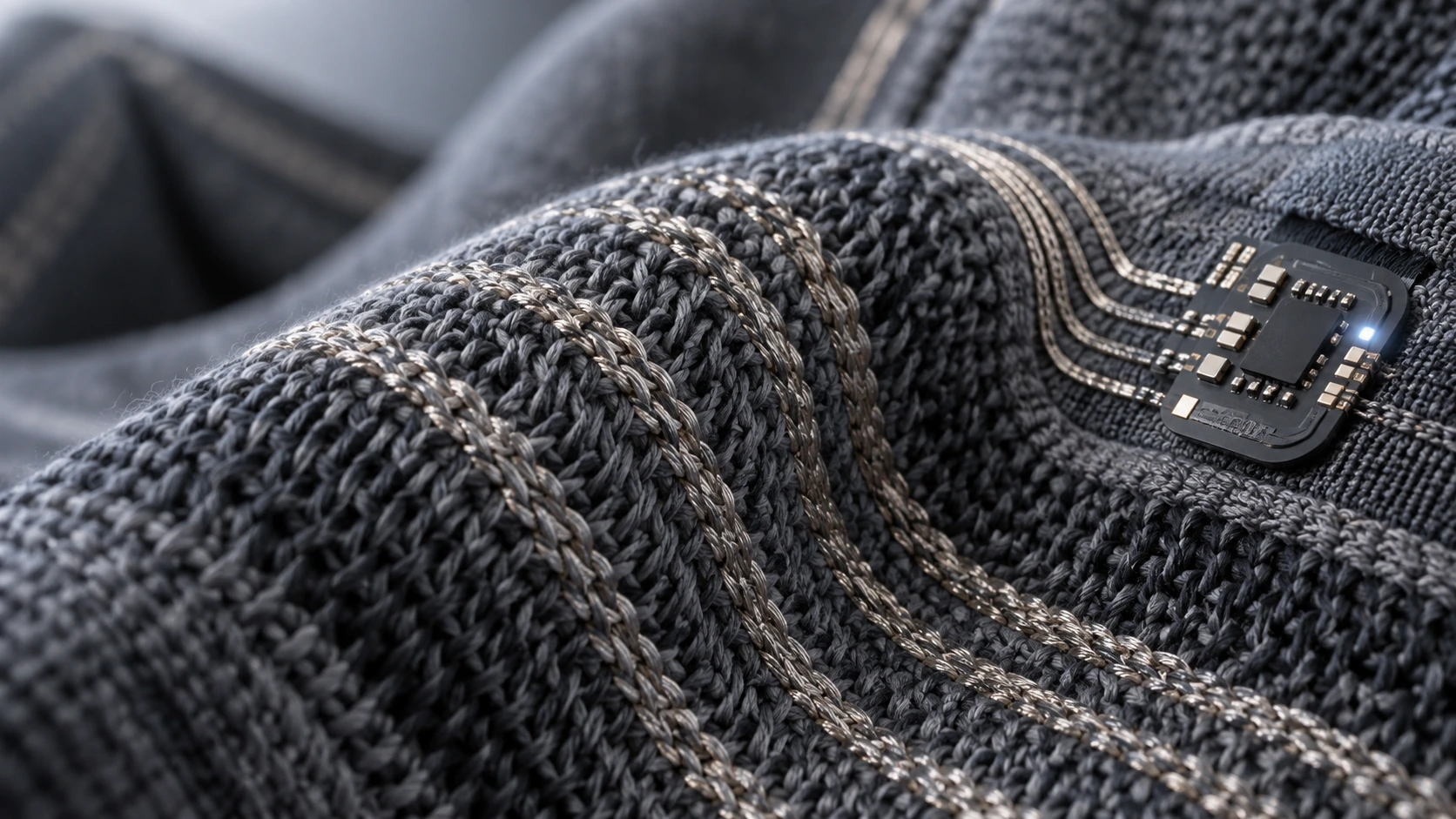
What Conductive Yarn Does
Normal yarn is chosen mainly for properties such as strength, softness, stretch and appearance. Conductive yarn adds another capability: it can carry an electrical signal.
Depending on its construction, conductive yarn may contain metallic fibres, conductive coatings or other electrically active materials. When stitched or knitted into a garment, it can connect textile sensors, switches or other wearable components.
The important point is that the electrical pathway can remain flexible. Instead of running a conventional rigid wire across the body, part of the circuit can follow the garment.
How the Harvard Sensor Worked
In Harvard's 2026 multistable knitting research, the team first engineered knitted shells that could snap between stable shapes. They then embedded fine conductive yarn into the textile so the shape change also changed the electrical state.
One prototype was worn around a knee or elbow. As the joint moved, the textile snapped between states. An Arduino could read those changes and use them to count movement such as steps.
The researchers also demonstrated a knitted switch that controlled an LED and a reconfigurable lampshade with several textile switches. These examples show that the fabric does not have to behave like a conventional pressure button. Its own movement can become the switching action.
| Part of the System | Function |
|---|---|
| Knitted Structure | Creates the mechanical snap between stable states |
| Conductive Yarn | Carries the electrical signal |
| Joint Movement | Triggers the fabric's shape change |
| Controller | Reads the signal and converts it into an action or data point |
Where Clothing Sensors Could Be Useful
The research does not claim that all clothing should become electronic. The strongest use cases are situations where soft movement sensing provides useful information without making the wearer carry another rigid device.
Sportswear could use textile sensing to monitor repetitive joint movement. Rehabilitation garments could record whether prescribed exercises are being performed. Workplace uniforms could potentially detect movement patterns that are relevant to ergonomic analysis.
Smart textile switches could also create garment-based controls. A wearer might eventually activate a connected device by pressing, bending or snapping a textile zone built into a sleeve, cuff or chest panel.

What Garment Makers Must Solve
Adding a conductive yarn is only one part of building a commercial smart garment. The textile still needs to survive normal clothing use.
Manufacturers would need to validate repeated bending, abrasion, laundering, sweat exposure and the reliability of electrical connections. The garment also needs a practical way to connect textile circuits to any removable battery, controller or communication module.
Fit is another consideration. A movement sensor only works properly if the sensing area sits at the intended location on the wearer's body. That may create new sizing and pattern-development requirements for uniform suppliers.
Data & Privacy Questions Matter Too
This is an important business issue if sensor garments eventually enter workplaces. A uniform that records movement can create useful ergonomic or safety data, but it can also raise questions about employee monitoring.
Companies would need clear policies covering what is measured, why it is measured, how long data is kept and who can access it. Smart uniforms should not be treated as ordinary garments once they begin collecting information about the wearer.
A smart uniform can create technical value, but the data policy needs to be designed as carefully as the garment.
Final Takeaway
Conductive yarn gives apparel designers a way to move part of a wearable circuit into the textile itself. Harvard's multistable knit research demonstrated that combining electrical yarn with engineered fabric geometry can create soft switches that react to movement.
The technology remains experimental, but it shows why smart clothing development is moving beyond attaching sensors to finished garments. Future sensing functions may be knitted directly into the material during manufacturing.
The key change is simple: clothing can move from being the place where a sensor is mounted to becoming part of the sensor itself.
Frequently Asked Questions
What is conductive yarn?+
Conductive yarn is a textile yarn engineered to carry electrical signals, allowing it to form flexible circuits or connections inside garments.
Can conductive yarn measure movement by itself?+
Conductive yarn needs to be part of a sensing structure or circuit. In the Harvard research, the conductive yarn worked with a multistable knitted structure whose snap-through movement changed the electrical state.
Can smart textile sensors be washed?+
Commercial washability depends on the complete yarn, textile, connector and electronics system. The Harvard research demonstrates the sensing concept but does not establish universal industrial-laundry durability.
Need Help Choosing a Uniform?
Tell us your staff role, quantity and branding needs. We can help you compare practical uniform options for your team.
Discuss Your Uniform Requirements